

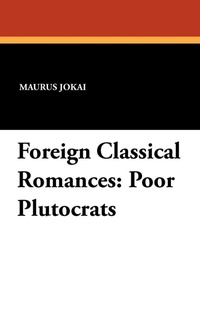
Foreign Classical Romances
Poor Plutocrats
Published on 27. September 2024
Book
Paperback/Softback
416 pages
978-1-4344-1534-9 (ISBN)
Description
Mór Jókai (also known as Maurus Jókai, 1825-1904) was a prolific Hungarian novelist, playwright, and journalist, widely regarded as one of the greatest writers in Hungarian literature. Known for his vivid imagination and storytelling, Jókai authored more than 100 novels, including The Man with the Golden Touch and Black Diamonds. His works often combined adventure, romance, and historical themes, showcasing his deep love for Hungarian culture and history. A key figure in Hungary's literary golden age, Jókai's influence extended beyond literature into politics, where he supported national independence and cultural preservation.
More details
Language
English
Place of publication
Holicog
United States
Product notice
Paperback (trade)
Unsewn / adhesive bound
Dimensions
Height: 216 mm
Width: 140 mm
Thickness: 24 mm
Weight
584 gr
ISBN-13
978-1-4344-1534-9 (9781434415349)
Copyright in bibliographic data and cover images is held by Nielsen Book Services Limited or by the publishers or by their respective licensors: all rights reserved.
Schweitzer Classification
Persons
Mór Jókai, also known as Maurice Jókai, Maurus Jókai, or Mauritius Jókai, was a Hungarian novelist, dramatist, and revolutionary leader. Born on February 18, 1825, in Komárom, Hungary, Jókai is considered one of the most influential writers in Hungarian literature. His literary work includes historical novels, adventure stories, and plays, often reflecting the political upheavals of his time. He played a significant role in the Hungarian Revolution of 1848, which deeply influenced his worldview on freedom and national identity. Jókai's works, such as The Green Book and Timar's Two Worlds, delve into complex social and political themes, often set against rich and imaginative backdrops. Alongside his writing, Jókai was actively involved in the Hungarian political scene, particularly during the 1848 revolution. He was married twice, first to the actress Róza Laborfalvi, and later to Bella Nagy. He had one daughter, Róza Jókai. Jókai passed away on May 5, 1904, in Budapest, leaving behind a legacy that endures both through his literary contributions and his impact on Hungary's history.