

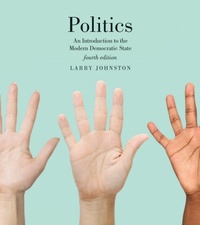
Politics (Canadian Edition)
An Introduction to the Modern Democratic State, Fourth Edition
4th Edition
Published on 30. November 2012
Book
Paperback/Softback
416 pages
978-1-4426-0533-6 (ISBN)
Description
The latest edition of Politics offers a comprehensive and comparative approach to the essential components of democratic politics in today's states. The book begins by addressing ways of thinking about politics, community, and society, offering broad outlines of political theory in a historical context. Johnston then provides a comparative framework for understanding basic democratic systems which is drawn upon in subsequent sections on institutions, the political process, and governing. The result is an accessible introduction to contemporary democratic politics that is also deeply theoretical and comparative in scope.
The fourth edition has been revised throughout and rewritten with a more focused narrative. The student-friendly design incorporates more visuals and sidebars, as well as chapter objectives and a glossary, in order to make the material easily digestible. In addition, a new companion website provides self-study support for students along with a wealth of materials for instructors to draw from when developing lectures, tutorials, assignments, and exams.
See www.johnstonpolitics.com for more information.
The fourth edition has been revised throughout and rewritten with a more focused narrative. The student-friendly design incorporates more visuals and sidebars, as well as chapter objectives and a glossary, in order to make the material easily digestible. In addition, a new companion website provides self-study support for students along with a wealth of materials for instructors to draw from when developing lectures, tutorials, assignments, and exams.
See www.johnstonpolitics.com for more information.
More details
Edition
4th New edition
Language
English
Place of publication
Toronto
Canada
Target group
College/higher education
Edition type
New edition
Product notice
Paperback (trade)
Dimensions
Height: 226 mm
Width: 203 mm
Thickness: 23 mm
Weight
635 gr
ISBN-13
978-1-4426-0533-6 (9781442605336)
Copyright in bibliographic data and cover images is held by Nielsen Book Services Limited or by the publishers or by their respective licensors: all rights reserved.
Schweitzer Classification
Person
Larry Johnston is the author of Ideologies: An Analytic and Conceptual Approach (1996) and Between Transcendence and Nihilism (1995). A legislative researcher in Toronto since 1998, he was an academic consultant to the Ontario Citizens' Assembly on Electoral Reform in 2006. He has taught a variety of politics courses at the University of Toronto, McMaster University, and Ryerson University.
Content
List of Figures
Introduction: The Dimensions of Politics and an Approach to its Study
What Politics Is...
A Comparative Approach
Chapter 1: Co-operation, Coercion, and Consent-Opening Ideas
Our Social Nature
Authority and Leadership
Civil Society
Beyond the State
Conclusion
References
Further Reading
Chapter 2: The Many Ways of Studying Politics
Politics as Philosophy
Politics as Social Science
Units of Analysis: Individual, Group, or Class?
Politics as Anthropology
Back to Bismarck: Politics and the Study of Politics
References
Further Reading
Chapter 3: From The Republic to the Liberal Republic: History and Ideas
Classical Antiquity
Feudal Society (the Medieval Era)
The Reformation
The Enlightenment
The Market Economy
Synergy
Political Revolution
Liberal Government
Philosophical Works
References
Further Reading
Chapter 4: The Fall and Reluctant Rise of Democracy
Democracy Defined
Distrust of Democracy
From Liberal Government to Liberal Democracy
Assessing Representative Democracy
Democracy's Prospects
Consolidating Democracy
References
Further Reading
Chapter 5: Roadmap to the Rest (A Comparative Framework)
Who's In and Who's Out
Functions, Institutions, Systems
Functions, Institutions, Systems
Functions, Institutions, Systems
The Judiciary as a Branch of Government
Bicameralism-Do Two Houses Make a Home?
Degrees of Federalism
Electoral and Party Systems
Type of Government
Recapping
Appendix: Comparative Data Set
Further Reading
Chapter 6: Systems of Government: Parliamentary Options
Components of Parliamentary Government
Majority, Minority, or Coalition
The Government-Formation Process
The Conclusion of a Government and Its Implications
A Closer Look at Coalition Government
Cabinets: Size and Structure
Executive Dominance
References
Further Reading
Chapter 7: Systems of Government (2): Degrees of Presidentialism
Madisonian Presidentialism
Coalitional Presidentialism in Latin America
Semi-Presidentialism
An Exceptional Case: Switzerland
Conclusion
References
Further Reading
Chapter 8: Dividing the State: Federalism and Other Options
Unitary, Federal, Confederal
Components of Federalism
Asymmetrical Federalism
Bicameralism
Amending Formula
Non-federal Options
References
Further Reading
Chapter 9: Who Wants What? The Political Process
Social Cleavages
Ideology: The Role of Ideas
References
Further Reading
Chapter 10: Who Gets In? The Machinery of Democratic Elections
What Is an Electoral System?
Criteria for Evaluating Electoral Systems
Electoral Systems Considered
Electoral Administration
References
Further Readings
Appendix: Electoral System Data
Chapter 11: Who is Heard? Varieties of Representation
Political Parties
Party Systems
Election Campaigns
Organized Interests
Corporatism
Social Movements
Conclusion
References
Further Readings
Chapter 12: The Official Response: Public Policy and Administration
Two Theories about Public Policy
Who Does What: Examining the Policy Cycle
Types of Policy
The Bureaucracy
References
Further Reading
Chapter 13: The Rule of Law in Practice: The Justice System
The Nature of Law
The Legislative Process
Direct Democracy
Private Law
Administrative Law
Court Systems
Rights
Judicial Review
Automatic Justice?
References
Further Reading
Chapter 14: Governing in an Age of Decline? Social and Economic Policy
The Nature of Capitalist Market Society
Classic Liberalism and Laissez-faire
Models versus Reality
The Reform of Market Capitalism
The Welfare State
The Age of Deficit and Debt
Going Forward
References
Further Reading
Appendix: Economic Statistics
Glossary
Index
Introduction: The Dimensions of Politics and an Approach to its Study
What Politics Is...
A Comparative Approach
Chapter 1: Co-operation, Coercion, and Consent-Opening Ideas
Our Social Nature
Authority and Leadership
Civil Society
Beyond the State
Conclusion
References
Further Reading
Chapter 2: The Many Ways of Studying Politics
Politics as Philosophy
Politics as Social Science
Units of Analysis: Individual, Group, or Class?
Politics as Anthropology
Back to Bismarck: Politics and the Study of Politics
References
Further Reading
Chapter 3: From The Republic to the Liberal Republic: History and Ideas
Classical Antiquity
Feudal Society (the Medieval Era)
The Reformation
The Enlightenment
The Market Economy
Synergy
Political Revolution
Liberal Government
Philosophical Works
References
Further Reading
Chapter 4: The Fall and Reluctant Rise of Democracy
Democracy Defined
Distrust of Democracy
From Liberal Government to Liberal Democracy
Assessing Representative Democracy
Democracy's Prospects
Consolidating Democracy
References
Further Reading
Chapter 5: Roadmap to the Rest (A Comparative Framework)
Who's In and Who's Out
Functions, Institutions, Systems
Functions, Institutions, Systems
Functions, Institutions, Systems
The Judiciary as a Branch of Government
Bicameralism-Do Two Houses Make a Home?
Degrees of Federalism
Electoral and Party Systems
Type of Government
Recapping
Appendix: Comparative Data Set
Further Reading
Chapter 6: Systems of Government: Parliamentary Options
Components of Parliamentary Government
Majority, Minority, or Coalition
The Government-Formation Process
The Conclusion of a Government and Its Implications
A Closer Look at Coalition Government
Cabinets: Size and Structure
Executive Dominance
References
Further Reading
Chapter 7: Systems of Government (2): Degrees of Presidentialism
Madisonian Presidentialism
Coalitional Presidentialism in Latin America
Semi-Presidentialism
An Exceptional Case: Switzerland
Conclusion
References
Further Reading
Chapter 8: Dividing the State: Federalism and Other Options
Unitary, Federal, Confederal
Components of Federalism
Asymmetrical Federalism
Bicameralism
Amending Formula
Non-federal Options
References
Further Reading
Chapter 9: Who Wants What? The Political Process
Social Cleavages
Ideology: The Role of Ideas
References
Further Reading
Chapter 10: Who Gets In? The Machinery of Democratic Elections
What Is an Electoral System?
Criteria for Evaluating Electoral Systems
Electoral Systems Considered
Electoral Administration
References
Further Readings
Appendix: Electoral System Data
Chapter 11: Who is Heard? Varieties of Representation
Political Parties
Party Systems
Election Campaigns
Organized Interests
Corporatism
Social Movements
Conclusion
References
Further Readings
Chapter 12: The Official Response: Public Policy and Administration
Two Theories about Public Policy
Who Does What: Examining the Policy Cycle
Types of Policy
The Bureaucracy
References
Further Reading
Chapter 13: The Rule of Law in Practice: The Justice System
The Nature of Law
The Legislative Process
Direct Democracy
Private Law
Administrative Law
Court Systems
Rights
Judicial Review
Automatic Justice?
References
Further Reading
Chapter 14: Governing in an Age of Decline? Social and Economic Policy
The Nature of Capitalist Market Society
Classic Liberalism and Laissez-faire
Models versus Reality
The Reform of Market Capitalism
The Welfare State
The Age of Deficit and Debt
Going Forward
References
Further Reading
Appendix: Economic Statistics
Glossary
Index