

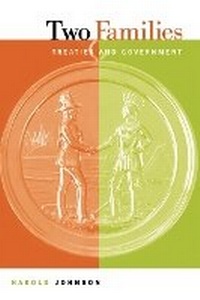
Two Families
Treaties and Government
Will be published approx. on 1. February 2007
Book
Paperback/Softback
144 pages
978-1-895830-29-3 (ISBN)
Description
First Nations Elders interpreted treaties as instruments that gave Europeans the right to settle here, share resources, and build a relationship of equality with those who were here before. These elders did not intend the treaties to allow the subjugation and impoverishment of First Nations, or give settler governments the right to legislate every aspect of First Nations activities. In an easy to read narrative, Harold Johnson presents an eloquent view, on behalf of a people, of what treaties represent, including the justice system and reconciliation of laws, resources and taxation, assimilation, leadership and sovereignty, Constitutional rights, youth, and relations between next generations.
Reviews / Votes
While initially it may appear to be a strange addition to a law library, this slender text should be required reading for anyone working in aboriginal law or treaty interpretation. - Patrick Fawcett (Canadian Law Library Review)More details
Language
English
Place of publication
Saskatoon
Canada
Product notice
Paperback (trade)
Illustrations
1 map, 16 photos
Dimensions
Height: 229 mm
Width: 152 mm
Weight
230 gr
ISBN-13
978-1-895830-29-3 (9781895830293)
Copyright in bibliographic data and cover images is held by Nielsen Book Services Limited or by the publishers or by their respective licensors: all rights reserved.
Schweitzer Classification
Person
Harold Johnson practices law in La Ronge, northern Saskatchewan, and balances this with operating his family's traditional trap line using a dog team. He has served in the Canadian Navy, and worked in mining and logging before returning to school. He holds a law degree from the University of Saskatchewan and a master's degree in law from Harvard. He is also the author of two novels, Billy Tinker and Backtrack, both set in northern Saskatchewan against a background of traditional Cree mythology.
Content
Introduction
Maps
1 My Family
2 Your Family
3 The Adoption of Your Family by My Family
4 Your Family's Justice System
5 Reconciliation of Laws
6 Political Divisions
7 Resources
8 Taxation
9 Assimilation
10 Leadership
11 Sovereignty
12 Your Constitution
13 Youth
14 Next Generation
Appendix A: Treaty No. 6
Appendix B: Adhesion by Cree Indians
Notes
Maps
1 My Family
2 Your Family
3 The Adoption of Your Family by My Family
4 Your Family's Justice System
5 Reconciliation of Laws
6 Political Divisions
7 Resources
8 Taxation
9 Assimilation
10 Leadership
11 Sovereignty
12 Your Constitution
13 Youth
14 Next Generation
Appendix A: Treaty No. 6
Appendix B: Adhesion by Cree Indians
Notes