

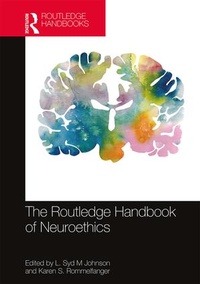
The Routledge Handbook of Neuroethics
1st Edition
Published on 12. July 2017
Book
Hardback
510 pages
978-1-138-89829-5 (ISBN)
Description
The Routledge Handbook of Neuroethics offers the reader an informed view of how the brain sciences are being used to approach, understand, and reinvigorate traditional philosophical questions, as well as how those questions, with the grounding influence of neuroscience, are being revisited beyond clinical and research domains. It also examines how contemporary neuroscience research might ultimately impact our understanding of relationships, flourishing, and human nature. Written by 61 key scholars and fresh voices, the Handbook's easy-to-follow chapters appear here for the first time in print and represent the wide range of viewpoints in neuroethics. The volume spotlights new technologies and historical articulations of key problems, issues, and concepts and includes cross-referencing between chapters to highlight the complex interactions of concepts and ideas within neuroethics. These features enhance the Handbook's utility by providing readers with a contextual map for different approaches to issues and a guide to further avenues of interest.
Chapter 11 of this book is freely available as a downloadable Open Access PDF under a Creative Commons Attribution-Non Commercial-No Derivatives 3.0 license. https://www.routledgehandbooks.com/doi/10.4324/9781315708652.ch11
Chapter 11 of this book is freely available as a downloadable Open Access PDF under a Creative Commons Attribution-Non Commercial-No Derivatives 3.0 license. https://www.routledgehandbooks.com/doi/10.4324/9781315708652.ch11
Reviews / Votes
"The Routledge Handbook of Neuroethics is an impressive and important companion to the emerging discipline of neuroethics. The scope of the contributions to this handbook is dazzling, covering not merely well worked questions in neuroethics, but also giving us glimpses of its bright future. A judicious mix of big names and newer voices make this a volume that anyone with an interest in neuroethics will want to read."--Neil Levy, Macquarie University and University of Oxford
"In this valuable and interdisciplinary collection, Johnson and Rommelfanger have compiled the most interesting and important writings in the emerging field of neuroethics. It explores both "the ethics of neuroscience," that is, ethical issues raised by neuroscience, and "the neuroscience of ethics," that is, the implications of neuroscience for metaethics and moral psychology. This Handbook is a must-read for anyone who wants to understand neuroethics and its potential implications for law and policy."
--Bonnie Steinbock, The University of Albany, SUNY
More details
Series
Language
English
Place of publication
London
United Kingdom
Publishing group
Taylor & Francis Ltd
Target group
College/higher education
Illustrations
5 s/w Zeichnungen, 13 s/w Tabellen
13 Tables, black and white; 5 Line drawings, black and white
Dimensions
Height: 246 mm
Width: 174 mm
Weight
1054 gr
ISBN-13
978-1-138-89829-5 (9781138898295)
Copyright in bibliographic data and cover images is held by Nielsen Book Services Limited or by the publishers or by their respective licensors: all rights reserved.
Schweitzer Classification
Other editions
Additional editions
L. Syd M. Johnson | Karen S. Rommelfanger
The Routledge Handbook of Neuroethics
Book
06/2020
1st Edition
Routledge
€76.40
Shipment within 15-20 days
L. Syd M. Johnson | Karen S. Rommelfanger
The Routledge Handbook of Neuroethics
E-Book
07/2017
Routledge
€60.49
Available for download
L. Syd M. Johnson | Karen S. Rommelfanger
The Routledge Handbook of Neuroethics
E-Book
07/2017
Routledge
€60.49
Available for download
Persons
L. Syd M Johnson is Associate Professor of Philosophy and Bioethics in the departments of Humanities and Kinesiology and Integrative Physiology at Michigan Technological University. Her current research focuses on ethical and epistemological issues in disorders of consciousness and sport-related neurotrauma.
Karen S. Rommelfanger is an Assistant Professor in the departments of Neurology and Psychiatry and Behavioral Sciences, the Neuroethics Program Director at Emory University's Center for Ethics, and Neuroscience Editor-in-Residence at the American Journal of Bioethics Neuroscience. A neuroscientist and ethicist, her current research explores how evolving neuroscience and neurotechnologies challenge societal definitions of disease and medicine. She is a member of the Neuroethics Division of the NIH BRAIN Initiative.
Karen S. Rommelfanger is an Assistant Professor in the departments of Neurology and Psychiatry and Behavioral Sciences, the Neuroethics Program Director at Emory University's Center for Ethics, and Neuroscience Editor-in-Residence at the American Journal of Bioethics Neuroscience. A neuroscientist and ethicist, her current research explores how evolving neuroscience and neurotechnologies challenge societal definitions of disease and medicine. She is a member of the Neuroethics Division of the NIH BRAIN Initiative.
Content
Contents
List of Contributors
Introduction
Part I. What is Neuroethics?
The Competing Identities of Neuroethics: Remarks on Theoretical and Methodological Assumptions and Their Practical Implications for the Future of Neuroethics
Eric Racine and Matthew Sample
Neuroethics and the Neuroscientific Turn
Jon Leefmann and Elisabeth Hildt
Part II. The Ethics of Neuroscience
Thinking Differently: Neurodiversity and Neural Engineering
Sara Goering
The Ethics of Expanding Applications of Deep Brain Stimulation
Markus Christen and Sabine Mueller
4.1 Spotlight: Neuromodulation
4.2 Spotlight: Ablation Techniques
Markus Christen and Sabine Mueller
The Ethics of Prodromal and Preclinical Disease Stages
Jalayne J. Arias, Jennifer Sarrett, Rosa Gonzalez, Elaine F. Walker
Disorders of Consciousness and the Use of Neurotechnologies: An Ethical Perspective
Orsolya Friedrich and Ralf J. Jox
Placebo for Psychogenic Disorders: Ethics, Illness, and Treatment Narratives
Lindsey Grubbs and Karen S. Rommelfanger
Cosmetic Neurology and the Ethics of Enhancement
Anjan Chatterjee
Modafinil and the Increasing Lifestyle Use of Smart Drugs by Healthy People: Neuroethical and Societal Issues
Sebastian Porsdam Mann and Barbara J. Sahakian
Neuroenhancement and Therapy in National Defense Contexts
Michael N. Tennison and Jonathan D. Moreno
Moral Neuroenhancement
Brian D. Earp, Thomas Douglas, and Julian Savulescu
My Brain Made Me Do It?: Neuroscience and Criminal Responsibility
Valerie Gray Hardcastle
Your Brain on Lies: Deception Detection in Court
Julie A. Seaman
13.1 Spotlight: Lie Detection Technologies
Valerie Gray Hardcastle
Neuroprivacy and Cognitive Liberty
Paul Root Wolpe
Chronic Traumatic Encephalopathy: Ethical, Legal, and Social Implications
L. Syd M Johnson
Neurohype: A Field Guide to Exaggerated Brain-Based Claims
Scott O. Lilienfeld, Elizabeth Aslinger, Julia Marshall, and Sally Satel
Neuroscience Online: Real Ethical Issues in Virtual Realms
Ryan H. Purcell and Karen S. Rommelfanger
Home Use of tDCS: From "Do-It-Yourself" to "Direct-To-Consumer"
Anna Wexler and Peter B. Reiner
Part III. The Neuroscience of Ethics
Moral Reasoning
John D. Banja
Informing Ethical Decision Making
Adam Feltz and Edward T. Cokely
Brain Implants: Implications for Free Will
Walter Glannon
21.1 Spotlight: Free Will
Walter Glannon
Personal Identity and Brain Identity
Georg Northoff and Nils-Frederic Wagner
22.1 Spotlight: Mind-Body Identity: Are We Just Our Brains?
Kimberly Van Orman
Values, Empathy, and the Brain
Nina L. Powell and Stuart W.G. Derbyshire
Moral Robots
Matthias Scheutz and Bertram F. Malle
24.1 Spotlight: Artificial Intelligence, Consciousness, and Moral Status
Susan Schneider
Part IV. Expanding the Frame
Neurogenderings and Neuroethics
Cyd Cipolla and Kristina Gupta
Neurodiversity, Neuroethics, and the Autism Spectrum
Emily Y. Liu
RDoC's Special Kind of Reductionism and its Possible Impact on Clinical Psychiatry
Luc Faucher and Simon Goyer
Neuroethics in Context: The Development of the Discipline in Argentina
Arleen Salles
Neuroethics in Japan
Tamami Fukushi, Taichi Isobe, Eisuke Nakazawa, Yoshiyuki Takimoto, Akira Akabayashi, Laura Specker Sullivan and Osamu Sakura
The Neurobiologic Embedding of Childhood Socioeconomic Status
Margaret A. Sheridan
Prenatal and Neonatal Neuroethics: The Moral Significance of Painience
L. Syd M Johnson
Animal Minds: The Neuroethics of Nonhuman Dissent
Andrew Fenton and Adam Shriver
Index
List of Contributors
Introduction
Part I. What is Neuroethics?
The Competing Identities of Neuroethics: Remarks on Theoretical and Methodological Assumptions and Their Practical Implications for the Future of Neuroethics
Eric Racine and Matthew Sample
Neuroethics and the Neuroscientific Turn
Jon Leefmann and Elisabeth Hildt
Part II. The Ethics of Neuroscience
Thinking Differently: Neurodiversity and Neural Engineering
Sara Goering
The Ethics of Expanding Applications of Deep Brain Stimulation
Markus Christen and Sabine Mueller
4.1 Spotlight: Neuromodulation
4.2 Spotlight: Ablation Techniques
Markus Christen and Sabine Mueller
The Ethics of Prodromal and Preclinical Disease Stages
Jalayne J. Arias, Jennifer Sarrett, Rosa Gonzalez, Elaine F. Walker
Disorders of Consciousness and the Use of Neurotechnologies: An Ethical Perspective
Orsolya Friedrich and Ralf J. Jox
Placebo for Psychogenic Disorders: Ethics, Illness, and Treatment Narratives
Lindsey Grubbs and Karen S. Rommelfanger
Cosmetic Neurology and the Ethics of Enhancement
Anjan Chatterjee
Modafinil and the Increasing Lifestyle Use of Smart Drugs by Healthy People: Neuroethical and Societal Issues
Sebastian Porsdam Mann and Barbara J. Sahakian
Neuroenhancement and Therapy in National Defense Contexts
Michael N. Tennison and Jonathan D. Moreno
Moral Neuroenhancement
Brian D. Earp, Thomas Douglas, and Julian Savulescu
My Brain Made Me Do It?: Neuroscience and Criminal Responsibility
Valerie Gray Hardcastle
Your Brain on Lies: Deception Detection in Court
Julie A. Seaman
13.1 Spotlight: Lie Detection Technologies
Valerie Gray Hardcastle
Neuroprivacy and Cognitive Liberty
Paul Root Wolpe
Chronic Traumatic Encephalopathy: Ethical, Legal, and Social Implications
L. Syd M Johnson
Neurohype: A Field Guide to Exaggerated Brain-Based Claims
Scott O. Lilienfeld, Elizabeth Aslinger, Julia Marshall, and Sally Satel
Neuroscience Online: Real Ethical Issues in Virtual Realms
Ryan H. Purcell and Karen S. Rommelfanger
Home Use of tDCS: From "Do-It-Yourself" to "Direct-To-Consumer"
Anna Wexler and Peter B. Reiner
Part III. The Neuroscience of Ethics
Moral Reasoning
John D. Banja
Informing Ethical Decision Making
Adam Feltz and Edward T. Cokely
Brain Implants: Implications for Free Will
Walter Glannon
21.1 Spotlight: Free Will
Walter Glannon
Personal Identity and Brain Identity
Georg Northoff and Nils-Frederic Wagner
22.1 Spotlight: Mind-Body Identity: Are We Just Our Brains?
Kimberly Van Orman
Values, Empathy, and the Brain
Nina L. Powell and Stuart W.G. Derbyshire
Moral Robots
Matthias Scheutz and Bertram F. Malle
24.1 Spotlight: Artificial Intelligence, Consciousness, and Moral Status
Susan Schneider
Part IV. Expanding the Frame
Neurogenderings and Neuroethics
Cyd Cipolla and Kristina Gupta
Neurodiversity, Neuroethics, and the Autism Spectrum
Emily Y. Liu
RDoC's Special Kind of Reductionism and its Possible Impact on Clinical Psychiatry
Luc Faucher and Simon Goyer
Neuroethics in Context: The Development of the Discipline in Argentina
Arleen Salles
Neuroethics in Japan
Tamami Fukushi, Taichi Isobe, Eisuke Nakazawa, Yoshiyuki Takimoto, Akira Akabayashi, Laura Specker Sullivan and Osamu Sakura
The Neurobiologic Embedding of Childhood Socioeconomic Status
Margaret A. Sheridan
Prenatal and Neonatal Neuroethics: The Moral Significance of Painience
L. Syd M Johnson
Animal Minds: The Neuroethics of Nonhuman Dissent
Andrew Fenton and Adam Shriver
Index