

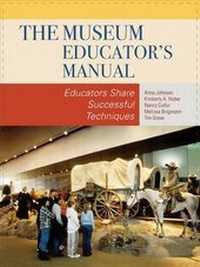
The Museum Educator's Manual
Educators Share Successful Techniques
Published on 16. February 2009
Book
Paperback/Softback
264 pages
978-0-7591-1167-7 (ISBN)
Description
The role of education in museums has increasingly become a major professional concern. Engaging, informative, and even entertaining programs can make an enormous difference in a museum's popularity, bringing in visitors of all ages, from the local community and beyond. The proliferation of recent publications on museum education and the promotion of workshops and training seminars for museum staff have reinforced the need for creativity, excellence, and accountability in museum educational programs. The Museum Educator's Manual addresses the role museum educators play in today's museums from an experience-based perspective. Seasoned museum educators author each chapter, emphasizing key programs along with case studies that provide successful examples, and demonstrate a practical foundation for the daily operations of a museum education department_no matter how small. The book covers volunteer management and training; exhibit design; program and event design and implementation; working with families, seniors, and teens; collaborating with schools and other institutions; and funding. With invaluable checklists, schedules, organizational charts, program examples, and other how-to documents included throughout, The Museum Educator's Manual is a 'must have' book for any museum educator.
Reviews / Votes
Finally, there is a comprehensive text for museum educators, filled with practical suggestions and solutions as opposed to theoretical discourses. The Museum Educator's Manual should serve educators well and move the practice of museum education forward. -- Alan Gartenhaus, author Minds in Motion: Using Museums to Enhance Creative Thinking This is a good basic manual that educators can turn to over and over when they are faced with a new challenge or an unfamiliar task. Five senior educators are generous with their collective experience and insights, drawn from a range of museums and interactions with many different audiences. It is written in an accessible style, free of jargon, with tested and appropriate sample documents and short first-hand accounts of programming successes and lessons. -- Laura Roberts, Bank Street College of Education The Museum Educator's Manual demystifies many of the types of activities all cultural institutions share. This easy-to-follow guide includes case studies and practical advice. Step by step, the authors provide information that will lead staff of all levels to a higher competence and a greater comfort level with their work. -- GladysAnn Wells, Arizona State Library, Archives and Public Records A 360-degree view of what museum educators do day to day, as described by professionals with deep and broad experience. Whether you're a novice or veteran in the field, this book will enrich your practice. -- Stephanie Norby, Smithsonian Center for Education and Museum Studies This practical book's strength lies in its diversity and pragmatic tone. Coming from a wide range of backgrounds?history museums, botanical societies, and art institutions?the many professionals who contributed to it have the singular focus of assisting practitioners to educate their visitors, while acknowledging the vast range of different audiences. Scattered throughout the text are sidebar accounts from practitioners that offer context and a point of view, providing breadth and sharing experiences. Most significantly, it contains a treasure trove of sample forms to use: surveys, volunteer logs, planning charts, and more. For those offerings alone, this manual is crucial for museum educators. Highly recommended... * CHOICE, August 2009 * The Museum Educator's Manual offers museum practitioners and museum studies students a handy volume for guidance in current museum education practices. You can read it from cover to cover to gain an understanding of museum education or you can dip into it for practical instructions to address particular problems. This volume is a valuable addition to any museum professional's office bookshelf. -- Mary Alexander, Maryland Historical Society, co-author<I>Museums in Motion<I> second edition This practical book's strength lies in its diversity and pragmatic tone. Coming from a wide range of backgrounds-history museums, botanical societies, and art institutions-the many professionals who contributed to it have the singular focus of assisting practitioners to educate their visitors, while acknowledging the vast range of different audiences. Scattered throughout the text are sidebar accounts from practitioners that offer context and a point of view, providing breadth and sharing experiences. Most significantly, it contains a treasure trove of sample forms to use: surveys, volunteer logs, planning charts, and more. For those offerings alone, this manual is crucial for museum educators.Highly recommended. * CHOICE, August 2009 * This volume...is an excellent tool for both beginners and mid-level professionals. The authors have set out to create a manual for practical use and have clearly succeeded....Overall, this is an excellent addition to a professional library....The authors have succeeded in meeting their goal of compiling a comprehensive resource focusing on museum educators. It can serve as a resource for practitioners and for training museum educators. * Visitor Studies *
More details
Series
Language
English
Place of publication
California
United States
Dimensions
Height: 280 mm
Width: 217 mm
Thickness: 18 mm
Weight
726 gr
ISBN-13
978-0-7591-1167-7 (9780759111677)
Copyright in bibliographic data and cover images is held by Nielsen Book Services Limited or by the publishers or by their respective licensors: all rights reserved.
Schweitzer Classification
Persons
Anna Johnson presents workshops on museum education and serves as a content expert for the Arizona Humanities Council in the Smithsonian's Museums on Main Street project. Kimberly A. Huber has been a volunteer, intern, educator, curator, consultant, administrator, and board member at a number of museums in Arizona, including Mesa Southwest Museum, the Heard Museum, and Deer Valley Rock Art Center. Nancy Cutler is a consultant in the field of museum education and interpretation and has worked on projects with the Gilbert Historical Museum, the Desert Botanical Garden, and the City of Phoenix.Melissa Bingmann is assistant professor of history at Indiana University-Purdue University at Indianapolis.Tim Groveis an education specialist and exhibition developer at the Smithsonian's National Air and Space Museum.
Content
Introduction
Part I. Training and Management
Chapter 1. Museum Education and Museum Educators
Chapter 2. Working with Volunteers
Chapter 3. Docent Training Guidelines
Chapter 4. Building Effective Tours: Taming Wild Docents
Chapter 5. Professional Development for Teachers
Part II. Programs and Outreach
Chapter 6. Families and More: Intergenerational Learning
Chapter 7. Reaching Out into the Community
Chapter 8. Planning and Managing Museum Programs and Special Events
Chapter 9. Education Online
Chapter 10. Evaluation
Part III. Working with Others
Chapter 11. Financing Museum Education Programs
Chapter 12. Educators on Exhibition Teams
Chapter 13. Collaboration
Part I. Training and Management
Chapter 1. Museum Education and Museum Educators
Chapter 2. Working with Volunteers
Chapter 3. Docent Training Guidelines
Chapter 4. Building Effective Tours: Taming Wild Docents
Chapter 5. Professional Development for Teachers
Part II. Programs and Outreach
Chapter 6. Families and More: Intergenerational Learning
Chapter 7. Reaching Out into the Community
Chapter 8. Planning and Managing Museum Programs and Special Events
Chapter 9. Education Online
Chapter 10. Evaluation
Part III. Working with Others
Chapter 11. Financing Museum Education Programs
Chapter 12. Educators on Exhibition Teams
Chapter 13. Collaboration