

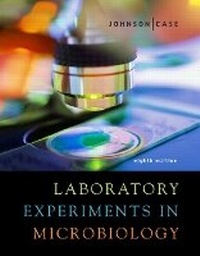
Laboratory Experiments in Microbiology
United States Edition
8th Edition
Published on 16. March 2006
Book
Spiral bound
448 pages
978-0-8053-8292-1 (ISBN)
Description
This thoroughly-revised lab manual is designed to supplement any nonmajors micorbiology textbook, and provides 57 experiments that demonstrate the broad spectrum of microbiology. Co-authored by Christine L. Case, this manual is an ideal companion to Microbiology: An Introduction, Ninth Edition textbook by Tortora, Funke, and Case.
Intended as a manual of basic microbiological techniques, this popular guide includes applications for undergraduate students in diverse areas, including the biological sciences, the allied health sciences, agriculture, environmental science, nutrition, pharmacy, and various pre-professional programs. Experiments have been refined in this new edition to encourage students to develop critical-thinking skills as well as learn basic facts and technical skills. Material with direct application to clinical and commercial labs is included wherever possible, and increased emphasis is placed on lab safety, including a safety contract students can hand in to their instructor.
Intended as a manual of basic microbiological techniques, this popular guide includes applications for undergraduate students in diverse areas, including the biological sciences, the allied health sciences, agriculture, environmental science, nutrition, pharmacy, and various pre-professional programs. Experiments have been refined in this new edition to encourage students to develop critical-thinking skills as well as learn basic facts and technical skills. Material with direct application to clinical and commercial labs is included wherever possible, and increased emphasis is placed on lab safety, including a safety contract students can hand in to their instructor.
More details
Edition
8th edition
Language
English
Place of publication
Upper Saddle River
United States
Target group
Professional and scholarly
Dimensions
Height: 274 mm
Width: 222 mm
Thickness: 24 mm
Weight
1072 gr
ISBN-13
978-0-8053-8292-1 (9780805382921)
Copyright in bibliographic data and cover images is held by Nielsen Book Services Limited or by the publishers or by their respective licensors: all rights reserved.
Schweitzer Classification
Other editions
New editions
Book
04/2009
9th Edition
Pearson
€68.08
Article exhausted; check for reprint
Previous edition
Book
05/2003
7th Edition
Pearson Education (US)
€86.84
Article exhausted; check for reprint
Content
Introduction.
I. MICROSCOPY.
1. Use and Care of the Microscope.
2. Examination of Living Microorganisms.
II. STAINING METHODS.
3. Preparation of Smears and Simple Staining.
4. Negative Staining.
5. Gram Staining.
6. Acid-fast Staining.
7. Structural Stains (Endospore, Capsule, Flagella).
8. Morphologic Unknown.
III. CULTIVATION OF BACTERIA.
9. Microbes in the Environment.
10. Transfer of Bacteria: Aseptic Techniques.
11. Isolation of Bacteria by Dilution Technique.
12. Special Media for Isolating Bacteria.
IV. MICROBIAL METABOLISM.
13. Carbohydrate Catabolism.
14. Fermentation.
15. Protein Catabolism, Part 1.
16. Protein Catabolism, Part 2.
17. Respiration.
18. Rapid Identification Methods.
V. MICROBIAL GROWTH.
19. Oxygen and the Growth of Bacteria.
20. Determination of a Bacterial Growth Curve: The Role of Temperature.
21. Biofilms.
VI. CONTROL OF MICROBIAL GROWTH.
22. Physical Methods of Control: Heat.
23. Physical Methods of Control: Ultraviolet Radiation.
24. Chemical Methods of Control: Disinfectants and Antiseptics.
25. Chemical Methods of Control: Antimicrobial Drugs.
26. Effectiveness of Hand Scrubbing.
VII. MICROBIAL GENETICS.
27. Regulation of Gene Expression.
28. Isolation of Bacterial Mutants.
29. Transformation of Bacteria.
30. DNA Fingerprinting.
31. Genetic Engineering.
32. Ames Test for Detecting Possible Chemical Carcinogens.
VIII. THE MICROBIAL WORLD.
33. Unknown Identification and Bergey's Manual.
34. Fungi: Yeasts.
35. Fungi: Molds.
36. Phototrophs: Algae and Cyanobacteria.
37. Protozoa.
IX. VIRUSES.
38. Isolation and Titration of Bacteriophages.
39. Plant Viruses.
X. INTERACTION OF MICROBE AND HOST.
40. Epidemiology.
41. Koch's Postulate.
XI. IMMUNOLOGY.
42. Nonspecific Resistance.
43. Blood Group Determination: Slide Agglutination.
44. Agglutination Reactions: Microtiter Agglutination.
45. ELISA Technique.
XII. MICROORGANISMS AND DISEASE.
46. Bacteria of the Skin.
47. Bacteria of the Respiratory Tract.
48. Bacteria of the Mouth.
49. Bacteria of the Gastrointestinal Tract.
50. Bacteria of the Urogenital Tract.
51. Identification of an Unknown from a Clinical Sample.
XIII. MICROBIOLOGY AND THE ENVIRONMENT.
52. Microbes in Water: Multiple-Tube Technique.
53. Microbes in Water: Membrane Filter Technique.
54. Microbes in Food: Contamination.
55. Microbes Used in the Production of Foods.
56. Microbes in Soil: The Nitrogen and Sulfur Cycles.
57. Microbes in Soil: Bioremediaton.
APPENDICES.
A. Pipetting.
B. Dilution Techniques and Calculations.
C. Use of the Spectrophotometer.
D. Graphing.
E. Use of the Dissecting Membrane.
F. Use of the Membrane Filter.
G. Electrophoresis.
H. Keys to Bacteria.
Index.
I. MICROSCOPY.
1. Use and Care of the Microscope.
2. Examination of Living Microorganisms.
II. STAINING METHODS.
3. Preparation of Smears and Simple Staining.
4. Negative Staining.
5. Gram Staining.
6. Acid-fast Staining.
7. Structural Stains (Endospore, Capsule, Flagella).
8. Morphologic Unknown.
III. CULTIVATION OF BACTERIA.
9. Microbes in the Environment.
10. Transfer of Bacteria: Aseptic Techniques.
11. Isolation of Bacteria by Dilution Technique.
12. Special Media for Isolating Bacteria.
IV. MICROBIAL METABOLISM.
13. Carbohydrate Catabolism.
14. Fermentation.
15. Protein Catabolism, Part 1.
16. Protein Catabolism, Part 2.
17. Respiration.
18. Rapid Identification Methods.
V. MICROBIAL GROWTH.
19. Oxygen and the Growth of Bacteria.
20. Determination of a Bacterial Growth Curve: The Role of Temperature.
21. Biofilms.
VI. CONTROL OF MICROBIAL GROWTH.
22. Physical Methods of Control: Heat.
23. Physical Methods of Control: Ultraviolet Radiation.
24. Chemical Methods of Control: Disinfectants and Antiseptics.
25. Chemical Methods of Control: Antimicrobial Drugs.
26. Effectiveness of Hand Scrubbing.
VII. MICROBIAL GENETICS.
27. Regulation of Gene Expression.
28. Isolation of Bacterial Mutants.
29. Transformation of Bacteria.
30. DNA Fingerprinting.
31. Genetic Engineering.
32. Ames Test for Detecting Possible Chemical Carcinogens.
VIII. THE MICROBIAL WORLD.
33. Unknown Identification and Bergey's Manual.
34. Fungi: Yeasts.
35. Fungi: Molds.
36. Phototrophs: Algae and Cyanobacteria.
37. Protozoa.
IX. VIRUSES.
38. Isolation and Titration of Bacteriophages.
39. Plant Viruses.
X. INTERACTION OF MICROBE AND HOST.
40. Epidemiology.
41. Koch's Postulate.
XI. IMMUNOLOGY.
42. Nonspecific Resistance.
43. Blood Group Determination: Slide Agglutination.
44. Agglutination Reactions: Microtiter Agglutination.
45. ELISA Technique.
XII. MICROORGANISMS AND DISEASE.
46. Bacteria of the Skin.
47. Bacteria of the Respiratory Tract.
48. Bacteria of the Mouth.
49. Bacteria of the Gastrointestinal Tract.
50. Bacteria of the Urogenital Tract.
51. Identification of an Unknown from a Clinical Sample.
XIII. MICROBIOLOGY AND THE ENVIRONMENT.
52. Microbes in Water: Multiple-Tube Technique.
53. Microbes in Water: Membrane Filter Technique.
54. Microbes in Food: Contamination.
55. Microbes Used in the Production of Foods.
56. Microbes in Soil: The Nitrogen and Sulfur Cycles.
57. Microbes in Soil: Bioremediaton.
APPENDICES.
A. Pipetting.
B. Dilution Techniques and Calculations.
C. Use of the Spectrophotometer.
D. Graphing.
E. Use of the Dissecting Membrane.
F. Use of the Membrane Filter.
G. Electrophoresis.
H. Keys to Bacteria.
Index.