

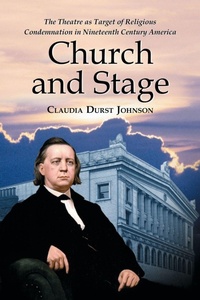
Church and Stage
The Theatre as Target of Religious Condemnation in Nineteenth Century America
Will be published approx. on 21. November 2007
Book
Paperback/Softback
221 pages
978-0-7864-3080-2 (ISBN)
Description
Throughout nineteenth century America, religious officials often condemned the theatre as an inversion of the house of God, similar to the church in architectural structure and organization but wholly different in purpose and values. This book explores the many ways in which religious institutions supported by capitalism profoundly affected the early development of American theatre. The author analyzes the church's critical view toward common theatre practices, including the use of female and child performers, and the lower class alliance with the stage. Three appendices provide period correspondence, including an excerpt from Mark Twain's February 1871 "Memoranda," in which Twain criticizes an Episcopalian reverend for denying church burial to a popular stage comedian.
Reviews / Votes
"first-rate research...a useful resource...highly recommended"-Choice.More details
Language
English
Place of publication
Jefferson, NC
United States
Target group
Interest Age: From 18 years
Product notice
Paperback (trade)
Illustrations
24 photos, appendices, notes, bibliography, index
Dimensions
Height: 229 mm
Width: 152 mm
Thickness: 13 mm
Weight
368 gr
ISBN-13
978-0-7864-3080-2 (9780786430802)
Copyright in bibliographic data and cover images is held by Nielsen Book Services Limited or by the publishers or by their respective licensors: all rights reserved.
Schweitzer Classification
Person
Claudia Durst Johnson lives in Berkeley, California. She was a professor of English and department head at the University of Alabama.
Content
Table of Contents
Introduction-Church and Stage: The Two Temples
1. The English and Early American Beginnings
2. The Power and Values of the Church
3. Plays, Playgoers, and Actors
4. The Impact of Clerical Attacks on Actors and the Profession
5. The Church and the Actress
6. Trading Religious Approval for Work
7. Wearing the Pants, Making the Choices, Writing the Plays
8. Children in Industry: Children on Stage
9. Prostitutes and the Bar
10. Violence in the Audience, Irreverence on the Stage
11. The Winding Down of an Old War
Appendix 1: Cornelius Logan's Defense of the Stage
Appendix 2: Cincinnati Daily Enquirer on the Third Tier
Appendix 3: Mark Twain on the Reverend Sabine
Chapter Notes
Bibliography
Index
Introduction-Church and Stage: The Two Temples
1. The English and Early American Beginnings
2. The Power and Values of the Church
3. Plays, Playgoers, and Actors
4. The Impact of Clerical Attacks on Actors and the Profession
5. The Church and the Actress
6. Trading Religious Approval for Work
7. Wearing the Pants, Making the Choices, Writing the Plays
8. Children in Industry: Children on Stage
9. Prostitutes and the Bar
10. Violence in the Audience, Irreverence on the Stage
11. The Winding Down of an Old War
Appendix 1: Cornelius Logan's Defense of the Stage
Appendix 2: Cincinnati Daily Enquirer on the Third Tier
Appendix 3: Mark Twain on the Reverend Sabine
Chapter Notes
Bibliography
Index