

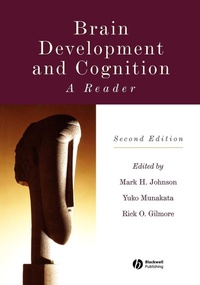
Brain Development and Cognition
A Reader
2nd Edition
Published on 16. May 2002
Book
Paperback/Softback
560 pages
978-0-631-21737-4 (ISBN)
Description
The first edition of this successful reader brought together key readings in the area of developmental cognitive neuroscience for students. Now updated in order to keep up with this fast moving field, the volume includes new readings illustrating recent developments along with updated versions of previous contributions.
Reviews / Votes
"For child language researchers who wish to gain some background knowledge in this field, we reccommend this volume highly. This text is suitable for academics and students alike. It is an excellent source, and the associated teaching resources available on-line are well constructed and highly useful... The clarity and coherence of the overall argumements contained in the volume make the book a worthwhile component of any developmentalist's library." Vincent Reid & Tricia Striano, Cultural Ontogeny Group, Max Planck Institute for Evolutionary AnthropologyMore details
Edition
2nd edition
Language
English
Place of publication
Hoboken
United Kingdom
Publishing group
John Wiley and Sons Ltd
Target group
Professional and scholarly
Product notice
Paperback (trade)
Dimensions
Height: 254 mm
Width: 178 mm
Thickness: 30 mm
Weight
1040 gr
ISBN-13
978-0-631-21737-4 (9780631217374)
Copyright in bibliographic data and cover images is held by Nielsen Book Services Limited or by the publishers or by their respective licensors: all rights reserved.
Schweitzer Classification
Other editions
Additional editions
E-Book
05/2008
2nd Edition
Wiley-Blackwell
€61.99
Available for download
Book
05/2002
2nd Edition
Wiley
€209.40
Shipment within 15-20 days
Previous edition

Book
01/1993
Blackwell Publishers
€44.75
Article exhausted; check for reprint
Persons
Mark H. Johnson is Director of the Centre for Brain and Cognitive Development at Birkbeck College, University of London, and an MRC Senior Research Scientist. He has published over one hundred scholarly articles and four books on brain and cognitive development, including Developmental Cognitive Neuroscience: An Introduction (1997). He is also on the editorial board of several developmental journals and book series.
Yuko Munakata is currently an Assistant Professor in Developmental Cognitive Neuroscience at the University of Denver. Her interests include memory development, dissociations in behavior during development and following brain damage, and neural network models of cognitive development.
Rick O. Gilmore is Assistant Professor of Psychology at Pennsylvania State University. His research focuses on the development of spatial perception and memory in infancy and their relationship to brain development.
Yuko Munakata is currently an Assistant Professor in Developmental Cognitive Neuroscience at the University of Denver. Her interests include memory development, dissociations in behavior during development and following brain damage, and neural network models of cognitive development.
Rick O. Gilmore is Assistant Professor of Psychology at Pennsylvania State University. His research focuses on the development of spatial perception and memory in infancy and their relationship to brain development.
Content
Contributors. Preface..
Part I: Perspectives on Development.
Introduction.
1. Critique of the Modern Ethologists Attitude (Konard Lorenz).
2. The Problem of Change (Susan Oyama).
3. The Epigenetic System and the Development of Cognitive Functions (Jean Piaget).
4. From Gene to Organism: The Developing Individual as an Emergent, Interactional, Hierachical System (G. Gottlieb).
Part II: Brain Maturation.
Introduction.
5. General Principles of CNS Development (R .S. Nowakowski and N.L. Hayes).
6. Intrinsic and Extrinsic Determinants of Neocortial Parcellation: A Radical Unit Model (P. Rakic).
7. Positron Emission Tomography Study of Human Brain Functional Development (Harry T. Chugani, Michael E. Phelps and John C. Mazziotta).
8. Morphometric Study of Human Cerebral Cortex Developemt (Peter R. Huttenlocher).
Part III: Brain Maturation and Cognition.
Introduction.
9. The Development of Visual Attention: A Cognitive Neuroscience Perspective (Mark H. Johnson).
10. The Ontogeny of Human Memory: A Cognitive Neuroscience Perspective (C.A. Nelson).
Part IV: Brain Plasticity.
Introduction.
11. Experience and Brain Development (William T. Greenough, James E. Black and Christopher S. Wallace).
12. Do Cortical Areas Emerge from a Protocortex? (Dennis D. M. O'Leary).
13. Emergence of Order in Visual System Development (C.J. Shatz).
Part V: Brain Plasticity and Cognition.
Introduction.
14. Specificity and plasticity in Neurocognitive Development in Humans (H. Neville and D. Bavelier).
15. Linguistic, Cognitive, and Affective Development in Children with Pre- and Perinatal Focal Brain Injury: A Ten-Year Overview from the San Diego Longitudinal Project (Joan Stiles, Elizabeth A. Bates, Donna Thal, Doris A. Trauner, and Judy Reilly).
16. Cortical Plasticity Underlying Perceptual, Motor, and Cognitive Skill Development: Implications for Neurorehabilitation (Michael M. Merzenich, Beverly A. Wright, William Jenkins, Christina Xerri, Nancy Byl, Steve. Miller and Paula. Tallal).
17. The Instinct to Learn (Peter Marler).
Part VI: Self Organization and Development.
Introduction.
18. Self-Organization in Developmental Processes: Can system Approaches Work? (Esther Thelen).
19. Development Itself is the Key to Understanding Developmental Disorders. Annette Karmiloff-Smith).
20. Object Recognition and Sensitive Periods: A Computational Analysis of Visual Imprinting (Randall C. O'Reilly and Mark H. Johnson).
Part VII: New Directions.
Introduction.
21. Connectionism and the Study of Change: Elizabeth Bates and Jeffrey L. Elman).
22. A Model System for Studying the Role of Dopamine in Prefrontal Cortex During Early Development in Humans (Adele Diamond).
23. Genes and Brain: Individual Differences and Human Universals: Bruce F. Pennington).
Name Index.
Subject Index.
Part I: Perspectives on Development.
Introduction.
1. Critique of the Modern Ethologists Attitude (Konard Lorenz).
2. The Problem of Change (Susan Oyama).
3. The Epigenetic System and the Development of Cognitive Functions (Jean Piaget).
4. From Gene to Organism: The Developing Individual as an Emergent, Interactional, Hierachical System (G. Gottlieb).
Part II: Brain Maturation.
Introduction.
5. General Principles of CNS Development (R .S. Nowakowski and N.L. Hayes).
6. Intrinsic and Extrinsic Determinants of Neocortial Parcellation: A Radical Unit Model (P. Rakic).
7. Positron Emission Tomography Study of Human Brain Functional Development (Harry T. Chugani, Michael E. Phelps and John C. Mazziotta).
8. Morphometric Study of Human Cerebral Cortex Developemt (Peter R. Huttenlocher).
Part III: Brain Maturation and Cognition.
Introduction.
9. The Development of Visual Attention: A Cognitive Neuroscience Perspective (Mark H. Johnson).
10. The Ontogeny of Human Memory: A Cognitive Neuroscience Perspective (C.A. Nelson).
Part IV: Brain Plasticity.
Introduction.
11. Experience and Brain Development (William T. Greenough, James E. Black and Christopher S. Wallace).
12. Do Cortical Areas Emerge from a Protocortex? (Dennis D. M. O'Leary).
13. Emergence of Order in Visual System Development (C.J. Shatz).
Part V: Brain Plasticity and Cognition.
Introduction.
14. Specificity and plasticity in Neurocognitive Development in Humans (H. Neville and D. Bavelier).
15. Linguistic, Cognitive, and Affective Development in Children with Pre- and Perinatal Focal Brain Injury: A Ten-Year Overview from the San Diego Longitudinal Project (Joan Stiles, Elizabeth A. Bates, Donna Thal, Doris A. Trauner, and Judy Reilly).
16. Cortical Plasticity Underlying Perceptual, Motor, and Cognitive Skill Development: Implications for Neurorehabilitation (Michael M. Merzenich, Beverly A. Wright, William Jenkins, Christina Xerri, Nancy Byl, Steve. Miller and Paula. Tallal).
17. The Instinct to Learn (Peter Marler).
Part VI: Self Organization and Development.
Introduction.
18. Self-Organization in Developmental Processes: Can system Approaches Work? (Esther Thelen).
19. Development Itself is the Key to Understanding Developmental Disorders. Annette Karmiloff-Smith).
20. Object Recognition and Sensitive Periods: A Computational Analysis of Visual Imprinting (Randall C. O'Reilly and Mark H. Johnson).
Part VII: New Directions.
Introduction.
21. Connectionism and the Study of Change: Elizabeth Bates and Jeffrey L. Elman).
22. A Model System for Studying the Role of Dopamine in Prefrontal Cortex During Early Development in Humans (Adele Diamond).
23. Genes and Brain: Individual Differences and Human Universals: Bruce F. Pennington).
Name Index.
Subject Index.