

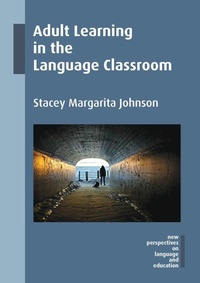
Adult Learning in the Language Classroom
Published on 17. September 2015
Book
Paperback/Softback
160 pages
978-1-78309-415-8 (ISBN)
Description
This book explores connections between the fields of foreign/second language teaching and adult learning. This interdisciplinary approach serves as a framework in order to: (a) understand the teaching methods that promote the deeper, more critical sort of language learning advocated by scholars and professional organizations, (b) understand how adult students learn and transform through language study, and (c) reinforce the immense value of beginning language courses. Johnson studies a classroom of adult language learners for one semester, exploring issues of motivation and perceived value for these short-term learners as well as touching on issues around intercultural communication teaching and learning. The book will be of interest to adult language teachers as well as researchers studying adult education and second language learning.
Reviews / Votes
Stacey Margarita Johnson has written a highly accessible analysis of adult beginners in a Spanish class, revealing how their learning is much more than acquiring competences. It transforms their lives and understanding of the world, and thus provides a much needed counter-balance to impoverished instrumental justifications for language teaching. Language learning enriches. -- Michael Byram, Professor Emeritus, University of Durham, UK This is an important piece of scholarship that challenges traditional assumptions and expectations on the goals of adult language learning. This book will certainly be an invaluable resource and guide for any college professor who wishes to incorporate transformative learning experiences into the novice or intermediate language class. -- Linwood J. Randolph Jr., University of North Carolina, Wilmington, USA Johnson presents a carefully constructed case for focusing language classes on helping students to achieve transformative learning in addition to improving language skills. While the book combines arguments about college and adult settings, it provides clear, relatable information that could help language instructors at all levels to modify their practices. -- Mariya Gyendina, University of Minnesota Twin Cities, USA * Language and Education, 30:6 * This book reports a very interesting study in an adult foreign language class from a new perspective. The findings are exciting and encouraging to language educators, language learners, and program developers. They help us look at lower-level foreign language classes from a new interdisciplinary perspective and help us see the value of these classes in promoting deeper and more reflective kind of learning among the students. These kinds of learning are not only the goals of language education but also of the undergraduate education in general. This book is, in some sense, an eye opener for practitioners in the area of foreign language education. -- Hongying Xu, University of Wisconsin-La Crosse, USA * LINGUIST List 27.3096 * Johnson's book presents a refreshing and positive view of the effects that FL teaching and learning can have on college students. Her work is an invitation for teachers of adult FL to reflect on ways they can make their courses more relevant to the lives of adult learners. It is also an invitation for practitioners and researchers to establish connections between the fields of adult learning and adult FL teaching. In addition, the book reports on best practices while teaching FL to college students that are applicable to other settings teaching adult learners (...) For all of these reasons, I believe this book to be interesting, relevant, and useful, and I recommend it to everyone interested in adult learning and research. -- Clarena Larrotta, Texas State University, USA * Adult Education Quarterly 2016, Vol. 66(2) 188- 193 * Postsecondary educators interested in the application of adult learning theory inthe L2 classroom will find an honest and informative case study of an elementary level
Spanish class in Johnson's latest work. Reflecting on the practical benefits of language learning, this book showcases the "transformative potential" of studying a foreign language and emphasizes the applied skills that can be acquired in just a single semester's worth of study. -- Alexis McBride, Vanderbilt University, USA * The Teaching and Learning of Cultures SIG Newsletter, 3:1, January 2016 *
More details
Series
Language
English
Place of publication
Bristol
United Kingdom
Publishing group
Channel View Publications Ltd
Target group
Professional and scholarly
Dimensions
Height: 210 mm
Width: 148 mm
Thickness: 9 mm
Weight
214 gr
ISBN-13
978-1-78309-415-8 (9781783094158)
Copyright in bibliographic data and cover images is held by Nielsen Book Services Limited or by the publishers or by their respective licensors: all rights reserved.
Schweitzer Classification
Other editions
Additional editions
Stacey Margarita Johnson
Adult Learning in the Language Classroom
Book
09/2015
Multilingual Matters
€127.50
Article not available at the moment
Stacey Margarita Johnson
Adult Learning in the Language Classroom
E-Book
09/2015
Multilingual Matters
€14.49
Available for download
Person
Stacey Margarita Johnson is currently at Vanderbilt University as the Assistant Director for Educational Technology in the Center for Teaching and Senior Lecturer in Spanish. Previously, she was an Assistant Professor of Spanish at Hope College. She also serves as the Vice Chair of the Culture SIG for ACTFL (American Council for the Teaching of Foreign Languages). Her research includes L2 teaching methodology, adult learning, and technology in language education.
Content
Chapter 1: Introduction
Chapter 2: Adult Learning Theory
Chapter 3: Adult Language Education
Chapter 4: This Class
Chapter 5: How the Class was Taught
Chapter 6: What Students Learned
Chapter 7: Transformation and Development
Chapter 8: Applications
References
Appendix
Chapter 2: Adult Learning Theory
Chapter 3: Adult Language Education
Chapter 4: This Class
Chapter 5: How the Class was Taught
Chapter 6: What Students Learned
Chapter 7: Transformation and Development
Chapter 8: Applications
References
Appendix