

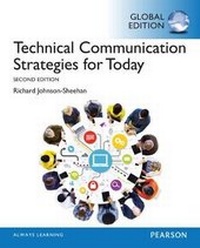
Technical Communication Strategies for Today with MyTechCommLab, Global Edition
2nd Edition
Published on 29. December 2014
Book
Mixed media product
978-1-292-08048-2 (ISBN)
Description
For introductory courses in Technical Communication. This package includes MyTechCommLab(TM). All of the topics and genres students need-in fewer pages and at a significantly lower price Students want their textbooks to cost less, and they want comprehensive topical coverage presented in a succinct and clear writing style. Technical Communication Strategies for Today offers both and speaks to today's students. Instructional narrative is "chunked," so that portions of text are combined with graphics. The chunked presentation also integrates an awareness of how documents are read-often skimmed by readers seeking the information they need, and it models the way today's technical documents should be designed. The contemporary writing style is matched by an approach that accurately reflects the modern day computer-centered technical workplace:Technical Communication Strategies for Today presents computers as thinking tools that powerfully influence how we develop, produce, design, and deliver technical documents and presentations.
This package includes MyTechCommLab , an online homework, tutorial, and assessment program designed to work with this text to personalize learning and improve results. With a wide range of interactive, engaging, and assignable activities, students are encouraged to actively learn and retain tough course concepts. MyTechCommLab should only be purchased when required by an instructor. Please be sure you have the correct ISBN and Course ID. Instructors, contact your Pearson representative for more information.
This package includes MyTechCommLab , an online homework, tutorial, and assessment program designed to work with this text to personalize learning and improve results. With a wide range of interactive, engaging, and assignable activities, students are encouraged to actively learn and retain tough course concepts. MyTechCommLab should only be purchased when required by an instructor. Please be sure you have the correct ISBN and Course ID. Instructors, contact your Pearson representative for more information.
More details
Edition
2nd edition
Language
English
Place of publication
Harlow
United Kingdom
Target group
College/higher education
Dimensions
Height: 230 mm
Width: 190 mm
Thickness: 10 mm
Weight
833 gr
ISBN-13
978-1-292-08048-2 (9781292080482)
Copyright in bibliographic data and cover images is held by Nielsen Book Services Limited or by the publishers or by their respective licensors: all rights reserved.
Schweitzer Classification
Other editions
Previous edition
Richard Johnson-Sheehan
Technical Communication Strategies for Today, Global Edition -- MyLab Tech Comm with Pearson eText
Software
11/2014
2nd Edition
Pearson Education Limited
€54.40
Only available as a set (single article not available)
Content
Part 1: Elements of Technical Communication
Chapter 1 Communicating in the Technical Workplace
Developing a Workplace Writing Process
Genres and the Technical Writing Process
Stage 1: Planning and Researching
Stage 2: Organizing and Drafting
Stage 3: Improving the Style
Stage 4: Designing
Stage 5: Revising and Editing
What Is Technical Communication?
Technical Communication Is Interactive and Adaptable
Technical Communication Is Reader Centered
Technical Communication Relies on Teamwork
Technical Communication Is Visual
Technical Communication Has Ethical, Legal, and Political
Dimensions
Technical Communication Is International and Cross-Cultural
How Important Is Technical Communication?
Chapter Review
Exercises and Projects
Chapter 2 Readers and Contexts of Use
Profiling Your Readers
Identifying Your Readers
Profiling Your Readers' Needs, Values, and Attitudes
Profiling Contexts of Use
Identifying the Context of Use
Using Profiles to Your Own Advantage
International and Cross-Cultural Communication
Differences in Content
Differences in Organization
Differences in Style
Differences in Design
Listen and Learn: The Key to International and Cross-Cultural Communication
At Work: What Are Some Strategies for Communicating with People from Another Culture?
Chapter Review
Exercises and Projects
Case Study: Installing a Medical Waste Incinerator
Chapter 3 Working in Teams
The Stages of Teaming
Forming: Strategic Planning
Step 1: Define the Project Mission and Objectives
Step 2: Identify Project Outcomes
Step 3: Define Team Member Responsibilities
Step 4: Create a Project Calendar
Step 5: Write Out a Work Plan
Step 6: Agree on How Conflicts Will Be Resolved
Storming: Managing Conflict
Running Effective Meetings
Mediating Conflicts
Firing a Team Member
Norming: Determining Team Roles
Revising Objectives and Outcomes
Help: Virtual Teaming
Identifying Team Roles
Using Groupware to Facilitate Work
Performing: Improving Quality
The Keys to Teaming
Chapter Review
Exercises and Projects
Case Study: Not a Sunny Day
Chapter 4 Letters, Memos, and E-Mails
Features of Letters, Memos, and E-Mails
Planning and Researching
Determining the Rhetorical Situation
Ethics in the Technical Workplace
What Are Ethics?
Where Do Ethics Come From?
Personal Ethics
Social Ethics
Conservation Ethics
Resolving Ethical Dilemmas
Help: Stopping Cyberbullying and Computer Harassment
Confronting an Ethical Dilemma
Resolving an Ethical Dilemma
When You Disagree with the Company
Ethics in the Technical Workplace
Copyright Law
Trademarks
At Work: Why Should Technical Professionals Learn About Ethics?
Patents
Privacy
Information Sharing
Proprietary Information
Libel and Slander
Fraud
Chapter Review
Exercises and Projects
Case Study: This Company Is Bugging Me
Part 2: Genres of Technical Communication
Chapter 5 Organizing and Drafting
Introduction with a Purpose and a Main Point
Body That Provides Need-to-Know Information
Conclusion That Restates the Main Point
Types of Letters, Memos, and E-Mails
Inquiries
Responses
Claims or Complaints
Adjustments
Refusals
Using Style and
Chapter 1 Communicating in the Technical Workplace
Developing a Workplace Writing Process
Genres and the Technical Writing Process
Stage 1: Planning and Researching
Stage 2: Organizing and Drafting
Stage 3: Improving the Style
Stage 4: Designing
Stage 5: Revising and Editing
What Is Technical Communication?
Technical Communication Is Interactive and Adaptable
Technical Communication Is Reader Centered
Technical Communication Relies on Teamwork
Technical Communication Is Visual
Technical Communication Has Ethical, Legal, and Political
Dimensions
Technical Communication Is International and Cross-Cultural
How Important Is Technical Communication?
Chapter Review
Exercises and Projects
Chapter 2 Readers and Contexts of Use
Profiling Your Readers
Identifying Your Readers
Profiling Your Readers' Needs, Values, and Attitudes
Profiling Contexts of Use
Identifying the Context of Use
Using Profiles to Your Own Advantage
International and Cross-Cultural Communication
Differences in Content
Differences in Organization
Differences in Style
Differences in Design
Listen and Learn: The Key to International and Cross-Cultural Communication
At Work: What Are Some Strategies for Communicating with People from Another Culture?
Chapter Review
Exercises and Projects
Case Study: Installing a Medical Waste Incinerator
Chapter 3 Working in Teams
The Stages of Teaming
Forming: Strategic Planning
Step 1: Define the Project Mission and Objectives
Step 2: Identify Project Outcomes
Step 3: Define Team Member Responsibilities
Step 4: Create a Project Calendar
Step 5: Write Out a Work Plan
Step 6: Agree on How Conflicts Will Be Resolved
Storming: Managing Conflict
Running Effective Meetings
Mediating Conflicts
Firing a Team Member
Norming: Determining Team Roles
Revising Objectives and Outcomes
Help: Virtual Teaming
Identifying Team Roles
Using Groupware to Facilitate Work
Performing: Improving Quality
The Keys to Teaming
Chapter Review
Exercises and Projects
Case Study: Not a Sunny Day
Chapter 4 Letters, Memos, and E-Mails
Features of Letters, Memos, and E-Mails
Planning and Researching
Determining the Rhetorical Situation
Ethics in the Technical Workplace
What Are Ethics?
Where Do Ethics Come From?
Personal Ethics
Social Ethics
Conservation Ethics
Resolving Ethical Dilemmas
Help: Stopping Cyberbullying and Computer Harassment
Confronting an Ethical Dilemma
Resolving an Ethical Dilemma
When You Disagree with the Company
Ethics in the Technical Workplace
Copyright Law
Trademarks
At Work: Why Should Technical Professionals Learn About Ethics?
Patents
Privacy
Information Sharing
Proprietary Information
Libel and Slander
Fraud
Chapter Review
Exercises and Projects
Case Study: This Company Is Bugging Me
Part 2: Genres of Technical Communication
Chapter 5 Organizing and Drafting
Introduction with a Purpose and a Main Point
Body That Provides Need-to-Know Information
Conclusion That Restates the Main Point
Types of Letters, Memos, and E-Mails
Inquiries
Responses
Claims or Complaints
Adjustments
Refusals
Using Style and