

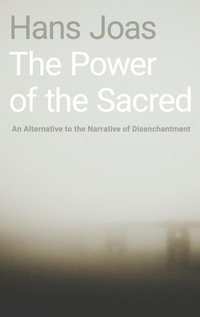
The Power of the Sacred
An Alternative to the Narrative of Disenchantment
Published on 21. April 2021
Book
Hardback
402 pages
978-0-19-093327-2 (ISBN)
Description
Disenchantment is a key term in the self-understanding of modernity. But what exactly does this concept mean? What was its original meaning when Max Weber introduced it? And can the conventional meaning or Max Weber's view really be defended, given the present state of knowledge about the history of religion?
In The Power of the Sacred, Hans Joas develops the fundamentals of a new sociological theory of religion by first reconstructing existing theories, from the eighteenth century to the present. Through a critical reading and reassessment of key texts in the three empirical disciplines of history, psychology, and sociology of religion, including the works of David Hume, J.G. Herder, Friedrich Schleiermacher, William James, Emile Durkheim, and Ernst Troeltsch, Joas presents an understanding of religion that lays the groundwork for a thorough study of Max Weber's views on disenchantment. After deconstructing Weber's highly ambiguous use of the concept, Joas proposes an alternative to the narratives of disenchantment and secularization which have dominated debates on the topic. He constructs a novel interpretation that takes into account the dynamics of ever new sacralizations, their normative evaluation in the light of a universalist morality as it first emerged in the "Axial Age," and the dangers of the misuse of religion in connection with the formation of power.
Built upon the human experience of self-transcendence, rather than human cognition or cultural discourses, The Power of the Sacred challenges both believers and non-believers alike to rethink the defining characteristics of Western modernity.
In The Power of the Sacred, Hans Joas develops the fundamentals of a new sociological theory of religion by first reconstructing existing theories, from the eighteenth century to the present. Through a critical reading and reassessment of key texts in the three empirical disciplines of history, psychology, and sociology of religion, including the works of David Hume, J.G. Herder, Friedrich Schleiermacher, William James, Emile Durkheim, and Ernst Troeltsch, Joas presents an understanding of religion that lays the groundwork for a thorough study of Max Weber's views on disenchantment. After deconstructing Weber's highly ambiguous use of the concept, Joas proposes an alternative to the narratives of disenchantment and secularization which have dominated debates on the topic. He constructs a novel interpretation that takes into account the dynamics of ever new sacralizations, their normative evaluation in the light of a universalist morality as it first emerged in the "Axial Age," and the dangers of the misuse of religion in connection with the formation of power.
Built upon the human experience of self-transcendence, rather than human cognition or cultural discourses, The Power of the Sacred challenges both believers and non-believers alike to rethink the defining characteristics of Western modernity.
Reviews / Votes
a substantive analysis * Bernice Martin, Church Times * A thoroughly argued, intriguing book. * Michael McCallion, Catholic Books Review *More details
Language
English
Place of publication
New York
United States
Target group
Professional and scholarly
Dimensions
Height: 240 mm
Width: 161 mm
Thickness: 26 mm
Weight
766 gr
ISBN-13
978-0-19-093327-2 (9780190933272)
Copyright in bibliographic data and cover images is held by Nielsen Book Services Limited or by the publishers or by their respective licensors: all rights reserved.
Schweitzer Classification
Other editions
Additional editions
E-Book
02/2021
1st Edition
OUP eBook
€22.99
Available for download
E-Book
02/2021
1st Edition
OUP eBook
€22.99
Available for download
Persons
Hans Joas is Ernst Troeltsch Professor for the Sociology of Religion at the Humboldt University of Berlin and Visiting Professor of Sociology and Social Thought at the University of Chicago. Some of his other books in English include G.H. Mead, A Contemporary Re-examination of His Thought, Pragmatism and Social Theory, The Creativity of Action, The Genesis of Values, War and Modernity, The Sacredness of the Person: A New Genealogy of Human Rights, and Faith as an Option: Possible Futures for Christianity. He has also published two books with Wolfgang Knoebl: Social Theory: Twenty Introductory Lectures and War in Social Thought: Hobbes to the Present and has edited several volumes, including The Axial Age and Its Consequences (with Robert Bellah).
Content
Preface
Introduction
Chapter 1. History of Religion as Critique of Religion? David Hume and the Consequences
Chapter 2. Religious Experience and the Theory of Signs
Chapter 3. Ritual and the Sacred. On the Anthropology of Ideal Formation
Chapter 4. Multiple Forms of Ideal Formation or Process of Disenchantment? Attempts at Synthesis by Ernst Troeltsch and Max Weber
Chapter 5. Transcendence as Reflexive Sacredness. The 'Axial Age' as a Turning Point in Religious History
Chapter 6. Fields of Tension. A New Interpretation of Max Weber's 'Intermediate Reflection'
Chapter 7. The Sacred and Power. Collective Self-Sacralization and Ways of Overcoming it
Bibliography
Index
Introduction
Chapter 1. History of Religion as Critique of Religion? David Hume and the Consequences
Chapter 2. Religious Experience and the Theory of Signs
Chapter 3. Ritual and the Sacred. On the Anthropology of Ideal Formation
Chapter 4. Multiple Forms of Ideal Formation or Process of Disenchantment? Attempts at Synthesis by Ernst Troeltsch and Max Weber
Chapter 5. Transcendence as Reflexive Sacredness. The 'Axial Age' as a Turning Point in Religious History
Chapter 6. Fields of Tension. A New Interpretation of Max Weber's 'Intermediate Reflection'
Chapter 7. The Sacred and Power. Collective Self-Sacralization and Ways of Overcoming it
Bibliography
Index