

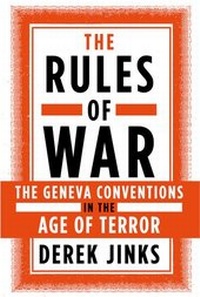
The Rules of War
The Geneva Conventions in the Age of Terror
1st Edition
Published in 2018
Book
Hardback
224 pages
978-0-19-518362-7 (ISBN)
Description
With the scandal over prison abuse at Abu Ghraib and the legal controversy over the enemy combatants at Guantanamo Bay, the proper treatment of prisoners of war has once again been thrust into the news. At the heart of this debate stands the Geneva Conventions, a famous set of rules about which most of us know nothing.
In The Rules of War, Derek Jinks - a leading authority on humanitarian law - provides an illuminating account of the Geneva Conventions, revealing when they apply, who they protect, what type of treatment they require, how they should be enforced, and much more. We learn that the Conventions - which were drafted in 1949 - apply to all armed conflict, from declared war, to civil war, to armed hostilities short of war. In fact, the Conventions are relevant to a remarkable range of
issues, from the trial of Slobodan Milosevic to the ongoing criminal proceedings regarding Rwanda and Sierra Leone. We discover that the Conventions protect a wide range of combatants, from "special ops" forces, to private military contractors, and even to terrorists. There are POW Conventions, but also Civilian
Conventions that protects all nationals who have fallen into the hands of the enemy, including "unlawful combatants" such as the Guantanamo detainees. And we see what the Conventions require, from humane treatment, to contact with agencies such as the Red Cross, to release and repatriation at the end of the conflict.
This is the only guide for general readers to the Geneva Conventions, rules which will play a key role in hot-button issues from the imminent trial of Saddam Hussein to the treatment of captured terrorists.
In The Rules of War, Derek Jinks - a leading authority on humanitarian law - provides an illuminating account of the Geneva Conventions, revealing when they apply, who they protect, what type of treatment they require, how they should be enforced, and much more. We learn that the Conventions - which were drafted in 1949 - apply to all armed conflict, from declared war, to civil war, to armed hostilities short of war. In fact, the Conventions are relevant to a remarkable range of
issues, from the trial of Slobodan Milosevic to the ongoing criminal proceedings regarding Rwanda and Sierra Leone. We discover that the Conventions protect a wide range of combatants, from "special ops" forces, to private military contractors, and even to terrorists. There are POW Conventions, but also Civilian
Conventions that protects all nationals who have fallen into the hands of the enemy, including "unlawful combatants" such as the Guantanamo detainees. And we see what the Conventions require, from humane treatment, to contact with agencies such as the Red Cross, to release and repatriation at the end of the conflict.
This is the only guide for general readers to the Geneva Conventions, rules which will play a key role in hot-button issues from the imminent trial of Saddam Hussein to the treatment of captured terrorists.
More details
Language
English
Place of publication
New York
United States
Target group
Professional and scholarly
Dimensions
Height: 210 mm
Width: 130 mm
ISBN-13
978-0-19-518362-7 (9780195183627)
Copyright in bibliographic data and cover images is held by Nielsen Book Services Limited or by the publishers or by their respective licensors: all rights reserved.
Schweitzer Classification
Person
Derek Jinks is Associate Professor of Law at Arizona State University College of Law. An authority on humanitarian law, he has served in the Prosecutor's Office of the International Criminal Tribunal that tried Slobodan Milosevic and was a United Nations Representative for the South Asia Human Rights Documentation Center in India, among other posts. He also serves as an international humanitarian law advisor to defense counsel in the criminal
proceedings before the U.S. Military Commissions on Guantanamo Bay, Cuba.
proceedings before the U.S. Military Commissions on Guantanamo Bay, Cuba.