

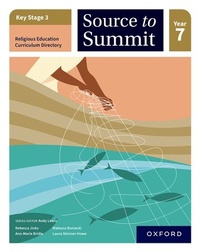
Key Stage 3 Religious Education Directory: Source to Summit Year 7 Student Book
Published on 8. June 2023
Book
Paperback/Softback
192 pages
978-1-382-03632-0 (ISBN)
Description
Source to Summit is a brand new KS3 course, comprising student books and digital Kerboodle resources, that have been cohesively planned to ensure full compliance with the new Religious Education Directory (RED).
Series editor, Andy Lewis, and a writing team of practicing teachers have drawn on their expertise and classroom experience to present the new curriculum in a way that students will be able to understand and remember. Mirroring the structure of the RED, there is a strong narrative telling the Christian story from Creation to the Church today, using:
- Carefully sequenced lessons
- Accessibly presented content
- Vividly designed spreads
There are opportunities for students to engage with scripture, and a wide range of case studies and examples help bring alive the Catholic faith.
Activities on each spread explicitly allow students to develop skills to understand, discern and personally respond to the material they encounter. Through a range of tasks with accompanying guidance, students will be able to demonstrate their progress over time in a structured way.
This course seeks to be authentic to the Catholic faith, rigorous and engaging, allowing students of all faiths and backgrounds to be fully immersed in the curriculum in an inclusive way.
TheSource to Summit Year 7 Student Book is endorsed by the Catholic Education Service for the new Religious Education Directory.
Series editor, Andy Lewis, and a writing team of practicing teachers have drawn on their expertise and classroom experience to present the new curriculum in a way that students will be able to understand and remember. Mirroring the structure of the RED, there is a strong narrative telling the Christian story from Creation to the Church today, using:
- Carefully sequenced lessons
- Accessibly presented content
- Vividly designed spreads
There are opportunities for students to engage with scripture, and a wide range of case studies and examples help bring alive the Catholic faith.
Activities on each spread explicitly allow students to develop skills to understand, discern and personally respond to the material they encounter. Through a range of tasks with accompanying guidance, students will be able to demonstrate their progress over time in a structured way.
This course seeks to be authentic to the Catholic faith, rigorous and engaging, allowing students of all faiths and backgrounds to be fully immersed in the curriculum in an inclusive way.
TheSource to Summit Year 7 Student Book is endorsed by the Catholic Education Service for the new Religious Education Directory.
Reviews / Votes
Source to Summit is well considered, well presented and the systematic way in which it presents in terms of its compliance with the RED is very reassuring for teachers. I feel a real confidence that this is a high quality resource; accessible in different ways for all students.I am very excited to be using the Kerboodle resources and for our students to access to them. Having access to the images and illustrations from the textbook is a fabulous way of ensuring that there is consistency across departments. The illustrations are beautiful and link the work and themes so well that being able to use them for posters/ PowerPoints/ booklets etc. will be of enormous benefit to teachers and students. The presentation of the 'engaging with text' questions and commentary sheets are clear, providing that window into our own explanations. This is something that I am particularly keen on seeing our students use. * Julia Smith, Assistant Headteacher & Teacher of RE, Holy Trinity Academy, Telford *
More details
Series
Edition
1
Language
English
Place of publication
Oxford
United Kingdom
Target group
Primary & secondary/elementary & high school
Dimensions
Height: 275 mm
Width: 220 mm
Thickness: 10 mm
Weight
518 gr
ISBN-13
978-1-382-03632-0 (9781382036320)
Copyright in bibliographic data and cover images is held by Nielsen Book Services Limited or by the publishers or by their respective licensors: all rights reserved.
Schweitzer Classification
Persons
Andy Lewis is an Assistant Headteacher and Director of Religious Education at St Bonaventure's School in the London Borough of Newham. He is co-author of GCSE Religious Studies for Edexcel A (9-1) Catholic Christianity with Islam and Judaism Student Book, and author of the accompanying Revision Guide.
Content
Chapter1: Creation and Covenant
Chapter1.1: How do we know about God?
Chapter1.2: How should we read the Bible?
Chapter1.3: What does Genesis 1 teach about creation?
Chapter1.4: What does Genesis 2 teach about creation?
Chapter1.5: What are the scientific theories about creation?
Chapter1.6: What do Catholics believe about scientific theories about creation?
Chapter1.7: What makes humans different to the rest of creation?
Chapter1.8: What is our responsibility to others?
Chapter1.9: What is our responsibility to the world?
Chapter1.10: What is the role of prayer?
Chapter1.11: Ethical Option: What can we do to protect creation?
Chapter1.12: Artistic Expression Option: Can art help Catholics understand creation?
Chapter1.13: Lived Religion Option: What can we learn from Sister Dorothy Stang
Assessment
Chapter2: Prophecy and Promise
Chapter2.1: How do you navigate the Bible?
Chapter2.2: How is the Bible read in translation?
Chapter2.3: How is the Bible a library of books?
Chapter2.4: What connects the Hebrew Bible and the Old Testament?
Chapter2.5: Why is the Old Testament important for Catholics?
Chapter2.6: What does it mean that scripture is inspired?
Chapter2.7: What is sacred scripture and sacred tradition?
Chapter2.8: How are scripture, tradition and the magisterium connected?
Chapter2.9: How do Catholics use scripture in the Mass?
Chapter2.10: How is scripture used in the Rosary?
Chapter2.11: Artistic Expression Option: How does the Book of Kells reflect the meaning of scripture?
Chapter2.12: Lived Religion Option: What are biblical idioms?
Assessment
Chapter3: Galilee to Jerusalem
Chapter3.1: What is the Incarnation?
Chapter3.2: Who is Jesus, the Son of God?
Chapter3.3: What did Arius teach about Jesus?
Chapter3.4: Who is Jesus, the Son of Man?
Chapter3.5: Who is Jesus, the Christ and Son of David?
Chapter3.6: Who is Jesus, the Lord?
Chapter3.7: What is the Trinity?
Chapter3.8: How does Catholic worship reflect belief in the Trinity?
Chapter3.9: How is Jesus the perfect human being?
Chapter3.10: Ethical Option: Can businesses act selflessly?
Chapter3.11: Artistic Option: What can Catholics learn from Rublev's Trinity?
Chapter3.12: Lived Religion Option: Who was Father Mychal Judge?
Assessment
Chapter1.1: How do we know about God?
Chapter1.2: How should we read the Bible?
Chapter1.3: What does Genesis 1 teach about creation?
Chapter1.4: What does Genesis 2 teach about creation?
Chapter1.5: What are the scientific theories about creation?
Chapter1.6: What do Catholics believe about scientific theories about creation?
Chapter1.7: What makes humans different to the rest of creation?
Chapter1.8: What is our responsibility to others?
Chapter1.9: What is our responsibility to the world?
Chapter1.10: What is the role of prayer?
Chapter1.11: Ethical Option: What can we do to protect creation?
Chapter1.12: Artistic Expression Option: Can art help Catholics understand creation?
Chapter1.13: Lived Religion Option: What can we learn from Sister Dorothy Stang
Assessment
Chapter2: Prophecy and Promise
Chapter2.1: How do you navigate the Bible?
Chapter2.2: How is the Bible read in translation?
Chapter2.3: How is the Bible a library of books?
Chapter2.4: What connects the Hebrew Bible and the Old Testament?
Chapter2.5: Why is the Old Testament important for Catholics?
Chapter2.6: What does it mean that scripture is inspired?
Chapter2.7: What is sacred scripture and sacred tradition?
Chapter2.8: How are scripture, tradition and the magisterium connected?
Chapter2.9: How do Catholics use scripture in the Mass?
Chapter2.10: How is scripture used in the Rosary?
Chapter2.11: Artistic Expression Option: How does the Book of Kells reflect the meaning of scripture?
Chapter2.12: Lived Religion Option: What are biblical idioms?
Assessment
Chapter3: Galilee to Jerusalem
Chapter3.1: What is the Incarnation?
Chapter3.2: Who is Jesus, the Son of God?
Chapter3.3: What did Arius teach about Jesus?
Chapter3.4: Who is Jesus, the Son of Man?
Chapter3.5: Who is Jesus, the Christ and Son of David?
Chapter3.6: Who is Jesus, the Lord?
Chapter3.7: What is the Trinity?
Chapter3.8: How does Catholic worship reflect belief in the Trinity?
Chapter3.9: How is Jesus the perfect human being?
Chapter3.10: Ethical Option: Can businesses act selflessly?
Chapter3.11: Artistic Option: What can Catholics learn from Rublev's Trinity?
Chapter3.12: Lived Religion Option: Who was Father Mychal Judge?
Assessment