


Introducing Multimodality
1st Edition
Published on 31. March 2016
Book
Paperback/Softback
232 pages
978-0-415-63926-2 (ISBN)
Description
This accessible introduction to multimodality illuminates the potential of multimodal research for understanding the ways in which people communicate. Readers will become familiar with the key concepts and methods in various domains while learning how to engage critically with the notion of multimodality. The book challenges widely held assumptions about language and presents the practical steps involved in setting up a multimodal study, including:
formulating research questions
collecting research materials
assessing and developing methods of transcription
considering the ethical dimensions of multimodal research.
A self-study guide is also included, designed as an optional stand-alone resource or as the basis for a short course. With a wide range of examples, clear practical support and a glossary of terms, Introducing Multimodality is an ideal reference for undergraduate and postgraduate students in multimodality, semiotics, applied linguistics and media and communication studies. Online materials, including colour images and more links to relevant resources, are available on the companion website at www.routledge.com/cw/jewitt and the Routledge Language and Communication Portal.
formulating research questions
collecting research materials
assessing and developing methods of transcription
considering the ethical dimensions of multimodal research.
A self-study guide is also included, designed as an optional stand-alone resource or as the basis for a short course. With a wide range of examples, clear practical support and a glossary of terms, Introducing Multimodality is an ideal reference for undergraduate and postgraduate students in multimodality, semiotics, applied linguistics and media and communication studies. Online materials, including colour images and more links to relevant resources, are available on the companion website at www.routledge.com/cw/jewitt and the Routledge Language and Communication Portal.
Reviews / Votes
"A comprehensive and insightful overview of up-to-date approaches to multimodality with detailed accounts of both their shared and distinctive theories of meaning and methods of analysis, using an array of representative study examples as illustrations. It is very comprehensible, requiring "no prior knowledge in linguistics or semiotics" on the part of readers and thus serves as a good starting point for novices in multimodality. It is also an excellent reference for established scholars who wish to deepen their insights into the complexities involved in various strands of multimodal research." Enhua Guo (2017): Introducing multimodality, Social Semiotics"An excellent guide to multimodality for learners who want to establish their research into multimodality, for this book presents eight approaches all together and sheds light on the distinctions, critiques and new directions of them ... the book offers a panoramic overview of fresh trends and developments in multimodality. Elaboration of those approaches is supported by the exemplification of recently published or still-in-press studies." Rurong Le, Multimodal Commun. 2016; 5(2): 143-144 'This exquisitely readable and user-friendly book introduces students to what is perhaps the most stimulating and exciting recent development in semiotic and discourse analysis. Written by some of the most dynamic and innovative scholars in the field of multimodality, this book promises to become a classic and remain an indispensable reference text for many years to come.' Jan Blommaert, Tilburg University, the Netherlands
'Finally a textbook which clearly and authoritatively brings together the different strands in multimodal theory and research and empowers students to explore multimodal communication through their own research.' Theo van Leeuwen, University of Technology Sydney, Australia
'A comprehensive and even handed review of a range of perspectives on multimodality, followed by wise advice on the design and conduct of research studies.' Frederick Erickson, University of California, USA
"A comprehensive and insightful overview of up-to-date approaches to multimodality with detailed accounts of both their shared and distinctive theories of meaning and methods of analysis, using an array of representative study examples as illustrations. It is very comprehensible, requiring "no prior knowledge in linguistics or semiotics" on the part of readers and thus serves as a good starting point for novices in multimodality. It is also an excellent reference for established scholars who wish to deepen their insights into the complexities involved in various strands of multimodal research." Enhua Guo (2017): Introducing multimodality, Social Semiotics
"An excellent guide to multimodality for learners who want to establish their research into multimodality, for this book presents eight approaches all together and sheds light on the distinctions, critiques and new directions of them ... the book offers a panoramic overview of fresh trends and developments in multimodality. Elaboration of those approaches is supported by the exemplification of recently published or still-in-press studies." Rurong Le, Multimodal Commun. 2016; 5(2): 143-144
More details
Language
English
Place of publication
London
United Kingdom
Publishing group
Taylor & Francis Ltd
Target group
College/higher education
Product notice
Paperback (trade)
Unsewn / adhesive bound
Illustrations
90 s/w Zeichnungen, 6 s/w Tabellen
6 Tables, black and white; 90 Line drawings, black and white
Dimensions
Height: 244 mm
Width: 170 mm
Thickness: 13 mm
Weight
409 gr
ISBN-13
978-0-415-63926-2 (9780415639262)
Copyright in bibliographic data and cover images is held by Nielsen Book Services Limited or by the publishers or by their respective licensors: all rights reserved.
Schweitzer Classification
Other editions
New editions
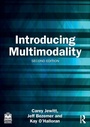
Carey Jewitt | Jeff Bezemer | Kay O'Halloran
Introducing Multimodality
Book
03/2025
2nd Edition
Routledge
€64.30
Shipment within 10-20 days
Additional editions
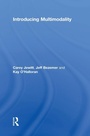
Carey Jewitt | Jeff Bezemer | Kay O'Halloran
Introducing Multimodality
Book
04/2016
1st Edition
Routledge
€183.50
Article exhausted; check for reprint
Persons
Carey Jewitt is Professor of Technology and Learning at University College London, Institute of Education. She has authored/edited a number of books on multimodality, including The Routledge Handbook of Multimodal Analysis (2009/2014), Technology, Literacy and Learning: A Multimodal Approach (2008), Urban English Classrooms: Multimodal Teaching and Learning (2005), with Gunther Kress and colleagues, and The Rhetorics of the Science Classroom: A Multimodal Approach (2001), with Gunther Kress and colleagues.
Jeff Bezemer is Reader in Learning and Communication and Co-Director of the Centre for Multimodal Research at University College London, Institute of Education. He is co-author of Multimodality, Learning and Communication (with Gunther Kress, 2015).
Kay O'Halloran is Associate Professor of Communication Studies at Curtin University, Western Australia. Her publications include Multimodal Analysis Image (2012), Multimodal Studies: Exploring Issues and Domains (2011), Mathematical Discourse: Language, Symbolism and Visual Images (2005) and Multimodal Discourse Analysis (2004).
Jeff Bezemer is Reader in Learning and Communication and Co-Director of the Centre for Multimodal Research at University College London, Institute of Education. He is co-author of Multimodality, Learning and Communication (with Gunther Kress, 2015).
Kay O'Halloran is Associate Professor of Communication Studies at Curtin University, Western Australia. Her publications include Multimodal Analysis Image (2012), Multimodal Studies: Exploring Issues and Domains (2011), Mathematical Discourse: Language, Symbolism and Visual Images (2005) and Multimodal Discourse Analysis (2004).
Content
List of illustrations
About this book
Acknowledgements
Chapter 1: Navigating a diverse field
Chapter 2: Why engage with multimodality?
Chapter 3: Systemic Functional Linguistics
Chapter 4: Social Semiotics
Chapter 5: Conversation Analysis
Chapter 6: Five more approaches to multimodality
Chapter 7: Designing a multimodal study
Glossary
Self-study guide
References
Index
About this book
Acknowledgements
Chapter 1: Navigating a diverse field
Chapter 2: Why engage with multimodality?
Chapter 3: Systemic Functional Linguistics
Chapter 4: Social Semiotics
Chapter 5: Conversation Analysis
Chapter 6: Five more approaches to multimodality
Chapter 7: Designing a multimodal study
Glossary
Self-study guide
References
Index