

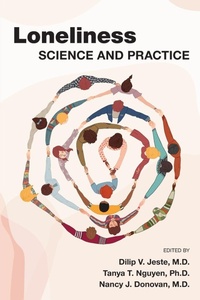
Loneliness
Science and Practice
Published on 31. December 2022
Book
Paperback/Softback
264 pages
978-1-61537-422-9 (ISBN)
Description
The internet, social media platforms, and digital
technology all seem to point to a world of greater interconnectivity and
social connection. Yet even against this background of global social
networks, loneliness remains a major issue for millions of individuals, and
one with tangible consequences: studies have demonstrated that loneliness
correlates with to an increased risk of mental illnesses, as well as a 45%
increased risk of death.
In Loneliness: Science and Practice,
experts from the United States and Europe seek to construct a translational
framework for recognizing and addressing loneliness in the clinical context.
Based on the latest literature on the topic, the book tackles
* The theoretical foundations of loneliness and other dimensions of
social connection. Readers will benefit from validated rating scales to
measure loneliness that account for the varied experiences of, and factors
that contribute to, loneliness.
* The incidence and presentation of
loneliness throughout the life cycle
* Loneliness among marginalized
communities, including racial and ethnic minorities, LGBTQ+ individuals,
immigrants, and individuals with mental illnesses
* The neurobiological
and systemic neuroendocrine and inflammatory mechanisms of loneliness
*
Interventions for loneliness, from research-based interventions for both
younger and older age groups to community-based interventions
Throughout this guide, clinical vignettes help ground the theoretical
information in real-world applicability. Key points help readers reference
each chapter's most salient points quickly, and lists of suggested readings
open the door to further exploration.
By examining the psychosocial
and biological mechanisms of loneliness, as well as the unique social and
cultural contexts in which it can occur, Loneliness: Science and
Practice offers readers a holistic understanding of loneliness and a
framework for addressing it in the distinct communities they serve.
technology all seem to point to a world of greater interconnectivity and
social connection. Yet even against this background of global social
networks, loneliness remains a major issue for millions of individuals, and
one with tangible consequences: studies have demonstrated that loneliness
correlates with to an increased risk of mental illnesses, as well as a 45%
increased risk of death.
In Loneliness: Science and Practice,
experts from the United States and Europe seek to construct a translational
framework for recognizing and addressing loneliness in the clinical context.
Based on the latest literature on the topic, the book tackles
* The theoretical foundations of loneliness and other dimensions of
social connection. Readers will benefit from validated rating scales to
measure loneliness that account for the varied experiences of, and factors
that contribute to, loneliness.
* The incidence and presentation of
loneliness throughout the life cycle
* Loneliness among marginalized
communities, including racial and ethnic minorities, LGBTQ+ individuals,
immigrants, and individuals with mental illnesses
* The neurobiological
and systemic neuroendocrine and inflammatory mechanisms of loneliness
*
Interventions for loneliness, from research-based interventions for both
younger and older age groups to community-based interventions
Throughout this guide, clinical vignettes help ground the theoretical
information in real-world applicability. Key points help readers reference
each chapter's most salient points quickly, and lists of suggested readings
open the door to further exploration.
By examining the psychosocial
and biological mechanisms of loneliness, as well as the unique social and
cultural contexts in which it can occur, Loneliness: Science and
Practice offers readers a holistic understanding of loneliness and a
framework for addressing it in the distinct communities they serve.
Reviews / Votes
Loneliness is a relatively new topic, and this book is animportant early step to appropriately identify patients who are experiencing
the adverse effects of loneliness and to create a basic understanding of the
biological underpinnings of the poor health effects caused by loneliness.
The book, particularly the final sections, lay the foundation for combatting
this growing problem, but more research is needed to know how to best treat
loneliness. -- Aaron John Plattner, MD * Doody *
More details
Language
English
Place of publication
VA
United States
Target group
Professional and scholarly
US School Grade: College Graduate Student and over
Product notice
Paperback (trade)
Illustrations
8 Figures; 23 Tables, unspecified
Dimensions
Height: 153 mm
Width: 234 mm
Thickness: 16 mm
Weight
432 gr
ISBN-13
978-1-61537-422-9 (9781615374229)
Copyright in bibliographic data and cover images is held by Nielsen Book Services Limited or by the publishers or by their respective licensors: all rights reserved.
Schweitzer Classification
Other editions
Additional editions
E-Book
11/2022
American Psychiatric Association Publishing
€41.49
Available for download
Persons
Dilip V. Jeste, M.D., is Former Senior Associate
Dean for Healthy Aging and Senior Care and Distinguished Professor of
Psychiatry and Neurosciences at the University of California, San Diego, in
La Jolla, California, and Past President of the American Psychiatric
Association.
Tanya T. Nguyen, Ph.D., is an Associate Professor
in the Department of Psychiatry at the Sam and Rose Stein Institute for
Research on Aging at the University of California, San Diego, in La Jolla,
California.
Nancy J. Donovan, M.D., is Chief of the Division of
Geriatric Psychiatry at Brigham and Women's Hospital, an Associate
Researcher at Massachusetts General Hospital, and an Associate Professor of
Psychiatry at Harvard Medical School in Boston, Massachusetts.
Dean for Healthy Aging and Senior Care and Distinguished Professor of
Psychiatry and Neurosciences at the University of California, San Diego, in
La Jolla, California, and Past President of the American Psychiatric
Association.
Tanya T. Nguyen, Ph.D., is an Associate Professor
in the Department of Psychiatry at the Sam and Rose Stein Institute for
Research on Aging at the University of California, San Diego, in La Jolla,
California.
Nancy J. Donovan, M.D., is Chief of the Division of
Geriatric Psychiatry at Brigham and Women's Hospital, an Associate
Researcher at Massachusetts General Hospital, and an Associate Professor of
Psychiatry at Harvard Medical School in Boston, Massachusetts.
Content
Foreword
Introduction
Chapter 1. Loneliness,
Social Connection, and Their Measurement
Chapter 2. Across the Life
Span
Chapter 3. People Living With Mental Health Disorders
Chapter
4. Marginalized Communities
Chapter 5. Neurobiology
Chapter 6.
Systemic Neuroendocrine and Inflammatory Mechanisms
Chapter 7.
Interventions for Younger People
Chapter 8. Research-Based
Interventions for Older Adults
Chapter 9. Community-Based Interventions
Introduction
Chapter 1. Loneliness,
Social Connection, and Their Measurement
Chapter 2. Across the Life
Span
Chapter 3. People Living With Mental Health Disorders
Chapter
4. Marginalized Communities
Chapter 5. Neurobiology
Chapter 6.
Systemic Neuroendocrine and Inflammatory Mechanisms
Chapter 7.
Interventions for Younger People
Chapter 8. Research-Based
Interventions for Older Adults
Chapter 9. Community-Based Interventions