


Psychology and Deterrence
Published on 26. January 1986
Book
Hardback
288 pages
978-0-8018-3277-2 (ISBN)
Description
Detterence is the most basic concept in American foreign policy today. But past practice indicates it often fails to work - and may increase the risk of war. Psychology and Deterrence reveals this stratgy's hidden and generally simplistic assumptions about the nature of power and aggression, threat and response, and calculation and behavior in the international arena.
Most current analysis, the authors, note, ignore decisionmakers' emotions, preceptions, and domestic political needs, assuming instead that people repond to crisis in highly rational ways. Examining the historical evidence from a psychological perspective, Psychology and Deterrence offers case studies on the origins of World War I, the 1973 Arab-Israeli conflict, and the Falklands Wars as seen by the most important participants.
These case studies reveal national leaders to be both more cautious and more reckless than theory would predict. They also show how deterrence strategies often backfire by aggravating a nation's sense of insequrity, thereby calling forth the very behavior they seek to prevent. The authors' conclusions offer important insights for superpower bargaining and nuclear deterrence.
Most current analysis, the authors, note, ignore decisionmakers' emotions, preceptions, and domestic political needs, assuming instead that people repond to crisis in highly rational ways. Examining the historical evidence from a psychological perspective, Psychology and Deterrence offers case studies on the origins of World War I, the 1973 Arab-Israeli conflict, and the Falklands Wars as seen by the most important participants.
These case studies reveal national leaders to be both more cautious and more reckless than theory would predict. They also show how deterrence strategies often backfire by aggravating a nation's sense of insequrity, thereby calling forth the very behavior they seek to prevent. The authors' conclusions offer important insights for superpower bargaining and nuclear deterrence.
Reviews / Votes
A provocative collection.-David C. Unger, New York Times [A] sophisticated and preceptive book. Innovative, thought-provoking, and well worth reading.
-Choice
More details
Series
Language
English
Place of publication
Baltimore, MD
United States
Dimensions
Height: 229 mm
Width: 152 mm
Weight
595 gr
ISBN-13
978-0-8018-3277-2 (9780801832772)
DOI
10.1353/book.74118
Copyright in bibliographic data is held by Nielsen Book Services Limited or its licensors: all rights reserved.
Schweitzer Classification
Other editions
Additional editions
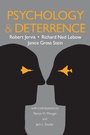
Robert Jervis | Richard Ned Lebow | Janice Gross Stein
Psychology and Deterrence
Book
05/1989
Johns Hopkins University Press
€37.40
Article not available for order
Robert Jervis | Richard Ned Lebow | Janice Gross Stein
Psychology and Deterrence
E-Book
05/1989
Johns Hopkins University Press
€22.49
Available for download
Persons
Robert Jervis is the author of Perception and Misperception in International Politics and How Statesmen Think: The Psychology of International Politics. Richard Ned Lebow is the director of the Program in International Relations at the University of Pittsburgh's Graduate School of Public and International Affairs.
-Foreign Affairs
-Foreign Affairs
Content
Preface and Acknowledgments
Chapter 1. Introduction: Approach and Assumptions
Chapter 2. Perceiving and Coping with Threat
Chapter 3. Calculation, Miscalculation, and Conventional Deterrence I: The View from Cairo
Chapter 4. Calculation, Miscalculation, and Conventional Deterrence II: The View from Jerusalem
Chapter 5. Miscalculation in the South Atlantic: The Origins of the Falklands War
Chapter 6. Saving Face for the Sake of Detterence
Chapter 7. Perceptions of the Security Dilemma in 1914
Chapter 8. The Deterrence Deadlock: Is There a Way Out?
Chapter 9. Conclusions
Notes
Index
Chapter 1. Introduction: Approach and Assumptions
Chapter 2. Perceiving and Coping with Threat
Chapter 3. Calculation, Miscalculation, and Conventional Deterrence I: The View from Cairo
Chapter 4. Calculation, Miscalculation, and Conventional Deterrence II: The View from Jerusalem
Chapter 5. Miscalculation in the South Atlantic: The Origins of the Falklands War
Chapter 6. Saving Face for the Sake of Detterence
Chapter 7. Perceptions of the Security Dilemma in 1914
Chapter 8. The Deterrence Deadlock: Is There a Way Out?
Chapter 9. Conclusions
Notes
Index