

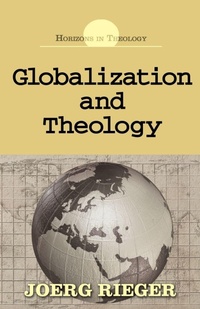
Globalization and Theology
Published on 1. September 2010
Book
Paperback/Softback
80 pages
978-1-4267-0065-1 (ISBN)
Description
Globalization is a catchword of our time, referring to the interdependence that affects us all. But we often meet globalization with extreme ambivalence, recognizing that it has both positive and negative consequences for economics, politics, and culture. Joerg Rieger makes the point that even theology, itself, can be a manifestation of globalization. At its worst, theology can reflect Western intellectual imperialism and at its best, theology can encourage a compelling vision of diversity within unity. The author articulates a theology of globalization as a diverse phenomenon that respects different ways of seeing and knowing, thus encouraging harmony rather than homogeny.
More details
Series
Language
English
Place of publication
Nashville, Tennessee
United States
Product notice
Paperback (trade)
Illustrations
black & white illustrations
Dimensions
Height: 216 mm
Width: 140 mm
Thickness: 6 mm
Weight
126 gr
ISBN-13
978-1-4267-0065-1 (9781426700651)
Copyright in bibliographic data and cover images is held by Nielsen Book Services Limited or by the publishers or by their respective licensors: all rights reserved.
Schweitzer Classification
Other editions
Additional editions
Person
Joerg Rieger es profesor de teología y dirige la cátedra en estudios wesleyanos en la Escuela de Divinidad del Cal Turner y el Programa de Graduados en Religión de la Universidad de Vanderbilt. También es el Director Fundador del Programa Wendland-Cook de Religión y Justicia en Vanderbilt. Por más de dos décadas Rieger ha trabajado para unir la teología y las luchas por la justicia y la liberación que marcan nuestra época.
Su trabajo aborda la relación de la teología con la vida pública, utilizando herramientas de estudios culturales, teoría crítica y estudios religiosos, a partir de la reflexión sobre el uso del poder en la religión, la política y la economía.
Su trabajo aborda la relación de la teología con la vida pública, utilizando herramientas de estudios culturales, teoría crítica y estudios religiosos, a partir de la reflexión sobre el uso del poder en la religión, la política y la economía.