

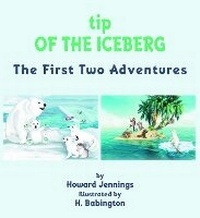
tip OF THE ICEBERG
The First Two Adventures
Published on 2. September 2021
Book
Paperback/Softback
36 pages
978-1-83975-642-9 (ISBN)
Description
Two stories in one book about tip OF THE ICEBERG, the world's favourite polar bear cub.
tip loves playing on the ice where she lives, in the Arctic.
But the ice is melting more every year because of climate change, and one day tip floats away on an iceberg in her first adventure.
Her second exciting adventure follows a few days later.
Both stories are very simple and gentle introductions to the effects of climate change and how they are affecting the lives of animals all around the world.
These stories are suitable to be read to and enjoyed by all children up to the age of 5, or to be read by 5 to 7-year-olds with help and encouragement as required.
tip loves playing on the ice where she lives, in the Arctic.
But the ice is melting more every year because of climate change, and one day tip floats away on an iceberg in her first adventure.
Her second exciting adventure follows a few days later.
Both stories are very simple and gentle introductions to the effects of climate change and how they are affecting the lives of animals all around the world.
These stories are suitable to be read to and enjoyed by all children up to the age of 5, or to be read by 5 to 7-year-olds with help and encouragement as required.
More details
Series
Language
English
Place of publication
Claygate
United Kingdom
Target group
Primary & secondary/elementary & high school
Children/juvenile
Dimensions
Height: 216 mm
Width: 216 mm
Thickness: 3 mm
Weight
108 gr
ISBN-13
978-1-83975-642-9 (9781839756429)
Copyright in bibliographic data and cover images is held by Nielsen Book Services Limited or by the publishers or by their respective licensors: all rights reserved.
Schweitzer Classification
Persons
Children's author Howard Jennings is a strong believer in educating young children about the effects of climate change in a simple and gentle way. By using animal characters in stories that always have a happy ending, readers are not overcome by the most immediate problem we all face today.