


The Next Generation of STEM Teachers
An Interdisciplinary Approach to Meet the Needs of the Future
Published on 13. April 2019
Book
Paperback/Softback
186 pages
978-1-4758-2275-5 (ISBN)
Description
STEM Teaching: An Interdisciplinary Approach breaks from the more historical idea of making knowledge within disciplines and seeks to engage the reader in a growing conversation that is gaining momentum and is focused on an 'interdisciplinarity of STEM education', which seeks to embrace and/or present emerging perspectives on the standards. Importantly, the conversation on STEM education and interdisciplinary approaches to teacher preparation may draw into specific relief the respective professional and/or disciplinary standards for each of the four STEM disciplines as each relates to fostering an interdisciplinary approach.
The importance and relevance of this interdisciplinary perspective to teacher preparation lies in the realization that STEM literacy moves into everyday lives and thinking, and not just in STEM related disciplines. This means that faculty in teacher preparation need to extend the range of STEM literacy in pedagogical strategies so that STEM teaching is enriched with multimodal literacies into teaching and learning, which in turn makes STEM knowledge more relevant and engaging for its manifest connections to solving the problems that challenge society.
The importance and relevance of this interdisciplinary perspective to teacher preparation lies in the realization that STEM literacy moves into everyday lives and thinking, and not just in STEM related disciplines. This means that faculty in teacher preparation need to extend the range of STEM literacy in pedagogical strategies so that STEM teaching is enriched with multimodal literacies into teaching and learning, which in turn makes STEM knowledge more relevant and engaging for its manifest connections to solving the problems that challenge society.
Reviews / Votes
Patrick M. Jenlink and Karen Embry Jenlink have compiled an important and timely resource for professionals in the field of STEM teacher preparation programs. This well-written volume provides a clear argument for utilizing an interdisciplinary perspective when preparing teachers who will guide student learning in the twenty-first century in the fields of science, mathematics, engineering and technology. As an engineer and STEM education scholar for many years, it is refreshing to note the importance given not only to teaching strong content fundamentals but also to infusing pedagogy with cultural relevance and real-world contexts that celebrate creativity and innovation. The guidance of the editors and the other respected contributing authors will positively impact not only faculty who prepare teachers and their teacher candidates, but also the young K-12 students who will learn from professionals who model the interdisciplinary nature of learning, collaborating and problem solving as future professionals in the STEM workforce. -- Araceli Martinez Ortiz, Executive Director, LBJ Institute for STEM Education and Research; Research Associate Professor of Engineering Education, College of Education, Texas State University The excitement of learning science and mathematics comes from wrestling with how science is thoroughly intertwined with engineering and technology and bound together with societal and cultural values. STEM teachers represent our society's front line for engendering a love for science in the children that follow in our footsteps, and this book carefully outlines both the barriers to fruitful STEM teaching and provides navigable pathways to success that our teachers-and ultimately our children-need right now. -- Timothy F. Slater, University of Wyoming Endowed Professor; Senior Scientist, CAPER Center for Astronomy & Physics Education Research STEM educators believe in the necessity and power of interdisciplinary learning, but few know how to create rich cross-boundary learning opportunities. The authors in STEM Teaching: An Interdisciplinary Approach creatively address this problem where it must begin-with educating teachers. The book is a rich and comprehensive resource for teacher educators who want to learn about, or are engaged in, STEM interdisciplinary learning, teaching, and teacher education. -- James Hiebert, Robert J. Barkley Professor of Education, School of Education, University of Delaware STEM Teaching: An Interdisciplinary Approach is a disruptive book about how to approach and how to teach in a new inspired way for new generations of teachers. The authors in this book take readers to the suggestive world of the interdisciplinary perspective, a holistic vision of teacher education, very useful to anyone who wants to connect different disciplines for a real education for a real life. It is a must-read for teachers, educators, students and researchers with a step forward list of recommendations to change our thinking level about STEM education. -- Luis Marques Molias, Dean, Faculty of Educational Sciences and Psychology, Universitat Rovira i Virgili, Spain With the growing demand for individuals with expertise in STEM fields, STEM Teaching: An Interdisciplinary Approach is not only timely but is imperative. It provides support for teacher educators wishing to prepare new teachers with the expertise needed to promote STEM through an interdisciplinary approach and redefines what it means to be literate in today's world. -- Shirley Lefever PhD, interim vice president and provost, Wichita State University; past president, Association of Teacher Educators (ATE)More details
Language
English
Place of publication
United States
Publishing group
Bloomsbury Publishing Plc
Target group
Professional and scholarly
Illustrations
18 b/w illustrations; 4 tables; 1 textbox
Dimensions
Height: 229 mm
Width: 152 mm
Thickness: 10 mm
Weight
282 gr
ISBN-13
978-1-4758-2275-5 (9781475822755)
Copyright in bibliographic data and cover images is held by Nielsen Book Services Limited or by the publishers or by their respective licensors: all rights reserved.
Schweitzer Classification
Other editions
Additional editions
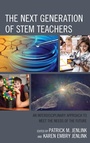
Patrick M. Jenlink | Karen Embry Jenlink
The Next Generation of STEM Teachers
An Interdisciplinary Approach to Meet the Needs of the Future
E-Book
04/2019
1st Edition
Rowman & Littlefield Publishers
€39.49
Available for download
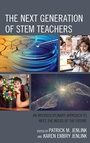
Patrick M. Jenlink | Karen Embry Jenlink
The Next Generation of STEM Teachers
An Interdisciplinary Approach to Meet the Needs of the Future
E-Book
04/2019
1st Edition
Bloomsbury eBooks US
€39.49
Available for download
Persons
Patrick M. Jenlink is Regents Professor, the E.J. Campbell Endowed Chair: Professor of Educational Leadership, and Professor of doctoral studies in the Department of Secondary Education and Educational Leadership. His experience includes STEM teaching with emphasis in biology I & II, chemistry, physics, human anatomy and physiology and technology, as well as serving as a building administrator, school district superintendent, evaluator and research consultant on NSF funded Statewide Systemic STEM initiative in Michigan, senior researcher on funded STEM initiatives in Oklahoma with NASA and Oklahoma State University, and senior researcher for a grant funded STEM initiative in Texas, the Texas State Middle Level Mathematics Project.
Karen Embry-Jenlink is a professor of doctoral studies in educational leadership at Stephen F. Austin State University in Nacogdoches, Texas. Dr. Embry-Jenlink has directed/served on several initiatives to support STEM educator preparation and educator and workforce development, including the Texas Middle Level State Mathematics Project, U.S. Integrated Workforce Standards, Texas Regional Collaboratives for Excellence in Science and Mathematics, College and Career Readiness Initiative Mathematics Faculty Collaborative, Talented Teachers For Training in Texas, and she appointed the ATE / NASA Education Commission on STEM Education in the Future.
Karen Embry-Jenlink is a professor of doctoral studies in educational leadership at Stephen F. Austin State University in Nacogdoches, Texas. Dr. Embry-Jenlink has directed/served on several initiatives to support STEM educator preparation and educator and workforce development, including the Texas Middle Level State Mathematics Project, U.S. Integrated Workforce Standards, Texas Regional Collaboratives for Excellence in Science and Mathematics, College and Career Readiness Initiative Mathematics Faculty Collaborative, Talented Teachers For Training in Texas, and she appointed the ATE / NASA Education Commission on STEM Education in the Future.
Content
Preface
Acknowledgements
Chapter 1 - Introduction: STEM Teacher Preparation and Practice: An Interdisciplinary Perspective
Patrick M. Jenlink and Karen Embry Jenlink, Stephen F. Austin State University
SECTION ONE: Interdisciplinary Thinking and Place-Based Practices in STEM Education
Chapter 2: Toward an Eccentric Educational Ideal: The Demands for Interdisciplinary Thinking and Collaboration
Shawn Vecellio, The National Hispanic University
Chapter 3: Looking Deeper through the STEM Lens: Exploring the Intersection between Content and Context to Optimize Learning
Louis S. Nadelson and Anne Seifert, Boise State University
Chapter 4: "I Don't Know Anything About DNA. Well I Do, But Not From You Guys": A Vision for Interdisciplinary STEM Teaching
Vanessa Svihla, Kersti Tyson, Justin Boyle, Jamie Collins, Ara Kooser, Ayesha Livingston, Abigail Stiles, and Julie Bryant
Chapter 5: Mathematics, Science, and Technology Reform in Teacher Education: Implications for Teaching Practice
Deborah Moore-Russo and Naemi Waight
SECTION TWO: Complexities and Challenges in STEM Education
Chapter 6: Developing a STEM Education Teacher Preparation Program to help Increase STEM Literacy amongst Preservice Teachers
Margaret Mohr-Schroeder, Christa Jackson, D. Craig Schroeder, and Jennifer Wilhelm, University of Kentucky, Fayette County Public Schools
Chapter 7: Troubling STEM: Making a Case for An Ethics/STEM Partnership
Astrid Steele, Nipissing University
Chapter 8: Literacy-Rich STEM Project Based Learning: Preparing STEM Teachers for High Needs Schools
Kevin Carr, Pacific University College of Education
Chapter 9: Promoting an Interdisciplinary Approach to STEM Education: Matching STEM Pedagogy to Trends on the Demand-Side
Joseph Mukuni
Chapter 10: Epilogue: The Future of STEM Teaching
Karen Embry Jenlink and Patrick M. Jenlink, Stephen F. Austin State University
About the Editors
About the Contributors
Acknowledgements
Chapter 1 - Introduction: STEM Teacher Preparation and Practice: An Interdisciplinary Perspective
Patrick M. Jenlink and Karen Embry Jenlink, Stephen F. Austin State University
SECTION ONE: Interdisciplinary Thinking and Place-Based Practices in STEM Education
Chapter 2: Toward an Eccentric Educational Ideal: The Demands for Interdisciplinary Thinking and Collaboration
Shawn Vecellio, The National Hispanic University
Chapter 3: Looking Deeper through the STEM Lens: Exploring the Intersection between Content and Context to Optimize Learning
Louis S. Nadelson and Anne Seifert, Boise State University
Chapter 4: "I Don't Know Anything About DNA. Well I Do, But Not From You Guys": A Vision for Interdisciplinary STEM Teaching
Vanessa Svihla, Kersti Tyson, Justin Boyle, Jamie Collins, Ara Kooser, Ayesha Livingston, Abigail Stiles, and Julie Bryant
Chapter 5: Mathematics, Science, and Technology Reform in Teacher Education: Implications for Teaching Practice
Deborah Moore-Russo and Naemi Waight
SECTION TWO: Complexities and Challenges in STEM Education
Chapter 6: Developing a STEM Education Teacher Preparation Program to help Increase STEM Literacy amongst Preservice Teachers
Margaret Mohr-Schroeder, Christa Jackson, D. Craig Schroeder, and Jennifer Wilhelm, University of Kentucky, Fayette County Public Schools
Chapter 7: Troubling STEM: Making a Case for An Ethics/STEM Partnership
Astrid Steele, Nipissing University
Chapter 8: Literacy-Rich STEM Project Based Learning: Preparing STEM Teachers for High Needs Schools
Kevin Carr, Pacific University College of Education
Chapter 9: Promoting an Interdisciplinary Approach to STEM Education: Matching STEM Pedagogy to Trends on the Demand-Side
Joseph Mukuni
Chapter 10: Epilogue: The Future of STEM Teaching
Karen Embry Jenlink and Patrick M. Jenlink, Stephen F. Austin State University
About the Editors
About the Contributors