

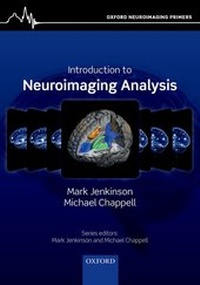
Introduction to Neuroimaging Analysis
Published on 26. October 2017
Book
Paperback/Softback
280 pages
978-0-19-881630-0 (ISBN)
Description
MRI has emerged as a powerful way of studying in-vivo brain structure and function in both healthy and disease states. Whilst new researchers may be able to call upon advice and support for acquisition from operators, radiologists and technicians, it is more challenging to obtain an understanding of the principles of analysing neuroimaging data. This is crucial for choosing acquisition parameters, designing and performing appropriate experiments, and correctly interpreting the results.
This primer gives a general and accessible introduction to the wide array of MRI-based neuroimaging methods that are used in research. Supplemented with online datasets and examples to enable the reader to obtain hands-on experience working with real data, it provides a practical and approachable introduction for those new to the neuroimaging field. The text also covers the fundamentals of what different MRI modalities measure, what artifacts commonly occur, the essentials of the analysis, and common 'pipelines' including brain extraction, registration and segmentation.
As it does not require any background knowledge beyond high-school mathematics and physics, this primer is essential reading for anyone wanting to work in neuroimaging or grasp the results coming from this rapidly expanding field.
The Oxford Neuroimaging Primers are short texts aimed at new researchers or advanced undergraduates from the biological, medical or physical sciences. They are intended to provide a broad understanding of the ways in which neuroimaging data can be analyzed and how that relates to acquisition and interpretation. Each primer has been written so that it is a stand-alone introduction to a particular area of neuroimaging, and the primers also work together to provide a comprehensive foundation for this increasingly influential field.
This primer gives a general and accessible introduction to the wide array of MRI-based neuroimaging methods that are used in research. Supplemented with online datasets and examples to enable the reader to obtain hands-on experience working with real data, it provides a practical and approachable introduction for those new to the neuroimaging field. The text also covers the fundamentals of what different MRI modalities measure, what artifacts commonly occur, the essentials of the analysis, and common 'pipelines' including brain extraction, registration and segmentation.
As it does not require any background knowledge beyond high-school mathematics and physics, this primer is essential reading for anyone wanting to work in neuroimaging or grasp the results coming from this rapidly expanding field.
The Oxford Neuroimaging Primers are short texts aimed at new researchers or advanced undergraduates from the biological, medical or physical sciences. They are intended to provide a broad understanding of the ways in which neuroimaging data can be analyzed and how that relates to acquisition and interpretation. Each primer has been written so that it is a stand-alone introduction to a particular area of neuroimaging, and the primers also work together to provide a comprehensive foundation for this increasingly influential field.
More details
Series
Language
English
Place of publication
Oxford
United Kingdom
Target group
Professional and scholarly
College/higher education
Dimensions
Height: 241 mm
Width: 170 mm
Thickness: 13 mm
Weight
517 gr
ISBN-13
978-0-19-881630-0 (9780198816300)
Copyright in bibliographic data and cover images is held by Nielsen Book Services Limited or by the publishers or by their respective licensors: all rights reserved.
Schweitzer Classification
Other editions
Additional editions
Mark Jenkinson | Michael Chappell
Introduction to Neuroimaging Analysis
E-Book
03/2018
1st Edition
OUP eBook
€37.99
Available for download
Mark Jenkinson | Michael Chappell
Introduction to Neuroimaging Analysis
E-Book
10/2017
1st Edition
OUP eBook
€37.99
Available for download
Persons
Mark Jenkinson is a co-founder and the principal developer of FSL (FMRIB Software Library) and has written numerous tools for analysis of structural, diffusion and functional data. He has been a part of the FMRIB centre, University of Oxford, since 1998, working on analysis methodology for MRI-based neuroimaging research and is included in Thomson Reuters' list of Highly Cited Researchers. From 2002 he has been teaching neuroimaging analysis to students and researchers from a wide variety of backgrounds (medicine, psychology, physiology, engineering, physics, and philosophy) through both annual FSL Courses and the FMRIB Graduate Programme. He has won teaching awards from the University of Oxford and the International Society of Magnetic Resonance in Medicine (ISMRM) and authored over 150 journal papers and book chapters covering a wide range of methodology and applications in MRI-based neuroimaging.
Michael Chappell is an Associate Professor of Engineering Science in the Institute of Biomedical Engineering, University of Oxford. He remains a member of the Oxford Centre for Functional MRI of the Brain (FMRIB) where he started his work on the quantification and analysis of Arterial Spin Labelling perfusion MRI data. He is an active developer on the FMIRB Software Library, providing tools for the analysis of perfusion MRI. Since 2014 he has been the Director of Training for the EPSRC-MRC Centre for Doctoral Training in Biomedical Imaging. He has taught undergraduate and postgraduate students on a wide variety of imaging and quantitative physiology topics as part of the FSL course, FMRIB Graduate Programme, the undergraduate degree in Engineering Science and in various doctoral training centres. He has also won teaching awards from the International Society of Magnetic Resonance in Medicine. He has published over 50 journal papers and is the co-author of Physiology for Engineers.
Michael Chappell is an Associate Professor of Engineering Science in the Institute of Biomedical Engineering, University of Oxford. He remains a member of the Oxford Centre for Functional MRI of the Brain (FMRIB) where he started his work on the quantification and analysis of Arterial Spin Labelling perfusion MRI data. He is an active developer on the FMIRB Software Library, providing tools for the analysis of perfusion MRI. Since 2014 he has been the Director of Training for the EPSRC-MRC Centre for Doctoral Training in Biomedical Imaging. He has taught undergraduate and postgraduate students on a wide variety of imaging and quantitative physiology topics as part of the FSL course, FMRIB Graduate Programme, the undergraduate degree in Engineering Science and in various doctoral training centres. He has also won teaching awards from the International Society of Magnetic Resonance in Medicine. He has published over 50 journal papers and is the co-author of Physiology for Engineers.
Author
Professor of NeuroimagingProfessor of Neuroimaging, Wellcome Centre for Integrative Neuroimaging, FMRIB Centre, Nuffield Department of Clinical Neurosciences, University of Oxford
Associate Professor of Engineering ScienceAssociate Professor of Engineering Science, Institute of Biomedical Engineering, University of Oxford
Content
1: Introduction
2: MRI modalities for neuroimaging
3: Overview of MRI analysis
4: Brain Extraction
5: Registration
6: Motion and Distortion Correction
7: Surface-based Analysis
8: Epilogue
2: MRI modalities for neuroimaging
3: Overview of MRI analysis
4: Brain Extraction
5: Registration
6: Motion and Distortion Correction
7: Surface-based Analysis
8: Epilogue