

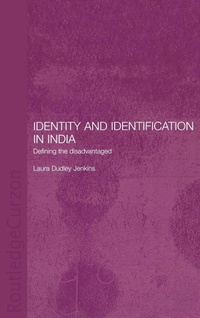
Identity and Identification in India
Defining the Disadvantaged
1st Edition
Published on 12. December 2002
Book
Hardback
272 pages
978-0-415-29680-9 (ISBN)
Description
Can a state empower its citizens by classifying them? Or do reservation policies reinforce the very categories they are meant to eradicate? Indian reservation policies on government jobs, legislative seats and university admissions for disadvantaged groups, like affirmative action policies elsewhere, are based on the premise that recognizing group distinctions in society is necessary to subvert these distinctions. Yet the official identification of eligible groups has unintended side-effects on identity politics. Bridging theories which emphasize the fluidity of identities and those which highlight the utility of group-based mobilizations and policies, this book exposes didactic enforcement of categorizations, while recognizing the social and political gains facilitated by group-based strategies.
More details
Language
English
Place of publication
London
United Kingdom
Publishing group
Taylor & Francis Ltd
Target group
College/higher education
Professional and scholarly
Dimensions
Height: 235 mm
Width: 157 mm
Thickness: 21 mm
Weight
600 gr
ISBN-13
978-0-415-29680-9 (9780415296809)
Copyright in bibliographic data and cover images is held by Nielsen Book Services Limited or by the publishers or by their respective licensors: all rights reserved.
Schweitzer Classification
Other editions
Additional editions
Book
11/2009
1st Edition
Routledge
€71.60
Shipment within 15-20 days
E-Book
09/2003
1st Edition
Routledge
€64.49
Available for download
E-Book
09/2003
1st Edition
Routledge
€64.49
Available for download
Person
Laura Dudley Jenkins is Assistant Professor of Political Science, University of Cincinnati, USA.
Content
Acknowledgements 1. Identity and Identification Part One: State Simplifications 2. Adjudicating Identities 3. Official Anthropology 4. Caste Certificates and Lists 5. Categorizing and Counting in the Census Part Two: Political Complications 6. 'Backward' Muslims and 'Scheduled Caste' Christians 7. Hindu Nationalism and Selective Inclusion 8. Class, Classification and Creamy Layers 9. Women's Reservations and Representations 10. Conclusions Notes Bibliography Appendix Index