

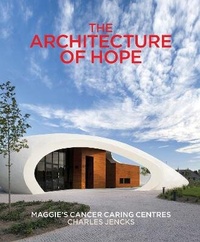
The Architecture of Hope
Maggie's Cancer Caring Centres
Published on 26. February 2015
Book
Hardback
256 pages
978-0-7112-3635-6 (ISBN)
Description
THE ARCHITECTURE OF HOPE focuses on an exciting building project that has been underway since the mid-1990s - new cancer caring centres that offer a fresh approach to both architecture and health. Named after Maggie Keswick and co-founded with her husband, the writer and landscape designer Charles Jencks, these centres aim to be situated at all the major British hospitals that treat cancer.
Already sixteen have been completed, with at least seven more the pipeline. Starting in Scotland, where the first were built, they have implications well beyond their modest size and origins. Complementary to NHS hospitals, they present a face that is welcoming, risk-taking, aesthetic and life-affirming; and with their commitment to the other arts, including landscape, they bring in the full panoply of constructive means.
Maggie's Centres are a new mixed building type for healing that have different roots in the past. As Jencks and Heathcote show, this hybrid quality is a response to the condition of cancer; its myriad causes and bewildering number of possible therapies. The 'architecture of hope' is this new emergent hybrid genre, consisting of various metaphors that correspond in kind to the many different types of cancer and their various treatments.
The Centres have been designed by celebrity architects, including Richard Murphy, Page and Park, Frank Gehry, Zaha Hadid, Richard Rogers, Richard MacCormac, the late Kisho Kurokawa, Piers Gough, Wilkinson Eyre and Rem Koolhaas. Additional Centres are being planned by Norman Foster & Partners, Thomas Heatherwick and Steven Holl.
The Centres are committed first to helping cancer sufferers help themselves, to inspiring carers to care more, and secondly to architecture. It is the arts and building, important allies in the perennial struggle with cancer, that lead to the 'architecture of hope'. As people walk into a centre after a diagnosis, or enervating treatment, often disoriented and lacking in self-confidence, they enter another world which acknowledges their importance and a basic condition that may become prevalent: living with cancer and not losing hope.
This is a new edition of The Architecture of Hope, first published in 2010, but now completely updated and redesigned with new material throughout, and additional essays about the role of art at Maggie's and about the gardens and landscaping. There is also a new section showcasing the way architecture students have responded to the Maggie's brief.
Already sixteen have been completed, with at least seven more the pipeline. Starting in Scotland, where the first were built, they have implications well beyond their modest size and origins. Complementary to NHS hospitals, they present a face that is welcoming, risk-taking, aesthetic and life-affirming; and with their commitment to the other arts, including landscape, they bring in the full panoply of constructive means.
Maggie's Centres are a new mixed building type for healing that have different roots in the past. As Jencks and Heathcote show, this hybrid quality is a response to the condition of cancer; its myriad causes and bewildering number of possible therapies. The 'architecture of hope' is this new emergent hybrid genre, consisting of various metaphors that correspond in kind to the many different types of cancer and their various treatments.
The Centres have been designed by celebrity architects, including Richard Murphy, Page and Park, Frank Gehry, Zaha Hadid, Richard Rogers, Richard MacCormac, the late Kisho Kurokawa, Piers Gough, Wilkinson Eyre and Rem Koolhaas. Additional Centres are being planned by Norman Foster & Partners, Thomas Heatherwick and Steven Holl.
The Centres are committed first to helping cancer sufferers help themselves, to inspiring carers to care more, and secondly to architecture. It is the arts and building, important allies in the perennial struggle with cancer, that lead to the 'architecture of hope'. As people walk into a centre after a diagnosis, or enervating treatment, often disoriented and lacking in self-confidence, they enter another world which acknowledges their importance and a basic condition that may become prevalent: living with cancer and not losing hope.
This is a new edition of The Architecture of Hope, first published in 2010, but now completely updated and redesigned with new material throughout, and additional essays about the role of art at Maggie's and about the gardens and landscaping. There is also a new section showcasing the way architecture students have responded to the Maggie's brief.
Reviews / Votes
"What you all have created, in terms of architecture, is a community statement to patients and carers that Your Life Matters. Walking from the hospital into Maggie's is a concretization of hope - just as the daffodil reminds us of spring."Senior Vice President, The Wellness Community in Santa Monica
More details
Language
English
Place of publication
United Kingdom
Publishing group
Quarto Publishing PLC
Illustrations
400 photographs, plans and illustrations
Dimensions
Height: 280 mm
Width: 230 mm
ISBN-13
978-0-7112-3635-6 (9780711236356)
Copyright in bibliographic data and cover images is held by Nielsen Book Services Limited or by the publishers or by their respective licensors: all rights reserved.
Schweitzer Classification
Person
Charles Jencks is the author of several best-selling books on architecture. He divides his time between lecturing, writing and designing in the USA, in the UK and in Europe.
To visit Charles Jencks' website click here
To visit Charles Jencks' website click here
Content
Introduction: The Potion Called Hope
PART ONE: ARCHITECTURE, CANCER AND HOPE
The Architecture of Hope, Charles Jencks
Building a Life Beyond Cancer, Laura Lee
Architecture and Health, Edwin Heathcote
Art at Maggie's, Richard Cork
The Garden Essences, Angie Butterfield
PART TWO: MAGGIE'S CENTRES
Edinburgh, Richard Murphy
Glasgow, Page and Park
Dundee, Frank Gehry
Inverness, Page and Park
Fife, Zaha Hadid
London, Richard Rogers
Cheltenham, Richard MacCormac
Gartnavel, Rem Koolhaas
Nottingham, Piers Gough
Swansea, Kisho Kurokawa
Hong Kong, Frank Gehry
Newcastle, Ted Cullinan
Aberdeen, Snohetta
Merseyside, Carmody Groarke
Lanarkshire, Reiach and Hall
Oxford, Wilkinson Eyre
PART THREE: FUTURE CENTRES
London St Barts, Stephen Holl
Leeds, Thomas Heatherwick
Cardiff, Dow Jones
Forth Valley, Nord
Manchester, Norman Foster
Southampton ALA
Barcelona, Benedetta Tagliabule
PART FOUR: INSPIRED BY MAGGIE'S
Uplifting Architecture, Charles Page
The Students Speak, Ann Heylighen
Notes on Growth
Bibliography
Index
PART ONE: ARCHITECTURE, CANCER AND HOPE
The Architecture of Hope, Charles Jencks
Building a Life Beyond Cancer, Laura Lee
Architecture and Health, Edwin Heathcote
Art at Maggie's, Richard Cork
The Garden Essences, Angie Butterfield
PART TWO: MAGGIE'S CENTRES
Edinburgh, Richard Murphy
Glasgow, Page and Park
Dundee, Frank Gehry
Inverness, Page and Park
Fife, Zaha Hadid
London, Richard Rogers
Cheltenham, Richard MacCormac
Gartnavel, Rem Koolhaas
Nottingham, Piers Gough
Swansea, Kisho Kurokawa
Hong Kong, Frank Gehry
Newcastle, Ted Cullinan
Aberdeen, Snohetta
Merseyside, Carmody Groarke
Lanarkshire, Reiach and Hall
Oxford, Wilkinson Eyre
PART THREE: FUTURE CENTRES
London St Barts, Stephen Holl
Leeds, Thomas Heatherwick
Cardiff, Dow Jones
Forth Valley, Nord
Manchester, Norman Foster
Southampton ALA
Barcelona, Benedetta Tagliabule
PART FOUR: INSPIRED BY MAGGIE'S
Uplifting Architecture, Charles Page
The Students Speak, Ann Heylighen
Notes on Growth
Bibliography
Index