


Exposing Violence
Media Practices and Aesthetics of Radical Truth
Will be published approx. on 31. March 2026
Book
Paperback/Softback
280 pages
978-0-262-05346-4 (ISBN)
Description
How small groups and grassroots collectives can act for justice and leverage contemporary media to document violence.
Exposing Violence gathers, for the first time, new tendencies in contemporary media practices that engage in exposing the violence inflicted upon human beings and the environment. It focuses on projects that emerged in the second and third decades of the twenty-first century as forms of socially engaged media activities initiated by independent groups of artists and researchers, interdisciplinary teams emerging at universities, and small laboratory groups.
Agnieszka Jelewska and Michał Krawczak propose an original analytical concept, the aesthetics of radical truth (AeRT), as a modus operandi to understand the specific nature of these projects situated at the intersection of art, science, activism, and engaged journalism. Their primary goal is the development of experimental, innovative, and collective forms of recording, revealing, tracing, identifying, and critically analyzing various manifestations of violence.
The book outlines the beginning of recent developments within “open justice,” including the creation of new digital archives and platforms that gather data on violence, interactive environments that facilitate new understanding through the emotional experience of evidence, and tools produced from the grass roots that allow for the tracking and disclosure of violence. The authors also highlight strategies for resisting violence in a media-dense environment.
Exposing Violence gathers, for the first time, new tendencies in contemporary media practices that engage in exposing the violence inflicted upon human beings and the environment. It focuses on projects that emerged in the second and third decades of the twenty-first century as forms of socially engaged media activities initiated by independent groups of artists and researchers, interdisciplinary teams emerging at universities, and small laboratory groups.
Agnieszka Jelewska and Michał Krawczak propose an original analytical concept, the aesthetics of radical truth (AeRT), as a modus operandi to understand the specific nature of these projects situated at the intersection of art, science, activism, and engaged journalism. Their primary goal is the development of experimental, innovative, and collective forms of recording, revealing, tracing, identifying, and critically analyzing various manifestations of violence.
The book outlines the beginning of recent developments within “open justice,” including the creation of new digital archives and platforms that gather data on violence, interactive environments that facilitate new understanding through the emotional experience of evidence, and tools produced from the grass roots that allow for the tracking and disclosure of violence. The authors also highlight strategies for resisting violence in a media-dense environment.
More details
Language
English
Place of publication
Cambridge (Massachusetts)
United States
Publishing group
MIT Press Ltd
Illustrations
30
Dimensions
Height: 162 mm
Width: 228 mm
Thickness: 21 mm
Weight
442 gr
ISBN-13
978-0-262-05346-4 (9780262053464)
Copyright in bibliographic data and cover images is held by Nielsen Book Services Limited or by the publishers or by their respective licensors: all rights reserved.
Schweitzer Classification
Other editions
Additional editions
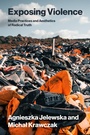
Agnieszka Jelewska | Michal Krawczak
Exposing Violence
Media Practices and Aesthetics of Radical Truth
E-Book
03/2026
MIT Press
€54.49
Available for download
Persons
Agnieszka Jelewska and Michal Krawczak
Content
Preface
Acknowledgments
Introduction
1 Aesthetics as labor for reclaiming truth
2 Radical investigators of military violence
3 Slow violence and data resistance
4 Liquid violence of borderization regimes
5 Digital archives for epistemic justice
Epilogue: Towards agglomerative aesthetics of radical truth
Appendix
Abbreviations
Notes
References
Index
Acknowledgments
Introduction
1 Aesthetics as labor for reclaiming truth
2 Radical investigators of military violence
3 Slow violence and data resistance
4 Liquid violence of borderization regimes
5 Digital archives for epistemic justice
Epilogue: Towards agglomerative aesthetics of radical truth
Appendix
Abbreviations
Notes
References
Index