


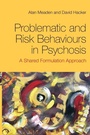
Problematic and Risk Behaviours in Psychosis
A Shared Formulation Approach
1st Edition
Published on 12. November 2010
Book
Hardback
328 pages
978-0-415-49464-9 (ISBN)
Description
In spite of improved access to psychosocial interventions, many people with psychosis continue to experience persistent problems which act as significant barriers to their recovery. This book investigates risk and problem behaviours in psychosis, including staff and service factors that can impede the delivery of effective care.
Problematic and Risk Behaviours in Psychosis provides a new approach for assessment, formulation and intervention within such problem behaviours in a team context. Of particular interest will be:
an outline of the SAFE (Shared Assessment, Formulation and Education) approach
an integrative model for understanding risk and problematic behaviour
shared risk assessment and management processes
approaches to reducing team and carer barriers to effective care
the use of CBT in day-to-day interactions with clients
a set of formulation-driven strategies for managing problematic behaviours
case studies and vignettes providing guidance and highlighting the benefits of the approach.
This book will have particular appeal to professionals working in specialist community, hospital-based and residential services who often struggle to help those with the most complex mental health problems who are hardest to reach. It is also an excellent resource for those engaged in training in psychological therapies, risk assessment and management.
Problematic and Risk Behaviours in Psychosis provides a new approach for assessment, formulation and intervention within such problem behaviours in a team context. Of particular interest will be:
an outline of the SAFE (Shared Assessment, Formulation and Education) approach
an integrative model for understanding risk and problematic behaviour
shared risk assessment and management processes
approaches to reducing team and carer barriers to effective care
the use of CBT in day-to-day interactions with clients
a set of formulation-driven strategies for managing problematic behaviours
case studies and vignettes providing guidance and highlighting the benefits of the approach.
This book will have particular appeal to professionals working in specialist community, hospital-based and residential services who often struggle to help those with the most complex mental health problems who are hardest to reach. It is also an excellent resource for those engaged in training in psychological therapies, risk assessment and management.
Reviews / Votes
"This book successfully illustrates how recent developments in cognitive therapy for psychosis, risk management and behavioural approaches can be integrated into a whole team treatment framework in services for people with complex and challenging mental health and behavioural needs. An excellent clinical resource for all professionals working with this client group." - Suzanne Jolley, Clinical Psychologist, King's College London, UK"As a student with little clinical experience, I found the authors' approach engaging. They provide clear and concise definitions of every assessment and the use of therapy in the clinical field, which I found very helpful. They also provide an integrative approach, clearly showing the differences of assessments used in practice. The interesting thing is the use of illustrative examples: case studies which make the approach come to life...I found this book exceptional" - Heather Brobbey, Journal of Mental Health, August 2011
"The Shared Assessment, Formulation, and Education (SAFE) approach presented by Meaden and Hacker offers a system for providing comprehensive, cognitive-behavioral treatment for RPBs at all levels of the health care environment. Rather than present a brand new treatment, their book presents a much-needed system for implementing exisitng cogntive-behavioral interventions in settings that provide treatment to people with psychotic disorders." - Patrick L. Kerr, PsyCritiques, Volume 57, Issue 7, February 2012 "This book successfully illustrates how recent developments in cognitive therapy for psychosis, risk management and behavioural approaches can be integrated into a whole team treatment framework in services for people with complex and challenging mental health and behavioural needs. An excellent clinical resource for all professionals working with this client group." - Suzanne Jolley, Clinical Psychologist, King's College London, UK
"As a student with little clinical experience, I found the authors' approach engaging. They provide clear and concise definitions of every assessment and the use of therapy in the clinical field, which I found very helpful. They also provide an integrative approach, clearly showing the differences of assessments used in practice. The interesting thing is the use of illustrative examples: case studies which make the approach come to life...I found this book exceptional" - Heather Brobbey, Journal of Mental Health, August 2011
"The Shared Assessment, Formulation, and Education (SAFE) approach presented by Meaden and Hacker offers a system for providing comprehensive, cognitive-behavioral treatment for RPBs at all levels of the health care environment. Rather than present a brand new treatment, their book presents a much-needed system for implementing exisitng cogntive-behavioral interventions in settings that provide treatment to people with psychotic disorders." - Patrick L. Kerr, PsyCritiques, Volume 57, Issue 7, February 2012
More details
Language
English
Place of publication
London
United Kingdom
Publishing group
Taylor & Francis Ltd
Target group
College/higher education
Professional and scholarly
Postgraduate, Professional, and Professional Practice & Development
Illustrations
7 s/w Zeichnungen, 11 s/w Tabellen
11 Tables, black and white; 7 Line drawings, black and white
Dimensions
Height: 240 mm
Width: 161 mm
Thickness: 22 mm
Weight
658 gr
ISBN-13
978-0-415-49464-9 (9780415494649)
Copyright in bibliographic data and cover images is held by Nielsen Book Services Limited or by the publishers or by their respective licensors: all rights reserved.
Schweitzer Classification
Other editions
Additional editions
Book
11/2010
1st Edition
Routledge
€63.70
Shipment within 15-20 days
E-Book
11/2010
Routledge
€55.49
Available for download
E-Book
11/2010
Routledge
€55.49
Available for download
Person
Alan Meaden is a Consultant Specialist Clinical Psychologist for Birmingham and Solihull Mental Health Foundation Trust who specialises in working with those most affected by psychosis. He is an active researcher, most notably in the area of cognitive therapy for command hallucinations, and has other research interests in engagement and staff factors.
David Hacker is a Principal Clinical Psychologist in Neuropsychology at University Hospital Birmingham Regional Neuroscience Centre. He is experienced in working clinically with psychosis, is an active researcher and a Cochrane reviewer. He has additional expertise in working with a range of forensic populations and has undertaken post-doctoral training in Neuropsychology, which is now his area of speciality.
David Hacker is a Principal Clinical Psychologist in Neuropsychology at University Hospital Birmingham Regional Neuroscience Centre. He is experienced in working clinically with psychosis, is an active researcher and a Cochrane reviewer. He has additional expertise in working with a range of forensic populations and has undertaken post-doctoral training in Neuropsychology, which is now his area of speciality.
Content
Acknowledgements. Preface. Introduction. List of Abbreviations. Part I: The SAFE Approach; Theory, Models and Processes. Problematic Behaviour in Psychosis: A Barrier to Social Inclusion and Recovery. Definitions, Prevalence and Consequences. The SAFE Approach: An Overview. Improving Care Planning: The WHO ICIDH-2 Model and Service Level Formulation. Formulating the Person: Arriving at a Shared View. Shared Risk Assessment in Psychosis. Shared Risk Formulation. CARM: An Integrative Model for Understanding Problematic Behaviour in Psychosis. Working with Staff and Carer Beliefs in SAFE. Part II: Assessment. Assessing Problematic Behaviours Excesses in Psychosis: A Multidisciplinary Team Based Approach. Identifying Early Warning Signs of Risk. Assessing Behavioural Deficits. Part III: Interventions in SAFE. Working with Low Risk Behavioural Excesses. Working with High Risk Behaviours. Working with Behavioural Deficits. Part IV: Implementation Issues: Translating SAFE into Routine Clinical Practice. Translating SAFE into Care Plans. Applying SAFE and CARM in Specialist Settings. Implementing SAFE: The Dynamics of Change. Training, Supervision, Reflective Practice and Staff Support Groups. Appendices. References. Index.