

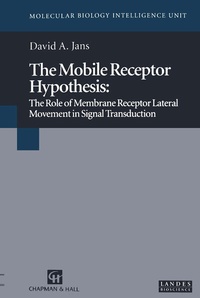
The Mobile Receptor Hypothesis
The Role of Membrane Receptor Lateral Movement in Signal Transduction
Published on 24. December 2012
Book
Paperback/Softback
XI, 224 pages
978-1-4757-0682-6 (ISBN)
Description
1. Introduction to the Mobile Receptor Hypothesis.- A. The Fluid Mosaic Model of Biological Membranes.- B. The Mobile Receptor Hypothesis.- C. Modern Collision Coupling Theory.- D. Summary and Implications.- 2. Direct Measurement of Lateral Mobility.- A. Introduction.- B. Fluorescence Microscopy.- C. Confocal Microscopy.- D. Fluorescence Photobleaching Recovery.- E. Lateral Mobility in the Cytoplasm and Membranes of Living Cells.- F. Measurements in Artificial and Isolated Membranes.- G. Measurements of Lateral Mobility Using Other Methods.- H. Summary.- 3. Parameters Affecting Plasma Membrane Protein Lateral Mobility.- A. Mechanisms of Protein Immobilization in Biological Membranes.- B. Membrane Lipid Mobility.- C. The Cytoskeleton.- D. Anchorage Modulation.- E. Membrane Protein Sequence Motifs.- F. Domain Structure: Regions of Restricted Mobility.- G. Signal Transduction.- H. Summary.- 4. Lateral Mobility of Polypeptide Hormone Receptors and GTP-Binding Proteins.- A. Introduction.- B. Practical Considerations.- C. Lateral Mobility Measurements of Polypeptide Hormone Receptors.- D. Tyrosine Kinase Receptor-Mediated Signal Transduction.- E. GTP-Binding Protein Activating Receptor-Mediated Signal Transduction.- F. Structural Considerations.- G. Lateral Mobility Measurements of GTP-Binding Proteins.- H. Lateral Mobility of Cytokine Receptors.- I. Summary and Implications for Signal Transduction.- 5. Evidence for the Role of Membrane Receptor Lateral Movement in GTP-Binding Protein-Mediated Signal Transduction.- A. Introduction.- B. Kinetic Considerations in GTP-Binding Protein-Mediated Receptor-Effector Systems.- C. Indirect Evidence for a Role of Receptor Lateral Movement in GTP-Binding Protein-Mediated Signal Transduction.- D. Direct Evidence for a Role of Receptor Lateral Movement in GTP-Binding Protein-Mediated Signal Transduction.- E. Ga Signaling in the Cytosolic Phase.- F. Stoichiometric Considerations and Trimeric GTP-Binding Protein Immobility.- G. Amplification in GTP-Binding Protein-Mediated Receptor-Effector Systems Through Receptor Lateral Movement.- H. Summary.- 6. Evidence for the Role of Receptor Immobilization in Desensitization Subsequent to Hormonal Stimulation.- A. Introduction.- B. Receptor Internalization in Desensitization of Response.- C. Receptor Immobilization Prior to Internalization.- D. Receptor Movement Required for Internalization.- E. Kinetic Considerations with Respect to Lateral Mobility Measurements.- F. Receptor Phosphorylation.- G. Studies with Receptor Antagonists¿Receptor Immobilization Is Agonist-Dependent.- H. Summary.- 7. Evidence for the Role of Immobilization of Ligand-Occupied Membrane Receptors in Signal Transduction.- A. Introduction.- B. Receptor Immobilization in Tyrosine Kinase Receptor Signaling.- C. Receptor Immobilization in Signaling by Fc Receptors.- D. Receptor Immobilization in Cell-Cell Interaction.- E. Receptor Immobilization in Cell-Adhesion to an Extracellular Substratum.- F. Summary.- 8. The Mobile Receptor Hypothesis: A Global View.- A. Introduction.- B. Receptor Lateral Movement in Signal Transduction.- C. The Central Role of the Cytoskeleton.- D. Signal Transduction: Receptor Lateral Mobility Modulation by Heterologous Signaling.- E. Potential Pharmacological Applications of the Mobile Receptor Hypothesis.- F. Concluding Remarks.
More details
Series
Edition
Softcover reprint of the original 1st ed. 1997
Language
English
Place of publication
New York
United States
Target group
Professional and scholarly
Research
Product notice
Paperback (trade)
Unsewn / adhesive bound
Illustrations
XI, 224 p.
Dimensions
Height: 229 mm
Width: 152 mm
Thickness: 14 mm
Weight
354 gr
ISBN-13
978-1-4757-0682-6 (9781475706826)
DOI
10.1007/978-1-4757-0680-2
Schweitzer Classification
Other editions
Additional editions
David A. Jans
The Mobile Receptor Hypothesis
The Role of Membrane Receptor Lateral Movement in Signal Transduction
E-Book
03/2013
Springer
€53.49
Available for download
David A. Jans
The Mobile Receptor Hypothesis
The Role of Membrane Receptor Lateral Movement in Signal Transduction
Book
05/1997
Chapman and Hall
€85.55
Article exhausted; check different version
Content
1. Introduction to the Mobile Receptor Hypothesis.- A. The Fluid Mosaic Model of Biological Membranes.- B. The Mobile Receptor Hypothesis.- C. Modern Collision Coupling Theory.- D. Summary and Implications.- 2. Direct Measurement of Lateral Mobility.- A. Introduction.- B. Fluorescence Microscopy.- C. Confocal Microscopy.- D. Fluorescence Photobleaching Recovery.- E. Lateral Mobility in the Cytoplasm and Membranes of Living Cells.- F. Measurements in Artificial and Isolated Membranes.- G. Measurements of Lateral Mobility Using Other Methods.- H. Summary.- 3. Parameters Affecting Plasma Membrane Protein Lateral Mobility.- A. Mechanisms of Protein Immobilization in Biological Membranes.- B. Membrane Lipid Mobility.- C. The Cytoskeleton.- D. Anchorage Modulation.- E. Membrane Protein Sequence Motifs.- F. Domain Structure: Regions of Restricted Mobility.- G. Signal Transduction.- H. Summary.- 4. Lateral Mobility of Polypeptide Hormone Receptors and GTP-Binding Proteins.- A. Introduction.- B. Practical Considerations.- C. Lateral Mobility Measurements of Polypeptide Hormone Receptors.- D. Tyrosine Kinase Receptor-Mediated Signal Transduction.- E. GTP-Binding Protein Activating Receptor-Mediated Signal Transduction.- F. Structural Considerations.- G. Lateral Mobility Measurements of GTP-Binding Proteins.- H. Lateral Mobility of Cytokine Receptors.- I. Summary and Implications for Signal Transduction.- 5. Evidence for the Role of Membrane Receptor Lateral Movement in GTP-Binding Protein-Mediated Signal Transduction.- A. Introduction.- B. Kinetic Considerations in GTP-Binding Protein-Mediated Receptor-Effector Systems.- C. Indirect Evidence for a Role of Receptor Lateral Movement in GTP-Binding Protein-Mediated Signal Transduction.- D. Direct Evidence for a Role of Receptor Lateral Movement in GTP-Binding Protein-Mediated Signal Transduction.- E. Ga Signaling in the Cytosolic Phase.- F. Stoichiometric Considerations and Trimeric GTP-Binding Protein Immobility.- G. Amplification in GTP-Binding Protein-Mediated Receptor-Effector Systems Through Receptor Lateral Movement.- H. Summary.- 6. Evidence for the Role of Receptor Immobilization in Desensitization Subsequent to Hormonal Stimulation.- A. Introduction.- B. Receptor Internalization in Desensitization of Response.- C. Receptor Immobilization Prior to Internalization.- D. Receptor Movement Required for Internalization.- E. Kinetic Considerations with Respect to Lateral Mobility Measurements.- F. Receptor Phosphorylation.- G. Studies with Receptor Antagonists-Receptor Immobilization Is Agonist-Dependent.- H. Summary.- 7. Evidence for the Role of Immobilization of Ligand-Occupied Membrane Receptors in Signal Transduction.- A. Introduction.- B. Receptor Immobilization in Tyrosine Kinase Receptor Signaling.- C. Receptor Immobilization in Signaling by Fc Receptors.- D. Receptor Immobilization in Cell-Cell Interaction.- E. Receptor Immobilization in Cell-Adhesion to an Extracellular Substratum.- F. Summary.- 8. The Mobile Receptor Hypothesis: A Global View.- A. Introduction.- B. Receptor Lateral Movement in Signal Transduction.- C. The Central Role of the Cytoskeleton.- D. Signal Transduction: Receptor Lateral Mobility Modulation by Heterologous Signaling.- E. Potential Pharmacological Applications of the Mobile Receptor Hypothesis.- F. Concluding Remarks.