

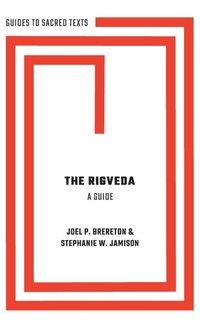
The Rigveda: A Guide
A Guide
Published on 15. April 2020
Book
Hardback
284 pages
978-0-19-063336-3 (ISBN)
Description
The Rigveda is a monumental text in both world religion and world literature, yet outside a small band of specialists it is little known. Composed in the latter half of the second millennium BCE, it stands as the foundational text of what would later be called Hinduism. The text consists of over a thousand hymns dedicated to various divinities, composed in sophisticated and often enigmatic verse. This concise guide from two of the Rigveda's leading English-language scholars introduces the text and breaks down its large range of topics--from meditations on cosmic enigmas to penetrating reflections on the ability of mortals to make contact with and affect the divine and cosmic realms through sacrifice and praise--for a wider audience.
More details
Series
Language
English
Place of publication
New York
United States
Target group
Professional and scholarly
Dimensions
Height: 222 mm
Width: 145 mm
Thickness: 19 mm
Weight
489 gr
ISBN-13
978-0-19-063336-3 (9780190633363)
Copyright in bibliographic data and cover images is held by Nielsen Book Services Limited or by the publishers or by their respective licensors: all rights reserved.
Schweitzer Classification
Other editions
Additional editions

Stephanie Jamison | Joel Brereton
The Rigveda: A Guide
Book
04/2020
Oxford University Press Inc
€41.50
Shipment within 15-20 days

Stephanie Jamison | Joel Brereton
The Rigveda: A Guide
E-Book
02/2020
OUP eBook
€17.49
Available for download

Stephanie Jamison | Joel Brereton
The Rigveda: A Guide
E-Book
02/2020
OUP eBook
€17.49
Available for download
Persons
Stephanie Jamison is Distinguished Professor of Asian Languages and Cultures and of Indo-European Studies at the University of California, Los Angeles. She is the author of many books and articles, including The Ravenous Hyenas and the Wounded Sun: Myth and Ritual in Ancient India and her monumental 2014 translation, with Joel Brereton, of The Rigveda for Oxford University Press.
Joel Brereton is Professor of Asian Studies and Religious Studies at the University of Texas at Austin. He is the author of The Rgvedic Adityas and the translator, with Stephanie Jamison, of The Rigveda for Oxford University Press.
Joel Brereton is Professor of Asian Studies and Religious Studies at the University of Texas at Austin. He is the author of The Rgvedic Adityas and the translator, with Stephanie Jamison, of The Rigveda for Oxford University Press.
Author
Distinguished Professor of Asian Languages and Cultures and of Indo-European StudiesDistinguished Professor of Asian Languages and Cultures and of Indo-European Studies, University of California, Los Angeles
Professor of Asian Studies and Religious StudiesProfessor of Asian Studies and Religious Studies, University of Texas at Austin
Content
I. Introduction
A. What is the Rgveda: A Brief Overview
B. A significant moment
C. World literature and religion
II. Historical Context
A. Migration
B. Indo-Iranian background
II. Dating and Authorship
A. Dating
B. Oral tradition and composition
C. Poets and poetic lineages
IV. Structure of the Text
A. Collection and ordering of the hymns
B. The transmission of the text and the state of the transmitted text
C. Structure of the text
V. Social and Political Context
A. Way of life
B. Social organization
C. Kingship
D. Mundane daily life and the depiction of women
VI. Ritual
A. Overview
B. The Soma Sacrifice in later Vedic texts
C. Changes between Rgvedic ritual and middle Vedic ritual
D. Pre-Rgvedic ritual
E. The Rgvedic ritual model
F. Other types of ritual in the Rgveda
VII. The Gods
A. Overview
B. The major gods
VIII. Eschatology
IX. Rgvedic Poetry and Poetics
A. The purpose of Rgvedic poetry: the power of the word
B. The poet
C. The status of the poet
D. Homologies, semantic webs, secret names, and riddles
E. Praise and request in the R?gvedic praise hymn
F. Structures and types of R?gvedic hymns: Some organizing
principles
G. Imagery, metaphors, similes
H. Language
I. Meter
X. Canonical Status and the Reception of the R?gveda
A. The Rgveda in the srauta tradition
B. Rgvedic Schools
C. Transmission
D. Interpretation
E. Reception
F. Publication
G. Text and Translation
Selection of Rgvedic Hymns
Bibliography
A. What is the Rgveda: A Brief Overview
B. A significant moment
C. World literature and religion
II. Historical Context
A. Migration
B. Indo-Iranian background
II. Dating and Authorship
A. Dating
B. Oral tradition and composition
C. Poets and poetic lineages
IV. Structure of the Text
A. Collection and ordering of the hymns
B. The transmission of the text and the state of the transmitted text
C. Structure of the text
V. Social and Political Context
A. Way of life
B. Social organization
C. Kingship
D. Mundane daily life and the depiction of women
VI. Ritual
A. Overview
B. The Soma Sacrifice in later Vedic texts
C. Changes between Rgvedic ritual and middle Vedic ritual
D. Pre-Rgvedic ritual
E. The Rgvedic ritual model
F. Other types of ritual in the Rgveda
VII. The Gods
A. Overview
B. The major gods
VIII. Eschatology
IX. Rgvedic Poetry and Poetics
A. The purpose of Rgvedic poetry: the power of the word
B. The poet
C. The status of the poet
D. Homologies, semantic webs, secret names, and riddles
E. Praise and request in the R?gvedic praise hymn
F. Structures and types of R?gvedic hymns: Some organizing
principles
G. Imagery, metaphors, similes
H. Language
I. Meter
X. Canonical Status and the Reception of the R?gveda
A. The Rgveda in the srauta tradition
B. Rgvedic Schools
C. Transmission
D. Interpretation
E. Reception
F. Publication
G. Text and Translation
Selection of Rgvedic Hymns
Bibliography