

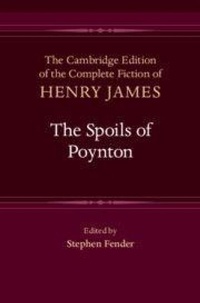
The Spoils of Poynton
Will be published approx. on 16. July 2026
Book
Hardback
490 pages
978-1-107-00996-7 (ISBN)
Description
The Cambridge Edition of the Complete Fiction of Henry James provides, for the first time, a scholarly edition of a major writer whose work continues to be read, quoted, adapted and studied. This is the first full critical edition of James's first major novel after his unhappy venture into commercial theatre. The Spoils of Poynton marks a shift towards the representation of complex psychological states characteristic of his later fiction, telling a dramatic story about the fate of the beautiful artefacts lovingly collected by the widow Adela Gereth and her late husband. Who do they, should they, belong to? The novel describes with extraordinary delicacy an intense family feud arising from the competing claims of those close to Mrs Gereth, and the ordeal endured by the young and intelligent Fleda Vetch as she tries to resolve it. This edition features a substantial introduction, explanatory notes, textual variants, bibliography and appendices.
More details
Series
Language
English
Place of publication
Cambridge
United Kingdom
Illustrations
Worked examples or Exercises
ISBN-13
978-1-107-00996-7 (9781107009967)
Copyright in bibliographic data and cover images is held by Nielsen Book Services Limited or by the publishers or by their respective licensors: all rights reserved.
Schweitzer Classification
Persons
Stephen Fender has taught widely in the US and the UK, where his most recent appointment was Professor and Chair of American Studies at Sussex. He is currently Visiting Professor at University College London. His books include studies of the rhetoric of the California Gold Rush, the literature of the Great Depression, Great American Speeches, and an edition of Henry James's short stories on the international theme.
Content
General Editors' preface; General chronology of James's life and writings; Introduction; Textual introduction; Chronology of composition and production; Bibliography; The Spoils of Poynton; Notes; Textual variants I; Textual variants II; Emendations.