

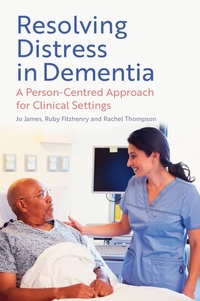
Resolving Distress in Dementia
A Person-Centred Approach for Clinical Settings
Published on 19. December 2024
Book
Paperback/Softback
256 pages
978-1-80501-023-4 (ISBN)
Description
GP surgeries, outpatient clinics, and hospitals can be difficult for people with dementia, as physical and emotional discomfort can build up and become overwhelming. This book invites healthcare workers to examine the root causes of distress for people with dementia in clinical settings, and offers ways to resolve incidents without the need for restraint or sedation. It also suggests strategies for reflection after incidents and forward planning, to support patients and staff and reduce the frequency of difficult interactions.
Each chapter includes illustrative case studies to bring key concepts and dilemmas to life, and is supported by analysis and practical advice rooted in the authors' extensive experience in dementia care.
This guide helps healthcare professionals to understand why people with dementia may become distressed in a clinical setting, and gives them the tools to not only resolve incidents, but create a person-centred, supportive environment to reduce future distress.
Each chapter includes illustrative case studies to bring key concepts and dilemmas to life, and is supported by analysis and practical advice rooted in the authors' extensive experience in dementia care.
This guide helps healthcare professionals to understand why people with dementia may become distressed in a clinical setting, and gives them the tools to not only resolve incidents, but create a person-centred, supportive environment to reduce future distress.
Reviews / Votes
This book is essential reading for all staff in care settings and provides an invaluable insight into why someone may be distressed. The key questions suggested throughout will enable staff to identify and plan appropriate approaches to reduce the person's distress. -- Dr Hilda Hayo, Chief Admiral Nurse and CEO Dementia UK If you ever thought you know a lot about dementia, read this and be inspired, educated and challenged. Resolving Distress in Dementia is accessible, well written and demonstrates the art of exceptional intelligent caring. -- Dr Dawne Garrett, Independent Consultant NurseMore details
Language
English
Place of publication
London
United Kingdom
Target group
College/higher education
Professional and scholarly
Product notice
Paperback (UK-trade)
Illustrations
N/A
Dimensions
Height: 152 mm
Width: 228 mm
Thickness: 16 mm
Weight
374 gr
ISBN-13
978-1-80501-023-4 (9781805010234)
Copyright in bibliographic data and cover images is held by Nielsen Book Services Limited or by the publishers or by their respective licensors: all rights reserved.
Schweitzer Classification
Other editions
Additional editions
Jo James | Ruby Fitzhenry | Rachel Thompson
Resolving Distress in Dementia
A Person-Centred Approach for Clinical Settings
E-Book
12/2024
Jessica Kingsley Publishers
€31.99
Available for download
Persons
Jo James (Author)
Jo James is a registered nurse with over 35 years' experience in acute hospital care and currently works as a consultant nurse for dementia and delirium at Imperial College Healthcare NHS Trust.
Ruby Fitzhenry (Author)
Ruby Fitzhenry is an RMN with a background working in inpatient dementia services, mental health forensic services and Parkinson's disease and dementia research. Ruby currently works as a dementia clinical nurse specialist supporting inpatients in acute hospitals.
Rachel Thompson (Author)
At the time of writing, Rachel Thompson was a Dementia Clinical Nurse Specialist with a background in intensive care. Prior to nursing, she worked as a dementia adviser in the community. She is passionate about reducing the stigma surrounding long-term conditions and helping people live well.
Mel Tumongha (Contributor)
Mel Tumongha worked as a registered nurse in the Philippines for 12 years before moving to the UK where she has worked as a staff nurse on a medicine for the elderly ward and as a dementia clinical nurse specialist at Imperial College Healthcare NHS Trust.
Jo James is a registered nurse with over 35 years' experience in acute hospital care and currently works as a consultant nurse for dementia and delirium at Imperial College Healthcare NHS Trust.
Ruby Fitzhenry (Author)
Ruby Fitzhenry is an RMN with a background working in inpatient dementia services, mental health forensic services and Parkinson's disease and dementia research. Ruby currently works as a dementia clinical nurse specialist supporting inpatients in acute hospitals.
Rachel Thompson (Author)
At the time of writing, Rachel Thompson was a Dementia Clinical Nurse Specialist with a background in intensive care. Prior to nursing, she worked as a dementia adviser in the community. She is passionate about reducing the stigma surrounding long-term conditions and helping people live well.
Mel Tumongha (Contributor)
Mel Tumongha worked as a registered nurse in the Philippines for 12 years before moving to the UK where she has worked as a staff nurse on a medicine for the elderly ward and as a dementia clinical nurse specialist at Imperial College Healthcare NHS Trust.
Content
Table of contents
Foreword
Introduction
Part 1
Chapter 1: About dementia
Chapter 2: The little history chapter.
Chapter 3: Communication (otherwise known as The Beast)
Chapter 4: What's so special about clinical settings?
Chapter 5: Being person-centred is not always easy.
Part 2
Chapter 6 - Why History Matters
Chapter 7: The physical problems we can't ignore.??
Chapter 8- Pain
Chapter 9: Delirium
Chapter 10 - How the environment can cause distress.
Chapter 11: Separation Anxiety
Chapter 12: Staring at a white wall - the toxic combination of boredom and isolation.
Chapter 13 - How we cause distress
Chapter 14 - When 'No' does not mean 'No'
Part 3
Chapter 15: Anger
Chapter 16- Sexual Behaviour
Chapter 17: Time Shifting
Chapter 18: Refusal by Romela Tumongha
Chapter 19: Sleep?
Chapter 20: Discriminatory behaviour
Part 4
Chapter 21 - The last one
Foreword
Introduction
Part 1
Chapter 1: About dementia
Chapter 2: The little history chapter.
Chapter 3: Communication (otherwise known as The Beast)
Chapter 4: What's so special about clinical settings?
Chapter 5: Being person-centred is not always easy.
Part 2
Chapter 6 - Why History Matters
Chapter 7: The physical problems we can't ignore.??
Chapter 8- Pain
Chapter 9: Delirium
Chapter 10 - How the environment can cause distress.
Chapter 11: Separation Anxiety
Chapter 12: Staring at a white wall - the toxic combination of boredom and isolation.
Chapter 13 - How we cause distress
Chapter 14 - When 'No' does not mean 'No'
Part 3
Chapter 15: Anger
Chapter 16- Sexual Behaviour
Chapter 17: Time Shifting
Chapter 18: Refusal by Romela Tumongha
Chapter 19: Sleep?
Chapter 20: Discriminatory behaviour
Part 4
Chapter 21 - The last one