

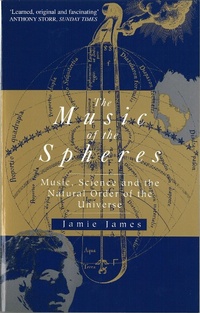
The Music Of The Spheres
Music, Science and the Natural Order of the Universe
Published on 16. February 1995
Book
Paperback/Softback
288 pages
978-0-349-10542-0 (ISBN)
Description
From the 5th century BC, when Pythagoras first composed his laws of Western music and science, until the flowering of Romanticism over 2000 years later, scientists and philosophers perceived the cosmos musically, as an ordered mechanism whose smooth operation created a celestial harmony - the music of the spheres. The separation of science and music began with the scientific revolution during the Renaissance, and reached a peak with Romanticism, which celebrated what was human, individual and local. 20th-century science and music, argues Jamie James in this book, have rejected the Romantic ideal and placed the ultimate focus outside the reach of human reason once again. The book provides a survey of the history of science and music, a reassessment of Romanticism and the modernist reaction to it, and a radical intellectual journey.
Reviews / Votes
An unequivocal affirmation that music is no mere entertainment, but is vitally significant: an important adjunct in healing; an essential part of education. * SUNDAY TIMES * A learned, sophisticated book, full of surprises. * FINANCIAL TIMES * James probes deeply into an undervalued question and left me wondering at the extent to which our whole view of reality- and what may lie beyond it- is being revolutionised. * NEW SCIENTIST * Exuberant and witty. * NEW YORK TIMES BOOK REVIEW *More details
Language
English
Place of publication
London
United Kingdom
Publishing group
Little, Brown Book Group
Dimensions
Height: 200 mm
Width: 130 mm
Thickness: 27 mm
Weight
191 gr
ISBN-13
978-0-349-10542-0 (9780349105420)
Copyright in bibliographic data and cover images is held by Nielsen Book Services Limited or by the publishers or by their respective licensors: all rights reserved.
Schweitzer Classification
Person
Jamie James was born in Houston Texas and is now the New York Correspondant for The Times and frequently contributes to the New York Times. He is a founding member of Discover and a contributing editor of Archeology.