

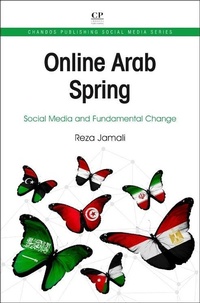
Online Arab Spring
Social Media and Fundamental Change
Published on 13. December 2014
Book
Paperback/Softback
200 pages
978-1-84334-757-6 (ISBN)
Description
What is the role of social media on fundamental change in Arab countries in the Middle East and North Africa? Online Arab Spring responds to this question, considering five countries: Egypt, Libya, Jordan, Yemen, and Tunisia, along with additional examples. The book asks why the penetration rate for social media differs in different countries: are psychological and social factors at play? Each chapter considers national identity, the legitimacy crisis, social capital, information and media literacy, and socialization. Religious attitudes are introduced as a key factor in social media, with Arabic countries in the Middle East and North Africa being characterized by Islamic trends. The insight gained will be helpful for analysing online social media effects internationally, and predicting future movements in a social context.
More details
Language
English
Place of publication
Witney
United Kingdom
Publishing group
Woodhead Publishing Ltd
Target group
College/higher education
Professional and scholarly
Researchers and practitioners in the areas of social media and its societal implications, with a particular focus on the Middle East and contemporary social change.
Product notice
Paperback (trade)
Unsewn / adhesive bound
Dimensions
Height: 228 mm
Width: 151 mm
Thickness: 10 mm
Weight
197 gr
ISBN-13
978-1-84334-757-6 (9781843347576)
Copyright in bibliographic data and cover images is held by Nielsen Book Services Limited or by the publishers or by their respective licensors: all rights reserved.
Schweitzer Classification
Other editions
Additional editions
E-Book
12/2014
Chandos Publishing
€58.95
Available for download
Person
Reza Jamali is a PhD candidate in Strategic Management at Tarbiat Modares University (TMU) Iran, Visiting Researcher at Radboud University Nijmegen (The Netherlands) and Selected Researcher at Yazd University (2009). He has published widely on issues of strategic management specifically focusing on science and technology ethics, social media and service excellence. His publications include articles in the Business Strategy Series, Performance Measurement and Metrics, Journal of Academic Ethics, Journal of Information Ethics and several international conferences. He is a reviewer of the Journal of Intellectual Capital, Gender in Management: An International Journal and Science & technology Policy. Now, he is conducting a research about How we can develop an ethical behavior index in social media and internet to rank websites based on ethical behavior, rather than number of visitors.
Content
List of figures
List of tables
About the author
Acknowledgements
Introduction
1. The origin of social media effects on countries' fundamental changes
Factors promoting social media penetration
Information literacy and media literacy
Mono-nationality and cultural exchanges
Soft war
References
Further reading
2. National identity, crises of legitimacy and penetration of social networks
Socialisation and national identity
Dimensions of national identity
References
Notes
3. Social media and social capital (with an emphasis on security)
Security and social capital
The role of political factors in social security
Factors in individual decision-making at the national level
Factors in participation in the security of society
Actual extent of the rule of law
References
4. Effects of information and media literacy in social movements
The complexity of the media
Literacy and political knowledge
Information literacy education in developing countries
Media literacy and critical thinking
References
Further reading
5. Religious attitudes in the cyber world
Religion and media
Islam, media and fighting oppression
Religion and social media: a mutual relationship
Religious democracy from a new viewpoint
Religious meritocracy
Islamic political parties
References
Notes
6. Country-social media intelligence: Towards a new index
Social media intelligence
Political market segmentation in the social media
Message design, media selection and message sending
Feedback and improvement on the message
References
Further reading
7. Strategic analysis and future strategies
Introduction
Analysis of political factors
Analysis of economic factors
Analysis of social factors
Analysis of technological and technical factors
Analysis of legal factors
Analysis of ethical factors
Strategies for the future
Overall conclusion
References
Index
List of tables
About the author
Acknowledgements
Introduction
1. The origin of social media effects on countries' fundamental changes
Factors promoting social media penetration
Information literacy and media literacy
Mono-nationality and cultural exchanges
Soft war
References
Further reading
2. National identity, crises of legitimacy and penetration of social networks
Socialisation and national identity
Dimensions of national identity
References
Notes
3. Social media and social capital (with an emphasis on security)
Security and social capital
The role of political factors in social security
Factors in individual decision-making at the national level
Factors in participation in the security of society
Actual extent of the rule of law
References
4. Effects of information and media literacy in social movements
The complexity of the media
Literacy and political knowledge
Information literacy education in developing countries
Media literacy and critical thinking
References
Further reading
5. Religious attitudes in the cyber world
Religion and media
Islam, media and fighting oppression
Religion and social media: a mutual relationship
Religious democracy from a new viewpoint
Religious meritocracy
Islamic political parties
References
Notes
6. Country-social media intelligence: Towards a new index
Social media intelligence
Political market segmentation in the social media
Message design, media selection and message sending
Feedback and improvement on the message
References
Further reading
7. Strategic analysis and future strategies
Introduction
Analysis of political factors
Analysis of economic factors
Analysis of social factors
Analysis of technological and technical factors
Analysis of legal factors
Analysis of ethical factors
Strategies for the future
Overall conclusion
References
Index