

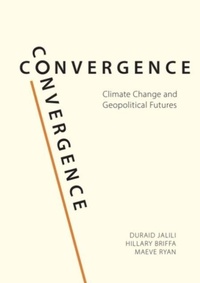
Convergence
Climate Change and Geopolitical Futures
Will be published approx. on 31. July 2026
Book
Hardback
192 pages
978-1-78821-938-9 (ISBN)
Description
Competing visions of the future are at the heart of debates on climate change. The daunting scale and characteristics of climate risks have led to terrifying prophesies of societal breakdown and escalating geopolitical flashpoints. Although these cannot be ignored, the same characteristics can intersect to heighten the potential for "convergence points", in which cooperation and transformation are catalysed by shared risks and recognition of mutual vulnerability. In navigating between entrenched geopolitical logics and transformative possibilities, this book provides readers with a vocabulary and a framework for assessing climate risk in ways that are both critical and creative; rooted in current structures but not limited by them. Thinking about climate futures, the authors show, means embracing radically different possibilities and seeing the world as it is (and the forces that have produced present realities), while remaining open to the possibility of it becoming otherwise.
Reviews / Votes
Trying to think through the impacts of climate change in a geopolitically turbulent world can feel so overwhelming as to discourage positive action. Jalili, Briffa, and Ryan cut through that paralysis with remarkable precision and imagination. Convergence is clear-eyed about current trends and risks, yet ambitious about the alternatives that are possible. -- Lawrence Freedman, King's College London This brilliant, imaginative and highly original take on the politics of climate change recognizes that addressing this huge challenge is more about the management of an uncertain future than grand problem-solving. The authors show this by skilfully presenting alternative futures across a range of policy areas and so circumvent the typical over-reliance on the simplistic alarmism of tipping points, resource wars and mass flows of environmental refugees. -- Peter Hough, Middlesex University London This book provides a much-needed exploration of climate futures, including the assumptions underpinning imagined scenarios of collapse or constructive realignment. The authors make a compelling case for recognising our own capacity to shape our future world. -- Matt McDonald, University of QueenslandMore details
Language
English
Place of publication
United Kingdom
Publishing group
Edinburgh University Press
Target group
College/higher education
Dimensions
Height: 240 mm
Width: 170 mm
ISBN-13
978-1-78821-938-9 (9781788219389)
Copyright in bibliographic data and cover images is held by Nielsen Book Services Limited or by the publishers or by their respective licensors: all rights reserved.
Schweitzer Classification
Persons
Duraid Jalili is Senior Lecturer in Security and Environment at King's College London. Hillary Briffa is Senior Lecturer in National Security Studies at King's College London. Maeve Ryan is Reader in History and Foreign Policy at King's College London.
Content
1. Introduction: flashpoints and convergence points in a time of "everything change"
2. Methods for understanding climate insecurity
3. Norms, knowledge and ideologies
4. Health and wellbeing
5. Resources, supply chains and political economies
6. Place and mobility
7. Technology and innovation
8. Epilogue
2. Methods for understanding climate insecurity
3. Norms, knowledge and ideologies
4. Health and wellbeing
5. Resources, supply chains and political economies
6. Place and mobility
7. Technology and innovation
8. Epilogue