

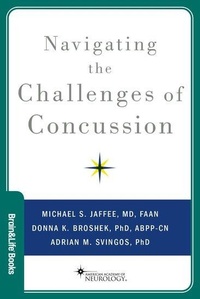
Navigating the Challenges of Concussion
Published on 12. April 2023
Book
Paperback/Softback
240 pages
978-0-19-063011-9 (ISBN)
Description
Concussion is one of the most common neurological conditions, with many people having experienced at least one concussion within a lifetime. Concussion has been the focus of great media attention which has brought awareness to this important health issue. While most have heard about athletes and concussions, these injuries can occur at any age and can have many causes such as car accidents and falls.
In Navigating the Challenges of Concussion, expert clinicians and researchers in the fields of neurology and neuropsychology teamed together to provide up-to-date and evidence-based information for patients and families affected by concussion or those at increased risk of sustaining concussions. Topics covered include how concussion is different from other forms of brain injury, what to expect after a concussion, and what to do if symptoms are persisting. The authors explore extensively the common misconceptions around the treatment of concussion, and instead offer evidence-based guidance to follow instead. Special considerations for children and students, athletes, employees, military personnel, and older adults are discussed. Patient stories are included throughout which highlight some of the experiences that patients with concussion may face and may relate to their own concussion journey.
In Navigating the Challenges of Concussion, expert clinicians and researchers in the fields of neurology and neuropsychology teamed together to provide up-to-date and evidence-based information for patients and families affected by concussion or those at increased risk of sustaining concussions. Topics covered include how concussion is different from other forms of brain injury, what to expect after a concussion, and what to do if symptoms are persisting. The authors explore extensively the common misconceptions around the treatment of concussion, and instead offer evidence-based guidance to follow instead. Special considerations for children and students, athletes, employees, military personnel, and older adults are discussed. Patient stories are included throughout which highlight some of the experiences that patients with concussion may face and may relate to their own concussion journey.
More details
Series
Language
English
Place of publication
New York
United States
Target group
Professional and scholarly
Product notice
Paperback (trade)
Unsewn / adhesive bound
Dimensions
Height: 209 mm
Width: 140 mm
Thickness: 11 mm
Weight
272 gr
ISBN-13
978-0-19-063011-9 (9780190630119)
Copyright in bibliographic data and cover images is held by Nielsen Book Services Limited or by the publishers or by their respective licensors: all rights reserved.
Schweitzer Classification
Other editions
Additional editions
Michael S. Jaffee | Donna K. Broshek | Adrian M. Svingos
Navigating the Challenges of Concussion
E-Book
01/2023
OUP eBook
€15.49
Available for download
Michael S. Jaffee | Donna K. Broshek | Adrian M. Svingos
Navigating the Challenges of Concussion
E-Book
01/2023
OUP eBook
€15.49
Available for download
Persons
Michael S Jaffee
Bob Paul Family Endowed Professor of Neurology and Director of the Brain Injury, Rehabilitation, and Neuroresilience Center, University of Florida
Michael S. Jaffee, MD, is the Bob Paul Family Endowed Professor of Neurology and Director of the Brain Injury, Rehabilitation, and Neuroresilience Center at the University of Florida. A graduate of UVA Medicine, Dr. Jaffee completed a residency in neurology and psychiatry and a sleep medicine fellowship at the San Antonio Uniformed Services Health Education Consortium. The former Director of the Defense and Veterans Brain Injury Center and a chair of the CDRMP Alzheimer's Research Program, Dr. Jaffee is currently a physician representative on the NFL Monetary Award Fund Provider Steering Committee and an active member of the AAN.
Donna K. Broshek, PhD, ABPP-CN
John Edward Fowler Professor
Director, Neuropsychology Assessment Clinic
Co-Director, Acute Concussion Evaluation Clinic
Department of Psychiatry & Neurobehavioral
Sciences
University of Virginia Health
Donna K. Broshek, PhD, ABPP-CN is the John Edward Fowler Professor and Director of the Neuropsychology Assessment Clinic in the Department of Psychiatry and Neurobehavioral Sciences at University of Virginia (UVA) Health. Dr. Broshek completed her doctorate at George Mason University and her fellowship in clinical neuropsychology at the UVA School of Medicine. She is a board certified clinical neuropsychologist and sees a large volume of patients with sports concussion, mild to moderate traumatic brain injury and persisting symptoms after concussion, as well as patients with other neurologic and medical conditions. Dr. Broshek is a Fellow and Past-President of the Sports Neuropsychology Society, and currently serves as the inaugural Executive Director. She is also a Fellow of the National Academy of Neuropsychology. Dr. Broshek has been active at the local, regional, and national levels in promoting concussion education and safety.
Adrian M. Svingos,
PhD
Postdoctoral Fellow
Brain Injury Clinical Research Center
Kennedy Krieger Institute and Johns Hopkins University School of Medicine
Adrian Svingos, PhD is a research and clinical neuropsychology fellow at the Kennedy Krieger Institute Brain Injury Clinical Research Center and the Department of Physical Medicine and Rehabilitation at Johns Hopkins University School of Medicine. Dr. Svingos earned an undergraduate degree from Syracuse University where she was a NCAA Division-1 athlete in field hockey. Dr. Svingos completed her master's and PhD degrees at the University of Florida, Department of Clinical and Health Psychology (Clinical Neuropsychology). Dr. Svingos' scientific work focuses on the identification of risk and resiliency factors associated with acquired brain injury recovery trajectories across the age and severity spectrum.
Bob Paul Family Endowed Professor of Neurology and Director of the Brain Injury, Rehabilitation, and Neuroresilience Center, University of Florida
Michael S. Jaffee, MD, is the Bob Paul Family Endowed Professor of Neurology and Director of the Brain Injury, Rehabilitation, and Neuroresilience Center at the University of Florida. A graduate of UVA Medicine, Dr. Jaffee completed a residency in neurology and psychiatry and a sleep medicine fellowship at the San Antonio Uniformed Services Health Education Consortium. The former Director of the Defense and Veterans Brain Injury Center and a chair of the CDRMP Alzheimer's Research Program, Dr. Jaffee is currently a physician representative on the NFL Monetary Award Fund Provider Steering Committee and an active member of the AAN.
Donna K. Broshek, PhD, ABPP-CN
John Edward Fowler Professor
Director, Neuropsychology Assessment Clinic
Co-Director, Acute Concussion Evaluation Clinic
Department of Psychiatry & Neurobehavioral
Sciences
University of Virginia Health
Donna K. Broshek, PhD, ABPP-CN is the John Edward Fowler Professor and Director of the Neuropsychology Assessment Clinic in the Department of Psychiatry and Neurobehavioral Sciences at University of Virginia (UVA) Health. Dr. Broshek completed her doctorate at George Mason University and her fellowship in clinical neuropsychology at the UVA School of Medicine. She is a board certified clinical neuropsychologist and sees a large volume of patients with sports concussion, mild to moderate traumatic brain injury and persisting symptoms after concussion, as well as patients with other neurologic and medical conditions. Dr. Broshek is a Fellow and Past-President of the Sports Neuropsychology Society, and currently serves as the inaugural Executive Director. She is also a Fellow of the National Academy of Neuropsychology. Dr. Broshek has been active at the local, regional, and national levels in promoting concussion education and safety.
Adrian M. Svingos,
PhD
Postdoctoral Fellow
Brain Injury Clinical Research Center
Kennedy Krieger Institute and Johns Hopkins University School of Medicine
Adrian Svingos, PhD is a research and clinical neuropsychology fellow at the Kennedy Krieger Institute Brain Injury Clinical Research Center and the Department of Physical Medicine and Rehabilitation at Johns Hopkins University School of Medicine. Dr. Svingos earned an undergraduate degree from Syracuse University where she was a NCAA Division-1 athlete in field hockey. Dr. Svingos completed her master's and PhD degrees at the University of Florida, Department of Clinical and Health Psychology (Clinical Neuropsychology). Dr. Svingos' scientific work focuses on the identification of risk and resiliency factors associated with acquired brain injury recovery trajectories across the age and severity spectrum.
Author
Bob Paul Family Endowed Professor of Neurology and Director of the Brain Injury, Rehabilitation, and Neuroresilience CenterBob Paul Family Endowed Professor of Neurology and Director of the Brain Injury, Rehabilitation, and Neuroresilience Center, University of Florida
John Edward Fowler Professor; Director, Neuropsychology Assessment Clinic; Co-Director, Acute Concussion Evaluation ClinicJohn Edward Fowler Professor; Director, Neuropsychology Assessment Clinic; Co-Director, Acute Concussion Evaluation Clinic, Department of Psychiatry & Neurobehavioral Sciences, University of Virginia Health
Postdoctoral FellowPostdoctoral Fellow, Kennedy Krieger Institute and Johns Hopkins University School of Medicine
Content
Part 1. Overview
1. Introduction
2. What is Concussion?
Part 2. Symptoms and Recovery
3. Acute Symptoms and Management
4. Common Symptoms Following Concussion
5. Prognosis and Expectations for Recovery
6. Management Options for Post-Concussive Symptoms to Promote Recovery
7. Long-Term Implications
8. School and Education Issues for the Student who has sustained a concussion
9. Occupational and Work issues for the Employee who has sustained a concussion
Part 3. Special Populations
10. Athletic Concussion
11. Military Concussion
12. Concussion in Children
13. Concussion in the Elderly
1. Introduction
2. What is Concussion?
Part 2. Symptoms and Recovery
3. Acute Symptoms and Management
4. Common Symptoms Following Concussion
5. Prognosis and Expectations for Recovery
6. Management Options for Post-Concussive Symptoms to Promote Recovery
7. Long-Term Implications
8. School and Education Issues for the Student who has sustained a concussion
9. Occupational and Work issues for the Employee who has sustained a concussion
Part 3. Special Populations
10. Athletic Concussion
11. Military Concussion
12. Concussion in Children
13. Concussion in the Elderly