

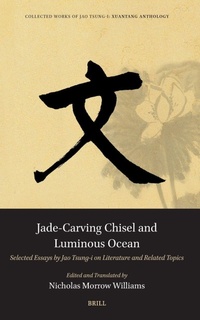
Jade-Carving Chisel and Luminous Ocean
Selected Essays by Jao Tsung-i on Literature and Related Topics
Brill (Publisher)
Published on 7. November 2024
Book
Hardback
288 pages
978-90-04-69317-3 (ISBN)
Description
Jao Tsung-i's scholarship illuminated the development of classical Chinese literature from antiquity through the end of the Qing dynasty. In this volume, eight interviews with and essays by Jao are translated faithfully into English, giving a sampling of his diverse insights into literature and its broader significance. Topics range from the religious beliefs underpinning the earliest Chinese writings, to the influence of Chan Buddhism on Chinese poetics, to Gu Yanwu's (1613-1682) poetic protest against the Manchu conquest. Collectively the essays demonstrate how literary art and spiritual beliefs have been intertwined throughout Chinese history.
More details
Series
Language
English
Place of publication
Leiden
Netherlands
Target group
Professional and scholarly
Product notice
sewn/stitched
Cloth over boards
Dimensions
Height: 240 mm
Width: 158 mm
Thickness: 20 mm
Weight
522 gr
ISBN-13
978-90-04-69317-3 (9789004693173)
Copyright in bibliographic data and cover images is held by Nielsen Book Services Limited or by the publishers or by their respective licensors: all rights reserved.
Schweitzer Classification
Person
Nicholas Morrow Williams, Ph.D. (2010), University of Washington, is Associate Professor of Chinese Literature at Arizona State University. He is the translator of Elegies of Chu (Oxford World's Classics, 2022) and author of numerous other works on classical Chinese poetry.
Jao Tsung-i (1917-2018) was a prolific scholar and polymathic painter, poet, and calligrapher. Born in Chaozhou, he spent most of his career in Hong Kong, where he won international recognition as a leading interpreter and representative of Chinese cultural tradition.
Jao Tsung-i (1917-2018) was a prolific scholar and polymathic painter, poet, and calligrapher. Born in Chaozhou, he spent most of his career in Hong Kong, where he won international recognition as a leading interpreter and representative of Chinese cultural tradition.
Content
Contents
Collected Works of Jao Tsung-i: Xuantang Anthology-Series Introduction
List of Tables and Figures
Editor's Introduction
Original Titles and Sources for Text Translated in This Volume
1 Literature and Spirit: in Conversation with Shi Yidui
?1?The Meaning of Shenming
?2?The Function of Divination
?3?The Verification of Spirits
2 Sudden Enlightenment and Gradual Enlightenment: in Conversation with Shi Yidui
?1?The Sixth Patriarch of Chan and the Rise of Chan Poetry
?2?Complete Penetration without Obstacle, Chan Mind Just So
?3?A Purified World, Ice Colder Than Water
3 Chinese Characters and Poetics
?1?Starting with Ezra Pound
?2?The Earliest Signs and Chinese Characters
?3?The Earliest Rhymed Narrative Poems
?4?Monosyllabic and Polysyllabic Words
?5?The Development of Xingsheng zi and Their Aesthetic Functions
?6?The Principles of Character Formation and the Concept of Lei ? (Category)
?7?The Conventions of Ellipsis and Reduplication
?8?Parallelism and Tonal Prosody
?9?The Development of Chinese Characters from a Functional Medium to an Aesthetic One and the Simplification of Poetry
?10?Conclusion
4 Confucian Learning and the Art of Rhetoric
?1?Verbal Refinement and Establishing Sincerity Comprise the Union between the Interior and Exterior
?2?Knowing People from Their Words
?3?Rhetoric and Pragmatics
5 On the "Wen fu" and Music
?1??2??3??4??5??6?6 Linked Pearls and Logic: a Case of Intercultural Misunderstanding
7 Suyab, the True Birthplace of Li Bai
?1?Location of Suyab
?2?Suyab Was Not Located in Qarasahr
?3?New Materials about Suyab
?4?Tibet and Suyab
?5?Suyab and the Western Turks
?6?Speculations about Why Li Bai's Father Returned to Sichuan
?7?Li Bai's Own Account of His Background
?8?Conclusion
8 On the Poetry of Gu Yanwu
Bibliography
Index
Collected Works of Jao Tsung-i: Xuantang Anthology-Series Introduction
List of Tables and Figures
Editor's Introduction
Original Titles and Sources for Text Translated in This Volume
1 Literature and Spirit: in Conversation with Shi Yidui
?1?The Meaning of Shenming
?2?The Function of Divination
?3?The Verification of Spirits
2 Sudden Enlightenment and Gradual Enlightenment: in Conversation with Shi Yidui
?1?The Sixth Patriarch of Chan and the Rise of Chan Poetry
?2?Complete Penetration without Obstacle, Chan Mind Just So
?3?A Purified World, Ice Colder Than Water
3 Chinese Characters and Poetics
?1?Starting with Ezra Pound
?2?The Earliest Signs and Chinese Characters
?3?The Earliest Rhymed Narrative Poems
?4?Monosyllabic and Polysyllabic Words
?5?The Development of Xingsheng zi and Their Aesthetic Functions
?6?The Principles of Character Formation and the Concept of Lei ? (Category)
?7?The Conventions of Ellipsis and Reduplication
?8?Parallelism and Tonal Prosody
?9?The Development of Chinese Characters from a Functional Medium to an Aesthetic One and the Simplification of Poetry
?10?Conclusion
4 Confucian Learning and the Art of Rhetoric
?1?Verbal Refinement and Establishing Sincerity Comprise the Union between the Interior and Exterior
?2?Knowing People from Their Words
?3?Rhetoric and Pragmatics
5 On the "Wen fu" and Music
?1??2??3??4??5??6?6 Linked Pearls and Logic: a Case of Intercultural Misunderstanding
7 Suyab, the True Birthplace of Li Bai
?1?Location of Suyab
?2?Suyab Was Not Located in Qarasahr
?3?New Materials about Suyab
?4?Tibet and Suyab
?5?Suyab and the Western Turks
?6?Speculations about Why Li Bai's Father Returned to Sichuan
?7?Li Bai's Own Account of His Background
?8?Conclusion
8 On the Poetry of Gu Yanwu
Bibliography
Index