

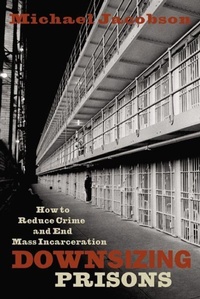
Downsizing Prisons
How to Reduce Crime and End Mass Incarceration
Published on 1. September 2006
Book
Paperback/Softback
292 pages
978-0-8147-4291-4 (ISBN)
Description
A convincing argument that mass incarceration neither reduces crime nor ensures safety
Over two million people are incarcerated in America's prisons and jails, eight times as many since 1975. Mandatory minimum sentencing, parole agencies intent on sending people back to prison, three-strike laws, for-profit prisons, and other changes in the legal system have contributed to this spectacular rise of the general prison population.
After overseeing the largest city jail system in the country, Michael Jacobson knows first-hand the inner workings of the corrections system. In Downsizing Prisons, he convincingly argues that mass incarceration will not, as many have claimed, reduce crime nor create more public safety. Simply put, throwing away the key is not the answer.
Over two million people are incarcerated in America's prisons and jails, eight times as many since 1975. Mandatory minimum sentencing, parole agencies intent on sending people back to prison, three-strike laws, for-profit prisons, and other changes in the legal system have contributed to this spectacular rise of the general prison population.
After overseeing the largest city jail system in the country, Michael Jacobson knows first-hand the inner workings of the corrections system. In Downsizing Prisons, he convincingly argues that mass incarceration will not, as many have claimed, reduce crime nor create more public safety. Simply put, throwing away the key is not the answer.
Reviews / Votes
Should be read by the public and used by policy makers. Essential. (Choice) There is a better path, and this book shows us how to find that new direction. (Los Angeles Times) Downsizing Prisons offers an innovative approach to reducing the strain on Americas overcrowded prisons: namely, by fixing the dysfunctional parole systems in states around the country. . . . Jacobsons book comes at exactly the right time. (Mother Jones) Policy wonks, journalists, elected officials and students of criminal justice will find the arguments and data in this book worth grappling with (New York Newsday) Downsizing Prisons is an excellent, well-documented, and well-referenced case study. Jacobson is a seasoned policy practitioner who understands the fit of partisan, policy, and system politics. He has hands-on experience, understands what works, and knows first-hand the dysfunctional impacts of higher incarceration rates. He argues for more rational and effective cost-control approaches to crime control (Public Administration Review) Downsizing Prisons explains not only why current incarceration policy is not working, but what we can do about it. Jacobsons blueprint provides an overview of a pragmatic strategy that can reduce the size of our bloated prison system while improving prospects for public safety.- - Marc Mauer, author of Race to IncarcerateMore details
Language
English
Place of publication
New York
United States
Target group
Professional and scholarly
Product notice
Paperback (trade)
Dimensions
Height: 227 mm
Width: 153 mm
Thickness: 20 mm
Weight
431 gr
ISBN-13
978-0-8147-4291-4 (9780814742914)
Copyright in bibliographic data and cover images is held by Nielsen Book Services Limited or by the publishers or by their respective licensors: all rights reserved.
Schweitzer Classification
Other editions
Additional editions
E-Book
02/2005
New York University Press
€29.49
Available for download
Person
Michael Jacobson has over twenty years of government service. He was formerly the commissioner of the New York City Departments of Correction and Probation and a deputy budget director for the City of New York, serving in the Koch, Dinkins, and Giuliani administrations. He is currently the Executive Director of the Vera Institute of Justice.
Content
ContentsAcknowledgmentsPreface Introduction: Bloated Prisons 1 Mass Incarceration 2 Unintended Consequences 3 ANew Reality for Prison Systems 4 Why Prison Growth Does Not Substantially Reduce Crime 5 Why Parole and Probation Policies Need to Change 6 Success Stories and Works in Progress7 Downsizing Prisons Notes Bibliography IndexAbout the Author