

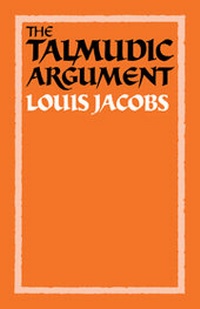
The Talmudic Argument
A Study in Talmudic Reasoning and Methodology
Published on 13. September 1984
Book
Hardback
240 pages
978-0-521-26370-2 (ISBN)
Description
This book, the only one in English that can serve as a textbook for beginners and more advanced students of the Babylonian Talmud, examines in detail a number of typical lengthy passages with a view to showing how Talmudic reasoning operates and how the Talmud was compiled by its final editors. The book serves as an introduction to the nature of this fascinating work on which the Jewish mind has been intellectually stimulated and nourished for over 1500 years. Original insights into the Talmudic debates are provided for the consideration of Talmudic experts but the work is intended chiefly as a guide to students who wish to obtain a more than superficial idea of what the Talmud really is about.
More details
Language
English
Place of publication
Cambridge
United Kingdom
Target group
College/higher education
Dimensions
Height: 216 mm
Width: 138 mm
Thickness: 18 mm
Weight
410 gr
ISBN-13
978-0-521-26370-2 (9780521263702)
Copyright in bibliographic data and cover images is held by Nielsen Book Services Limited or by the publishers or by their respective licensors: all rights reserved.
Schweitzer Classification
Other editions
New editions
Book
09/1984
Cambridge University Press
€56.90
Shipment within 15-20 days
Additional editions
Book
09/1984
Cambridge University Press
€56.90
Shipment within 15-20 days
Content
1. The Talmudic argument; 2. The literary form of the Babylonian Talmud; 3. Bererah: retrospective specification; 4. Yeush she-lo mi-da`at: unconscious abandonment of property; 5. Rubba: probability; 6. Davar she-lo ba le-'olam: conveyance of a thing not yet in existence; 7. Kol she-eyno be-zeh ahar zeh afilu be-vat ahat eyno: whatever cannot be established in a consecutive sequence cannot be established even in a simultaneous sequence; 8. Yesh horesh telem ehad: a single act of ploughing can result in a number of penalties; 9. Simanin de-oraita o de-rabbanan: whether reliance on distinguishing marks for the purpose of identification is Biblical or Rabbinic; 10. Devarim she-be-lev e nam devarim: mental reservations in contracts are disregarded; 11. Hazakah: presumptive state; 12. Gadol kevod ha-beriot: the law and regard for human dignity; 13. Hazmanah milts: whether the designation of an object for a particular use is effective; 14. Mitzvat laseh she-ha-zeman geramah: positive precepts dependent on time from which women are exempt; 15. Heyzek she-eyno nikar: indiscernible damage to property; 16. Kinyan hatzer: acquisition by means of a domain; 17. Palginan be-dibbura: admission of part of a testimony even though another part of the same testimony is rejected; 18. Tadir u-mekuddash: which takes precedence: the more constant or the more sacred?; 19. Palga nizka: the nature of the payment of half-damages to which the owner of a goring ox is liable; 20. Patur mi-diney adam ve-hayyav be-diney shamayim: cases where there is liability in the eyes of God even though the human courts cannot enforce payment; 21. Mahal 'al kevodo kevodo mahul: renunciation of honour by one to whom it is due; 22. Conclusions.