

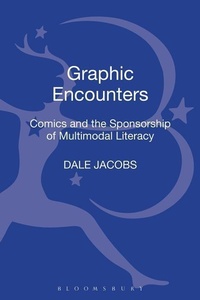
Graphic Encounters
Comics and the Sponsorship of Multimodal Literacy
Published on 24. October 2013
Book
Hardback
240 pages
978-1-4411-2956-7 (ISBN)
Description
With the recent explosion of activity and discussion surrounding comics, it seems timely to examine how we might think about the multiple ways in which comics are read and consumed.
Graphic Encounters moves beyond seeing the reading of comics as a debased or simplified word-based literacy. Dale Jacobs argues compellingly that we should consider comics as multimodal texts in which meaning is created through linguistic, visual, audio, gestural, and spatial realms in order to achieve effects and meanings that would not be possible in either a strictly print or strictly visual text. Jacobs advances two key ideas: one, that reading comics involves a complex, multimodal literacy and, two, that by studying how comics are used to sponsor multimodal literacy, we can engage more deeply with the ways students encounter and use these and other multimodal texts. Looking at the history of how comics have been used (by churches, schools, and libraries among others) will help us, as literacy teachers, best use that knowledge within our curricula, even as we act as sponsors ourselves.
Graphic Encounters moves beyond seeing the reading of comics as a debased or simplified word-based literacy. Dale Jacobs argues compellingly that we should consider comics as multimodal texts in which meaning is created through linguistic, visual, audio, gestural, and spatial realms in order to achieve effects and meanings that would not be possible in either a strictly print or strictly visual text. Jacobs advances two key ideas: one, that reading comics involves a complex, multimodal literacy and, two, that by studying how comics are used to sponsor multimodal literacy, we can engage more deeply with the ways students encounter and use these and other multimodal texts. Looking at the history of how comics have been used (by churches, schools, and libraries among others) will help us, as literacy teachers, best use that knowledge within our curricula, even as we act as sponsors ourselves.
More details
Language
English
Place of publication
New York
United States
Publishing group
Bloomsbury Publishing Plc
Target group
College/higher education
Product notice
Laminated cover
Illustrations
15
Dimensions
Height: 216 mm
Width: 140 mm
Thickness: 14 mm
Weight
426 gr
ISBN-13
978-1-4411-2956-7 (9781441129567)
DOI
CBID162366
Copyright in bibliographic data and cover images is held by Nielsen Book Services Limited or by the publishers or by their respective licensors: all rights reserved.
Schweitzer Classification
Person
Dale Jacobs is an Associate Professor of English at the University of Windsor, Canada. He has published numerous essays on comics and literacy. He is the editor of The Myles Horton Reader and the co-editor (with Laura Micciche) of A Way to Move.
Content
Chapter 1: Introduction
Chapter 2: Secret Origins of Literacy Sponsorship
Chapter 3: To Blend In or Stand Out: Publishers' Responses to "A National Disgrace" and the Comics Panic of the Early 1940s
Chapter 4: More at Stake: EC, Vampires, and the Sponsorship of Critical Literacy
Chapter 5: Oral Roberts Discovers Comics and Archie Goes to Church: Sponsoring Multimodal Literacy through Religious Comics
Chapter 6: Teaming Up for Literacy: Spider-Man, The Electric Company, and Cross-Media Literacy Sponsorship
Chapter 7: Libraries and the Sponsorship of Literacy through Comics
Acknowledgements
Works Cited
Index
Chapter 2: Secret Origins of Literacy Sponsorship
Chapter 3: To Blend In or Stand Out: Publishers' Responses to "A National Disgrace" and the Comics Panic of the Early 1940s
Chapter 4: More at Stake: EC, Vampires, and the Sponsorship of Critical Literacy
Chapter 5: Oral Roberts Discovers Comics and Archie Goes to Church: Sponsoring Multimodal Literacy through Religious Comics
Chapter 6: Teaming Up for Literacy: Spider-Man, The Electric Company, and Cross-Media Literacy Sponsorship
Chapter 7: Libraries and the Sponsorship of Literacy through Comics
Acknowledgements
Works Cited
Index