

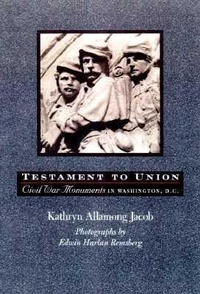
Testament to Union
Civil War Monuments in Washington, D.C.
Published on 8. December 1998
Book
Hardback
208 pages
978-0-8018-5861-1 (ISBN)
Description
Although the monuments of Washington, D.C., honor more than two centuries of history and heroes, five years of that history produced more of the city's public commemorative sculpture than all the others combined. The heroes of the Civil War command Washington's choicest vantage points and most visible parks, lending their names to the city's most familiar circles and squares-Scott, Farragut, Logan, Sheridan, Dupont, and others. In Testament to Union, Kathryn Allamong Jacob tells the stories behind the many District of Columbia statues that honor participants in the Civil War, predominantly Union, and testify to their sacrifice and valor. In her introduction, Jacob puts these monuments in historical context, describing the often bitter battles over control of historical memory, the postwar monument business (a lone soldier-in-granite model could cost a community as little as 1,000), and the rise of the "city beautiful" movement that transformed Washington. She then offers individual descriptions of forty-one sculptures, providing a lively and informative guide to some of Washington's most beautiful and moving works of art.
Organized geographically for easy use on walking or driving tours, the entries begin by listing the subject or title of the memorial along with its sculptor, medium, date, and location. Jacob describes its various elements and symbols, and she notes who commissioned the sculpture, who paid for it (or failed to pay in several cases), and who approved its design and placement. She also includes anecdotes and controversies that bring the monuments and their colorful history more fully to life. Admiral David Farragut's statue, for example, is cast from the propeller of his ship the U.S.S. Hartford, from whose rigging he shouted, "Damn the torpedoes! Full speed ahead!" during the battle of Mobile Bay. At the dedication of Lincoln Park's Emancipation Monument in 1876, the largest assembly of African-American to date, speaker Frederick Douglass shocked white listeners with thinly veiled criticism of the martyred Lincoln.
Edwin Remsberg's photographs of the monuments capture striking images of war and sacrifice-the straining horses and terrified men of the cavalry grouping at the Grant Monument; the vivid tomb effigy of young John Meigs, depicting him as he was found dead in a field; the Pension Building frieze with its hundreds of finely detailed terra cotta soldiers and sailors marching and rowing across the face of the building. Along with swashbuckling generals atop pedestals bristling with cannon, unexpected subjects appear. A statue of John Ericsson, the Swedish-American who designed the Monitor and perfected the screw propeller for the Union Navy, is hidden in a circle of shrubbery beside the Potomac. A bas-relief of twelve nuns dedicated to the memory of various religious orders who nursed the wounded during the Civil War sits beside noisy Rhode Island Avenue. In addition to the enormous white temple to Lincoln on the Mall, four smaller statues of that president can be found in the city where he was assassinated. Washington's Civil War sculptures bear silent witness to the struggle to preserve the Union. They are the fruit of conscious efforts to shape the nation's memory of that struggle.
For tourists and long-time residents, and for anyone interested in the Civil War or public art, Testament to Union is a wonderful guide to these tangible connections to the nation's past and an era when public monuments packed powerful messages.
Organized geographically for easy use on walking or driving tours, the entries begin by listing the subject or title of the memorial along with its sculptor, medium, date, and location. Jacob describes its various elements and symbols, and she notes who commissioned the sculpture, who paid for it (or failed to pay in several cases), and who approved its design and placement. She also includes anecdotes and controversies that bring the monuments and their colorful history more fully to life. Admiral David Farragut's statue, for example, is cast from the propeller of his ship the U.S.S. Hartford, from whose rigging he shouted, "Damn the torpedoes! Full speed ahead!" during the battle of Mobile Bay. At the dedication of Lincoln Park's Emancipation Monument in 1876, the largest assembly of African-American to date, speaker Frederick Douglass shocked white listeners with thinly veiled criticism of the martyred Lincoln.
Edwin Remsberg's photographs of the monuments capture striking images of war and sacrifice-the straining horses and terrified men of the cavalry grouping at the Grant Monument; the vivid tomb effigy of young John Meigs, depicting him as he was found dead in a field; the Pension Building frieze with its hundreds of finely detailed terra cotta soldiers and sailors marching and rowing across the face of the building. Along with swashbuckling generals atop pedestals bristling with cannon, unexpected subjects appear. A statue of John Ericsson, the Swedish-American who designed the Monitor and perfected the screw propeller for the Union Navy, is hidden in a circle of shrubbery beside the Potomac. A bas-relief of twelve nuns dedicated to the memory of various religious orders who nursed the wounded during the Civil War sits beside noisy Rhode Island Avenue. In addition to the enormous white temple to Lincoln on the Mall, four smaller statues of that president can be found in the city where he was assassinated. Washington's Civil War sculptures bear silent witness to the struggle to preserve the Union. They are the fruit of conscious efforts to shape the nation's memory of that struggle.
For tourists and long-time residents, and for anyone interested in the Civil War or public art, Testament to Union is a wonderful guide to these tangible connections to the nation's past and an era when public monuments packed powerful messages.
Reviews / Votes
Reading this book makes me want to jump in the car, drive down to Washington and look at these monuments with new eyes. It provides a wonderful example of what historic travel is all about and the way it can add a whole new dimension to a visit... Jacob takes what could have been a dry topic and turns it into a fascinating behind-the-pedestals look at 41 Civil War monuments in the nation's capital. -- Tom Huntington, Editor Historic Traveler Rich and fascinating and packed with the kind of detail that can only come with total immersion in a subject, Testament to Union is a Washingtonian's jewel hoard... We are, in short, in the hands of a master of anecdote, who leads the reader from one end of the town to the other by the stories and histories behind the sightless faces of the sculptured heroes and their attendant figures. -- Duncan Spencer Washington Times Readable and well illustrated... Each entry sets the memorial in its political and artistic context and traces the story of its design, construction, and dedication. These accounts are well researched, vivid, and revealing, as Jacob weaves in human stories about controversies, sponsors, and sculptors. -- Catherine W. Bishir Journal of Southern History 2000 Jacob's book is a handsomely produced catalog of the Civil War monuments located in the Washington, D.C., area, with excellent new photographs. -- Kirk Savage Public Historian 1999 Jacob's remarkable volume vividly animates our understanding of the resonant connections between art and history within a politically charged civic matrix, and she skillfully conveys the complexities inherent in historical commemoration. -- Betsy Fahlman Virginia Magazine of History and Biography 1999More details
Language
English
Place of publication
Baltimore, MD
United States
Product notice
sewn/stitched
Cloth over boards
Illustrations
95 s/w Photographien bzw. Rasterbilder, 1 s/w Zeichnung
1 Line drawings, black and white; 95 Halftones, black and white
Dimensions
Height: 261 mm
Width: 186 mm
Thickness: 23 mm
Weight
621 gr
ISBN-13
978-0-8018-5861-1 (9780801858611)
DOI
10.56021/9780801858611
Copyright in bibliographic data and cover images is held by Nielsen Book Services Limited or by the publishers or by their respective licensors: all rights reserved.
Schweitzer Classification
Other editions
Additional editions
Book
07/2009
Johns Hopkins University Press
€30.00
Article not available for order
Persons
Kathryn Allamong Jacob is curator of manuscripts at the Schlesinger Library at the Radcliffe Institute at Harvard University. She is the author of Capital Elites: Society in Washington, D.C., after the Civil War. Edwin Harlan Remsberg is a photographer who lives in Fallston, Maryland. His photographs appear in Maryland's Vanishing Lives, also published by Johns Hopkins.
Content
Acknowledgments
Introduction
Monuments
Chapter 1. Arsenal Monument
Chapter 2. Emancipation
Chapter 3. Veterans of Foreign Wars Tribute
Chapter 4. Freedom
Chapter 5. James A. Garfield Memorial
Chapter 6. Ulysses S. Grant Memorial
Chapter 7. Peace Monument
Chapter 8. Major General George Gordon Meade Memorial
Chapter 9. Albert Pike Memorial
Chapter 10. Pension Building
Chapter 11. Abraham Lincoln, Judiciary Square
Chapter 12. Benjamin Franklin Stephenson and the Grand Army of the Republic Memorial
Chapter 13. Major General Winfield Scott Hancock
Chapter 14. Admiral David Farragut, United States Navy Memorial
Chapter 15. Major General John A. Logan
Chapter 16. Major General George H. Thomas
Chapter 17. Brigadier General James Birdseye McPherson
Chapter 18. General William Tecumseh Sherman Monument
Chapter 19. Lieutenant General Winfield Scott, Scott Circle
Chapter 20. Admiral David Farragut, Farragut Square
Chapter 21. Major General John A. Rawlins
Chapter 22. Abraham Lincoln, Rail Fence Mender
Chapter 23. John Ericsson Monument
Chapter 24. Lincoln Memorial
Chapter 25. Nuns of the Battlefield
Chapter 26. Rear Admiral Samuel Francis Du Pont Memorial Fountain
Chapter 27. Major General George B. McClellan
Chapter 28. General Philip H. Sheridan
Chapter 29. 25th New. York Volunteers Monument
Chapter 30. Lincoln Under Fire
Chapter 31. African-American Civil War Memorial
Chapter 32. Lieutenant General Winfield Scott, Soldiers' Home
Chapter 33. Abraham Lincoln, Fort Lincoln Cemetery
Chapter 34. Arlington National Cemetery
Chapter 35. Major John Rodgers Meigs
Chapter 36. Major General William Worth Belknap Monument
Chapter 37. Major General Philip Kearny
Chapter 38. Confederate Monument
Chapter 39. Brigadier General Richard L. Hoxie and Vinnie Ream Hoxie Monument
Chapter 40. Major General Henry W. Lawton Monument
Chapter 41. Alexandria Confederate Memorial
Appendix A. Monuments by Date of Installation
Appendix B. Alphabetical List of Monuments with Sculptors
Appendix C. Alphabetical List of Sculptors with Monuments
Other Sources Consulted
Index
Introduction
Monuments
Chapter 1. Arsenal Monument
Chapter 2. Emancipation
Chapter 3. Veterans of Foreign Wars Tribute
Chapter 4. Freedom
Chapter 5. James A. Garfield Memorial
Chapter 6. Ulysses S. Grant Memorial
Chapter 7. Peace Monument
Chapter 8. Major General George Gordon Meade Memorial
Chapter 9. Albert Pike Memorial
Chapter 10. Pension Building
Chapter 11. Abraham Lincoln, Judiciary Square
Chapter 12. Benjamin Franklin Stephenson and the Grand Army of the Republic Memorial
Chapter 13. Major General Winfield Scott Hancock
Chapter 14. Admiral David Farragut, United States Navy Memorial
Chapter 15. Major General John A. Logan
Chapter 16. Major General George H. Thomas
Chapter 17. Brigadier General James Birdseye McPherson
Chapter 18. General William Tecumseh Sherman Monument
Chapter 19. Lieutenant General Winfield Scott, Scott Circle
Chapter 20. Admiral David Farragut, Farragut Square
Chapter 21. Major General John A. Rawlins
Chapter 22. Abraham Lincoln, Rail Fence Mender
Chapter 23. John Ericsson Monument
Chapter 24. Lincoln Memorial
Chapter 25. Nuns of the Battlefield
Chapter 26. Rear Admiral Samuel Francis Du Pont Memorial Fountain
Chapter 27. Major General George B. McClellan
Chapter 28. General Philip H. Sheridan
Chapter 29. 25th New. York Volunteers Monument
Chapter 30. Lincoln Under Fire
Chapter 31. African-American Civil War Memorial
Chapter 32. Lieutenant General Winfield Scott, Soldiers' Home
Chapter 33. Abraham Lincoln, Fort Lincoln Cemetery
Chapter 34. Arlington National Cemetery
Chapter 35. Major John Rodgers Meigs
Chapter 36. Major General William Worth Belknap Monument
Chapter 37. Major General Philip Kearny
Chapter 38. Confederate Monument
Chapter 39. Brigadier General Richard L. Hoxie and Vinnie Ream Hoxie Monument
Chapter 40. Major General Henry W. Lawton Monument
Chapter 41. Alexandria Confederate Memorial
Appendix A. Monuments by Date of Installation
Appendix B. Alphabetical List of Monuments with Sculptors
Appendix C. Alphabetical List of Sculptors with Monuments
Other Sources Consulted
Index