

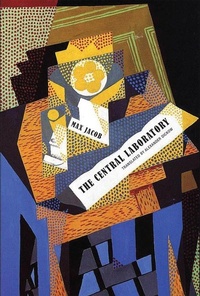
The Central Laboratory
Published on 8. September 2022
Book
Paperback/Softback
360 pages
978-1-939663-80-1 (ISBN)
Description
The first English translation of the Cubist poet's most important collection of verse poems-a wild grab bag of contradictory styles
When Max Jacob published The Central Laboratory in 1921, Parisian Dada had just officially come to an end and Surrealism was yet to be born. The poetic scene in Paris was between definitions, and Jacob embodied that moment.
The Central Laboratory is distinctly modern, yet utterly discordant with anything else that had been published before: a grab bag of popular genres, operettas, Breton folk song, nonsense poetry, nursery rhyme, doggerel, parody and puns in which sound often trumps sense and Jacob changes register on a dime. Employing Symbolist obscure reference, Cubist fracturing of perspective and Dadaist discontinuity, Jacob's art of mixed signals and mocked allegory formulates a camp sensibility, a "queering" of literary style as riddled with contradiction as Jacob himself had been in his lifetime.
A century after its initial publication in French, the book remains utterly peculiar and lost for too long in the shadow of Jacob's more famous book of prose poems, The Dice Cup. Jacob himself said of The Central Laboratory: "it sums up 20 years and reflects 20 states of soul, often 20 styles either suffered or created by me."
Max Jacob (1876-1944) was a French poet, painter, writer and critic. A key figure of bohemian Montmartre and the Cubist era, he rubbed shoulders with such figures as Apollinaire and Modigliani, and was a lifelong friend to Picasso, Gris and Cocteau. Jacob converted from Judaism to Christianity in 1915. Arrested by the Gestapo in 1944, he died in a deportation camp of pneumonia. Rosanna Warren's critically acclaimed biography of Jacob was published in 2020.
When Max Jacob published The Central Laboratory in 1921, Parisian Dada had just officially come to an end and Surrealism was yet to be born. The poetic scene in Paris was between definitions, and Jacob embodied that moment.
The Central Laboratory is distinctly modern, yet utterly discordant with anything else that had been published before: a grab bag of popular genres, operettas, Breton folk song, nonsense poetry, nursery rhyme, doggerel, parody and puns in which sound often trumps sense and Jacob changes register on a dime. Employing Symbolist obscure reference, Cubist fracturing of perspective and Dadaist discontinuity, Jacob's art of mixed signals and mocked allegory formulates a camp sensibility, a "queering" of literary style as riddled with contradiction as Jacob himself had been in his lifetime.
A century after its initial publication in French, the book remains utterly peculiar and lost for too long in the shadow of Jacob's more famous book of prose poems, The Dice Cup. Jacob himself said of The Central Laboratory: "it sums up 20 years and reflects 20 states of soul, often 20 styles either suffered or created by me."
Max Jacob (1876-1944) was a French poet, painter, writer and critic. A key figure of bohemian Montmartre and the Cubist era, he rubbed shoulders with such figures as Apollinaire and Modigliani, and was a lifelong friend to Picasso, Gris and Cocteau. Jacob converted from Judaism to Christianity in 1915. Arrested by the Gestapo in 1944, he died in a deportation camp of pneumonia. Rosanna Warren's critically acclaimed biography of Jacob was published in 2020.
Reviews / Votes
Jacob moves freely between sense and nonsense, beautifying the confusing, and at times, he delights in nothing less than the joy of how words sound. -- Patrick James Dunagan * Rain Taxi *More details
Language
English
Place of publication
Cambridge
United States
Product notice
Paperback (trade)
Unsewn / adhesive bound
Illustrations
1 Illustrations
Dimensions
Height: 201 mm
Width: 137 mm
Thickness: 23 mm
Weight
499 gr
ISBN-13
978-1-939663-80-1 (9781939663801)
Copyright in bibliographic data and cover images is held by Nielsen Book Services Limited or by the publishers or by their respective licensors: all rights reserved.
Schweitzer Classification