

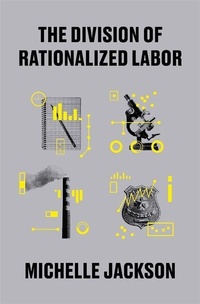
The Division of Rationalized Labor
Published on 2. December 2025
Book
Hardback
352 pages
978-0-674-29622-0 (ISBN)
Description
A pathbreaking study of why, paradoxically, workforce specialization and job responsibilities have increased hand in hand.
In the United States and other late-industrial countries, the division of labor has changed radically over the last 150 years. This comes as no surprise: the nature of work has been transformed by new technologies, new discoveries, and new challenges. While the fact of change was predictable, the type of change is not at all as theorists envisioned.
For all their differences, Adam Smith, Karl Marx, Emile Durkheim, and Max Weber each presumed that specialized workers would perform a narrower range of tasks. The early history of the industrial age supported this view. As the assembly line overtook the workshop, the artisan who constructed every part of a useful object was replaced with workers who handled a single piece of the work process. The Division of Rationalized Labor demonstrates that-although early industrialization may have operated as Smith, Marx, and their colleagues surmised-in late industrialization we are witnessing something quite different: specialization in many occupations has actually led to workers taking on an increasingly wide range of responsibilities.
Marshaling rich historical and statistical data, Michelle Jackson shows how this paradox of specialization emerges today in education, law enforcement, medicine, and manufacturing. Jackson argues that the development of probabilistic science provided the foundation for growing job complexity. As researchers learned which levers to pull in order to maximize productivity in a given industry, they created new tasks for the workers who specialized in producing industry outputs. As researchers developed the capacity to predict bad outcomes-criminality, low test scores, poor health-they left police, teachers, doctors, and nurses responsible for increasingly complicated preventive work. Analogous situations arise throughout the labor force, ensuring that workers across the occupational structure are overworked and overwhelmed.
In the United States and other late-industrial countries, the division of labor has changed radically over the last 150 years. This comes as no surprise: the nature of work has been transformed by new technologies, new discoveries, and new challenges. While the fact of change was predictable, the type of change is not at all as theorists envisioned.
For all their differences, Adam Smith, Karl Marx, Emile Durkheim, and Max Weber each presumed that specialized workers would perform a narrower range of tasks. The early history of the industrial age supported this view. As the assembly line overtook the workshop, the artisan who constructed every part of a useful object was replaced with workers who handled a single piece of the work process. The Division of Rationalized Labor demonstrates that-although early industrialization may have operated as Smith, Marx, and their colleagues surmised-in late industrialization we are witnessing something quite different: specialization in many occupations has actually led to workers taking on an increasingly wide range of responsibilities.
Marshaling rich historical and statistical data, Michelle Jackson shows how this paradox of specialization emerges today in education, law enforcement, medicine, and manufacturing. Jackson argues that the development of probabilistic science provided the foundation for growing job complexity. As researchers learned which levers to pull in order to maximize productivity in a given industry, they created new tasks for the workers who specialized in producing industry outputs. As researchers developed the capacity to predict bad outcomes-criminality, low test scores, poor health-they left police, teachers, doctors, and nurses responsible for increasingly complicated preventive work. Analogous situations arise throughout the labor force, ensuring that workers across the occupational structure are overworked and overwhelmed.
Reviews / Votes
Drawing on both historical accounts and quantitative statistics, Jackson seeks to explain why jobs in four fields-medicine, policing, education, and manufacturing-have experienced the 'paradox of specialization.' -- G. M. Massey * Choice * A profound, mind-expanding book, The Division of Rationalized Labor offers a powerful correction to common assumptions about how work has changed over time. It takes internal contradictions or puzzles and renders them understandable. This is one of those books that remakes the world afresh, bringing up new parallels, triggering new insights, and asking new questions. In clarifying what existing theories don't let us see, Michelle Jackson offers a revolutionary take worthy of Thomas Kuhn. -- Allison Pugh, Johns Hopkins University With a sharp-eyed analysis of trends and judiciously chosen case studies, Michelle Jackson resolves the paradox at the core of the twenty-first-century economy: the more specialized work becomes, the more there is to do. Her conclusion that science and technology pile new tasks on workers faster than managers can spin off new specialties represents a major, paradigm-shifting contribution to the study of work. -- Michael Hout, New York University This brilliant book draws on a wealth of historical examples to document how the dissemination of scientific knowledge has transformed occupations, rationalizing tasks, proliferating work responsibilities, and diversifying organizational missions. Precise, powerful, and deeply engaging, it upends everything we thought we knew about the division of labor. -- Marion Fourcade, University of California, BerkeleyMore details
Language
English
Place of publication
Cambridge, Mass
United States
Target group
College/higher education
Product notice
sewn/stitched
Cloth over boards
Illustrations
40 illus., 2 photos, 8 tables
Dimensions
Height: 242 mm
Width: 163 mm
Thickness: 39 mm
Weight
680 gr
ISBN-13
978-0-674-29622-0 (9780674296220)
Copyright in bibliographic data and cover images is held by Nielsen Book Services Limited or by the publishers or by their respective licensors: all rights reserved.
Schweitzer Classification
Person
Michelle Jackson is Associate Professor of Sociology at Stanford University. She is the author of Manifesto for a Dream: Inequality, Constraint, and Radical Reform and editor of Determined to Succeed? Performance versus Choice in Educational Attainment.