


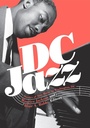
DC Jazz
Stories of Jazz Music in Washington, DC
Will be published approx. on 2. February 2027
Book
Paperback/Softback
224 pages
978-1-62616-590-8 (ISBN)
Description
Original and fascinating stories about the DC jazz scene throughout its history-now in paperback, with a new preface
The familiar history of jazz music in the United States begins with its birth in New Orleans, moves upstream along the Mississippi River to Chicago, then goes by rail to New York, before exploding around the globe. This telling of jazz's history, however, overlooks the pivotal role the nation's capital has played in jazz for a century.
DC Jazz tells the story of some of the city's notable clubs, players, and promoters, and its institutions so critical to this uniquely American form of music. Closer to the ground, a network of local schools like the Duke Ellington High School for the Performing Arts, jazz programs at the University of the District of Columbia and Howard University, churches, informal associations, locally focused media, and clubs keeps the music alive to this day. The historians Maurice Jackson and Blair Ruble also portray the role of jazz in desegregating the city.
A copublishing initiative with the DC History Center, this book includes over thirty museum-quality photographs and a guide to resources for readers interested in Washington history, the history of jazz, and Black history.
The familiar history of jazz music in the United States begins with its birth in New Orleans, moves upstream along the Mississippi River to Chicago, then goes by rail to New York, before exploding around the globe. This telling of jazz's history, however, overlooks the pivotal role the nation's capital has played in jazz for a century.
DC Jazz tells the story of some of the city's notable clubs, players, and promoters, and its institutions so critical to this uniquely American form of music. Closer to the ground, a network of local schools like the Duke Ellington High School for the Performing Arts, jazz programs at the University of the District of Columbia and Howard University, churches, informal associations, locally focused media, and clubs keeps the music alive to this day. The historians Maurice Jackson and Blair Ruble also portray the role of jazz in desegregating the city.
A copublishing initiative with the DC History Center, this book includes over thirty museum-quality photographs and a guide to resources for readers interested in Washington history, the history of jazz, and Black history.
Reviews / Votes
A treasure trove of history, deeply researched and often tightly annotated. * The Georgetowner * [The authors] give the reader an excellent survey of the extent of jazz activity and its impact on the national and international scenes. . . . It's a wonderful overview of a city known for many things, but whose imprint on jazz hasn't gotten anywhere near the attention it deserves until the publication of this outstanding book. * The Tennessee Jazz & Blues Society * The book tells us much about the city beyond geography. It's as 'Official Washington' a book about jazz as one could imagine: wonky, think-tanky, visiting-scholar-y. It's jazz as White Paper. . . . If this sounds like a criticism, rest assured that it is not. The book is precisely what it aspires to be, and a success on its own terms is a success, period. Besides, who's to complain that historians and history nerds want to give more attention to jazz? . . . It is ultimately a cornerstone: an essential reference for more narrative, perhaps lively histories. * Washington City Paper * The book is as digestible as it is illuminating. . . . As DC Jazz functions as an essential scholarly anchor, it succeeds at illustrating the resilience of the city's jazz landscape amid sometimes challenging social climate. * DownBeat * Takes readers on a relaxing stroll through D.C., visiting venues that first featured jazz musicians to welcoming audiences: The Crystal Caverns, later renamed the Bohemian Caverns, One Step Down and Blues Alley would become legendary hotspots within their own rights. Some artists would go on to perform at much larger, prestigious venues in the District like the Kennedy Center, whose jazz program, currently under the direction of musician/composer Jason Moran, owes its roots to pianist and composer Dr. Billy Taylor. * The Washington Informer *More details
Language
English
Place of publication
Washington, DC
United States
Edition type
Unabridged edition
Product notice
Paperback (trade)
Illustrations
Not illustrated
Dimensions
Height: 254 mm
Width: 178 mm
ISBN-13
978-1-62616-590-8 (9781626165908)
Copyright in bibliographic data is held by Nielsen Book Services Limited or its licensors: all rights reserved.
Schweitzer Classification
Other editions
Additional editions
E-Book
06/2018
Georgetown University Press
€28.99
Available for download
Persons
Maurice Jackson teaches African American history at Georgetown University and is the author of Rhythms of Resistance and Resilience: How Black Washingtonians Used Music and Sports in the Fight for Equality. He was the inaugural chair of the Washington, DC, Commission on African American Affairs, appointed by the mayor.
Blair Ruble was a distinguished fellow for programs at the Woodrow Wilson International Center for Scholars and the author of The Muse of Urban Delirium: How the Performing Arts Paradoxically Transform Conflict-Ridden Cities into Centers of Cultural Innovation and Washington's U Street: A Biography.
Blair Ruble was a distinguished fellow for programs at the Woodrow Wilson International Center for Scholars and the author of The Muse of Urban Delirium: How the Performing Arts Paradoxically Transform Conflict-Ridden Cities into Centers of Cultural Innovation and Washington's U Street: A Biography.
Content
List of Illustrations
Foreword by Jason Moran
Acknowledgments
Introduction
1. Jazz, "Great Black Music," and the Struggle for Equality in Washington, DC
Maurice Jackson
2. Seventh Street: Black DC's Musical Mecca
Blair A. Ruble
3. Washington's Duke Ellington
John Edward Hasse
4. Bill Brower: Notes from a Key Observer and Scene Maker
Interview by Willard Jenkins
5. Jazz Radio in Washington, DC
Rusty Hassan
6. Legislating Jazz
Anna Harwell Celenza
7. The Beautiful Struggle: A Look at Women Who Have Helped
Bridget Arnwine
8. No Church without a Choir: Howard University and Jazz in Washington, DC
Lauren Sinclair
9. From Federal City College to UDC: A Retrospective on Washington's Jazz University
Judith A. Korey
10. Researching Jazz History in Washington, DC
Michael Fitzgerald
List of Contributors
Index
Foreword by Jason Moran
Acknowledgments
Introduction
1. Jazz, "Great Black Music," and the Struggle for Equality in Washington, DC
Maurice Jackson
2. Seventh Street: Black DC's Musical Mecca
Blair A. Ruble
3. Washington's Duke Ellington
John Edward Hasse
4. Bill Brower: Notes from a Key Observer and Scene Maker
Interview by Willard Jenkins
5. Jazz Radio in Washington, DC
Rusty Hassan
6. Legislating Jazz
Anna Harwell Celenza
7. The Beautiful Struggle: A Look at Women Who Have Helped
Bridget Arnwine
8. No Church without a Choir: Howard University and Jazz in Washington, DC
Lauren Sinclair
9. From Federal City College to UDC: A Retrospective on Washington's Jazz University
Judith A. Korey
10. Researching Jazz History in Washington, DC
Michael Fitzgerald
List of Contributors
Index