

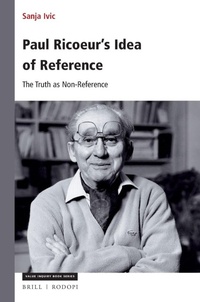
Paul Ricoeur's Idea of Reference
The Truth as Non-Reference
Published on 6. December 2018
Book
Paperback/Softback
146 pages
978-90-04-37563-5 (ISBN)
Description
This book investigates the importance of Ricoeur's hermeneutics and poetics in rethinking humanities. In particular, Ricoeur's insights on reference as refiguration and his idea of interpretation as a triadic process (which consists of mimesis 1 - prefiguration, mimesis 2 - configuration, and mimesis 3 - refiguration) will be applied to philosophy of science and to literary and historical texts. It will be shown that Ricoeur's idea of emplotment can be extended and applied to scientific, literary and historical texts. This multidisciplinary research will include philosophy of science, metaphysics, hermeneutics, and literary theory.
More details
Series
Language
English
Place of publication
Leiden
Netherlands
Target group
Professional and scholarly
Product notice
Paperback (trade)
Unsewn / adhesive bound
Dimensions
Height: 234 mm
Width: 157 mm
Thickness: 8 mm
Weight
181 gr
ISBN-13
978-90-04-37563-5 (9789004375635)
Copyright in bibliographic data and cover images is held by Nielsen Book Services Limited or by the publishers or by their respective licensors: all rights reserved.
Schweitzer Classification
Person
Sanja Ivic, PhD (2011) is a Research Fellow at the Institute for European Studies, Serbia. She completed her Postdoctoral research at the University of Paris X (France). Her publications include books and articles on various subjects in the field of philosophy.
Content
Preface
Introduction
1 Ricoeur's Idea of Reference as Refiguration: the Non-Descriptive Reference of Literary Work
?1? Introduction
?2? Ricoeur's Idea of Reference as Refiguration
?3? Ricoeur's Conception of Threefold Mimesis
?4? The Concept of Null-Reference
?5?Conclusion
2 The Truth as Non-Reference: the Realist and Anti-Realist Conception of Reference
?1? Introduction
?2? Reference as Refiguration in Science
?3? The Success of Non-Referring Concepts: a Hermeneutic Aspect of Reference
?4? Conclusion
3 Ricoeur's Concept of Reference Applied to Theories of Scientific Realism and to Historical Texts: Real versus Unreal
?1Introduction
?2The Question of Truth in the Theories of Scientific Realism and in the Historical and Fictional Narratives
?3Realism and the Realm of Possibility
?4Conclusion
4 The Universality of Hermeneutic and Narrative Experience: Ricoeur's Narrative Theory Applied to Science
?1? Introduction
?2? Explanation and Understanding in the History of Science and Philosophy
?3? Binary Oppositions in Science
?4? Ricoeur's Dialectics between Explanation and Understanding
?5? Ricoeur's Narrative Theory Applied to Science
?6? Narrative Understanding: Mediating between Fictional and Historical Texts
?7? Conclusion
5 Ricoeur's Idea of Metamorphoses of Narrative Plots
?1? Introduction
?2? Ricoeur's Idea of Narrative Paradigm: A Question about the Limits of Plot
?3? Transhistorical Schematism of Narration
?4? Conclusion
6 The Idea of Truth as Non-Reference in Literature
?1? Introduction
?2? Art as the Personal Truth of the Author in Bulgakov's The Master and Margarita
?3? Artistic and Religious Conception of Truth
?4? The Idea of Truth as Non-Reference in Borges' "Tloen, Uqbar, Orbis Tertius"
?5? Conclusion
References
Name Index
Subject Index
Introduction
1 Ricoeur's Idea of Reference as Refiguration: the Non-Descriptive Reference of Literary Work
?1? Introduction
?2? Ricoeur's Idea of Reference as Refiguration
?3? Ricoeur's Conception of Threefold Mimesis
?4? The Concept of Null-Reference
?5?Conclusion
2 The Truth as Non-Reference: the Realist and Anti-Realist Conception of Reference
?1? Introduction
?2? Reference as Refiguration in Science
?3? The Success of Non-Referring Concepts: a Hermeneutic Aspect of Reference
?4? Conclusion
3 Ricoeur's Concept of Reference Applied to Theories of Scientific Realism and to Historical Texts: Real versus Unreal
?1Introduction
?2The Question of Truth in the Theories of Scientific Realism and in the Historical and Fictional Narratives
?3Realism and the Realm of Possibility
?4Conclusion
4 The Universality of Hermeneutic and Narrative Experience: Ricoeur's Narrative Theory Applied to Science
?1? Introduction
?2? Explanation and Understanding in the History of Science and Philosophy
?3? Binary Oppositions in Science
?4? Ricoeur's Dialectics between Explanation and Understanding
?5? Ricoeur's Narrative Theory Applied to Science
?6? Narrative Understanding: Mediating between Fictional and Historical Texts
?7? Conclusion
5 Ricoeur's Idea of Metamorphoses of Narrative Plots
?1? Introduction
?2? Ricoeur's Idea of Narrative Paradigm: A Question about the Limits of Plot
?3? Transhistorical Schematism of Narration
?4? Conclusion
6 The Idea of Truth as Non-Reference in Literature
?1? Introduction
?2? Art as the Personal Truth of the Author in Bulgakov's The Master and Margarita
?3? Artistic and Religious Conception of Truth
?4? The Idea of Truth as Non-Reference in Borges' "Tloen, Uqbar, Orbis Tertius"
?5? Conclusion
References
Name Index
Subject Index