

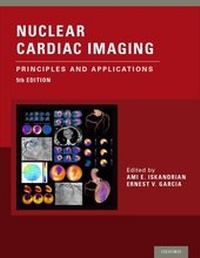
Nuclear Cardiac Imaging
Principles and Applications
5th Edition
Published on 10. December 2015
Book
Hardback
768 pages
978-0-19-939209-4 (ISBN)
Description
Nuclear cardiac imaging refers to cardiac radiological diagnostic techniques performed with the aid of radiopharmaceuticals, which are perfused into the myocardium as markers. These imaging studies provide a wide range of information about the heart, including the contractility of the heart, the amount of blood supply to the heart and whether parts of the heart muscle are alive or dead. This is essential information for cardiologists, and nuclear imaging has become an increasingly important part of the cardiologist's armamentarium. Chapters in Nuclear Cardiac Imaging cover historical, technical and physiological considerations, diagnosis and prognosis, conditions other than Coronary Artery Disease (CAD), advanced cardiac imaging, and challenges and opportunities. New to the fifth edition are key point summaries at the start of each chapter, clinical cases with videos, and a question and answer chapter on practical issues. This volume is ideal for nuclear cardiologists in training and nuclear clinicians alike who are searching for quick answers to important clinical and technical questions.
Reviews / Votes
Featured in- Annals of Nuclear CardiologyMore details
Edition
5th Revised edition
Language
English
Place of publication
New York
United States
Target group
Professional and scholarly
Edition type
Revised edition
Illustrations
457 illustrations
Dimensions
Height: 284 mm
Width: 223 mm
Thickness: 38 mm
Weight
2690 gr
ISBN-13
978-0-19-939209-4 (9780199392094)
Schweitzer Classification
Other editions
Additional editions
E-Book
11/2015
5th Edition
OUP eBook
€358.99
Available for download
Persons
Ami E. Iskandrian is a Distinguished Professor of Medicine and Radiology and Chief of Nuclear Cardiology in the Division of Cardiovascular Disease at the University of Alabama at Birmingham. Ernest V. Garcia is an Endowed Professor in Cardiac Imaging in the Department of Radiology and Imaging Sciences at Emory University's School of Medicine in Atlanta, Georgia.
Editor
Distinguished Professor of Medicine and Radiology, Section Chief, Nuclear Cardiology, Division of Cardiovascular DiseaseDistinguished Professor of Medicine and Radiology, Section Chief, Nuclear Cardiology, Division of Cardiovascular Disease, University of Alabama at Birmingham, Birmingham, Alabama
Professor of RadiologyProfessor of Radiology, Emory University School of Medicine, Atlanta, Georgia
Content
Section I. Historical, Technical and Physiological Considerations ; 1. Nuclear Cardiology: History and Milestones ; 2. Radiation physics and Radiation Safety ; 3. SPECT and PET Instrumentation: Conventional and New ; 4. Kinetics of Conventional and New Cardiac Radiotracers ; 5. Radionuclide Angiography: Planar and Tomographic ; 6. Gated SPECT MPI: Imaging Protocols and Acquisition ; 7. Gated SPECT MPI Processing and Quantitation ; 8. Image Artifacts ; 9. Attenuation Correction ; 10. Pharmacological Stress Testing ; Section II. Diagnosis and Risk Assessment ; 11. Treadmill Exercise Testing ; 12. Gated SPECT Perfusion in Diagnosis/Risk Assessment in Stable Patients ; 13. Risk Assessment in Acute Coronary Syndromes ; 14. Risk Assessment Before Noncardiac Surgery ; 15. Myocardial Perfusion Imaging Before and After Cardiac Revascularization ; 16. Screening Asymptomatic Subjects ; 17. Role of Imaging in Chronic Kidney Disease ; 18. Role of Imaging in Diabetes Mellitus ; 19. Imaging Patients with Chest Pain in the Emergency Department ; 20. Role of PET in Diagnosis and Risk Assessment in Patients with Known or Suspected CAD ; 21. Myocardial Viability Assessment: Nuclear Techniques and Clinical Implications ; Section III. Role of Nuclear Imaging Beyond CAD ; 22. Phase analysis for Dyssynchrony by MPI and MUGA ; 23. Imaging Myocardial Innervation ; 24. Measurements of Myocardial Blood Flow by Imaging ; 25. Imaging of Myocardial Metabolism ; 26. Inflammatory, Infiltrative Diseases, and Tumors ; 27. Radionuclide Imaging in Heart Failure ; Section IV. Advances in Cardiac Imaging ; 28. Hybrid Imaging ; 29. Cardiovascular Molecular Imaging ; 30. Use of Artificial Intelligence Including Decision Support Systems in Cardiac Imaging ; Section V. Challenges for Nuclear Cardiology ; 31. Physician Certification and Lab Accreditation ; 32. Cost-Effectiveness of Imaging with Nuclear Cardiology ; 33. Guidelines and Appropriate Use Criteria ; 34. Radiation Considerations ; 35. Practical Issues: Ask the Experts