

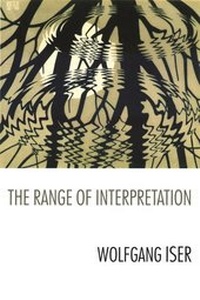
The Range of Interpretation
Published on 18. September 2001
Book
Paperback/Softback
280 pages
978-0-231-11903-0 (ISBN)
Description
There is a tacit assumption that interpretation comes naturally, that human beings live by constantly interpreting. In this sense, we might even rephrase Descartes by saying: We interpret, therefore we are. While such a basic human disposition makes interpretation appear to come naturally, the forms it takes, however, do not. In this work, Iser offers a fresh approach by formulating an "anatomy of interpretation" through which we can understand the act of interpretation in its many different manifestations. For Iser, there are several different genres of interpretation, all of which are acts of translation designed to transpose something into something else. Perhaps the most obvious example of interpretation involves canonical texts, such as the Rabbinical exegesis of the Torah or Samuel Johnson's reading of Shakespeare. But what happens when the matter that one seeks to interpret consists not of a text but of a welter of fragments, as in the study of history, or when something is hidden, as in the practice of psychoanalysis, or is as complex as a culture or system?
Iser details how, in each of these cases, the space that is opened up by interpretation is negotiated in a different way, thus concluding that interpretation always depends on what it seeks to translate. For students of philosophy, literary and critical theory, anthropology, and cultural history, Iser's elucidation of the mechanics by which we translate and understand, as well as his assessment of the anthropological roots of our drive to make meaning, will undoubtedly serve as a revelation.
Iser details how, in each of these cases, the space that is opened up by interpretation is negotiated in a different way, thus concluding that interpretation always depends on what it seeks to translate. For students of philosophy, literary and critical theory, anthropology, and cultural history, Iser's elucidation of the mechanics by which we translate and understand, as well as his assessment of the anthropological roots of our drive to make meaning, will undoubtedly serve as a revelation.
Reviews / Votes
[Range of Interpretation] leaves the reader with a greatly expanded understanding of the nature of interpretation, of the various roles it assumes in our culture, and it is difficult to imagine a scholar who would not profit from such a book. Philosophy in ReviewMore details
Series
Language
English
Place of publication
New York
United States
Target group
Professional and scholarly
Product notice
Paperback (trade)
Weight
312 gr
ISBN-13
978-0-231-11903-0 (9780231119030)
Copyright in bibliographic data and cover images is held by Nielsen Book Services Limited or by the publishers or by their respective licensors: all rights reserved.
Schweitzer Classification
Other editions
Additional editions
Wolfgang Iser
The Range of Interpretation
Book
03/2000
Columbia University Press
€144.84
Shipment within 10-20 days
Person
Wolfgang Iser is professor of comparative literature at the University of Konstanz, Germany, and professor of English at the University of California, Irvine. He is best known for his works The Implied Reader: Patterns of Communication in Prose Fiction from Bunyan to Beckett; The Act of Reading: A Theory of Aesthetic Response; Prospecting: From Reader Response to Literary Anthropology; and The Fictive and the Imaginary: Charting Literary Anthropology.
Content
1. Introduction The Marketplace of Interpretation Interpretation as Translatability 2. The Authority of the Canon Canonization and Midrash The Literary Canon: Dr. Johnson on Shakespeare 3. The Hermeneutic Circle Friedrich Daniel Ernst Schleiermacher: Self-reflective Circularity Johann Gustav Droysen: The Nesting of Circles Paul Ricoeur: Transactional Loops 4. The Recursive Loop Recursion in Ethnographic Discourse Systemic Recursion 5. The Traveling Differential: Franz Rosenzweig, "The Star of Redemption" "The Birth of the Elements Out of the Somber Foundations of Nought" Proliferating Translatability 6. Configurations of Interpretation: An Epilogue