

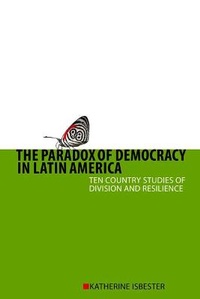
The Paradox of Democracy in Latin America
Ten Country Studies of Division and Resilience
Published on 1. November 2010
Book
Hardback
400 pages
978-1-4426-0196-3 (ISBN)
Description
Inviting in tone and organization but rigorous in its scholarship, The Paradox of Democracy in Latin America focuses on the problems, successes, and multiple forms of democracy in Latin America. The opening chapters provide readers with a theoretical and conceptual lens through which to examine the ten case studies, which focus on Mexico, Guatemala, Nicaragua, Costa Rica, Colombia, Venezuela, Brazil, Bolivia, Chile, and Argentina. What becomes clear throughout is that there is a paradox at the heart of Latin America's democracies. Despite decades of struggle to replace authoritarian dictatorships with electoral democracies, solid economic growth (leading up to the global credit crisis), and increased efforts by the state to extend the benefits of peace and prosperity to the poor, democracy-as a political system-is experiencing declining support, and support for authoritarianism is on the rise. The Paradox of Democracy in Latin America demonstrates the deep divisions between rulers and ruled in Latin America that undermine democratic processes, institutions, and norms.
More details
Language
English
Place of publication
Toronto
Canada
Target group
College/higher education
Dimensions
Height: 239 mm
Width: 162 mm
Thickness: 26 mm
Weight
680 gr
ISBN-13
978-1-4426-0196-3 (9781442601963)
Copyright in bibliographic data and cover images is held by Nielsen Book Services Limited or by the publishers or by their respective licensors: all rights reserved.
Schweitzer Classification
Person
Katherine Isbester, a former adjunct professor in the Department of Political Science at the University of Toronto, is now an independent scholar and consultant on development issues living in London, England.
Content
List of Tables Preface Democracy: A Complex Balance Katherine Isbester Democracy in Latin America: A Political History Katherine Isbester Issues and Institutions in Latin American Governance Katherine Isbester Mexico: From Perfect Dictatorship to Imperfect Democracy Judith Teichman Guatemala: Ethnicity and the Shadow State Katherine Isbester Nicaragua: Revolution and Betrayal Katherine Isbester Costa Rica: An Ethos and a Strong State Katherine Isbester Colombia: Violence, Drugs, and Democracy Roberta Rice Venezuela: Pacts, Populism, and Poverty Roberta Rice Brazil: Constraints and Innovations Lauren Phillips Bolivia: Ethnicity and Power Roberta Rice Chile: Democracy in a Divided Polity Judith Teichman Argentina: Clientelism, Corporatism, and Democracy Viviana Patroni Conclusion: What Works and Why Katherine Isbester Notes on Contributors Index