

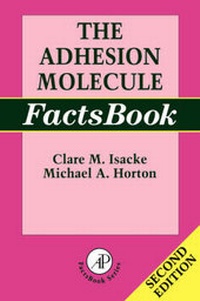
The Adhesion Molecule FactsBook
2nd Edition
Published on 24. August 2000
Book
Paperback/Softback
336 pages
978-0-12-356505-1 (ISBN)
Description
This updated and expanded Second Edition of The Adhesion Molecule FactsBook has nearly double the number of entries of the First Edition, and provides a compendium of the major cell surface adhesion molecules. The introductory chapters detail the organization of the data in the entries section, provide a background to the main adhesion molecule families, and inform the reader how to access information on adhesion molecules on the Internet. The entries have been designed to allow the reader to quickly establish the main structure and functional features of each molecule and where to find information.
Reviews / Votes
Praise for the First Edition"This book constitutes a handy resource to be included in your library among the more-specialized books of adhesion receptors and adhesion molecules." --IMMUNOLOGY TODAY
More details
Series
Edition
2nd edition
Language
English
Place of publication
San Diego
United States
Publishing group
Elsevier Science Publishing Co Inc
Target group
Professional and scholarly
Researchers and research clinicians in immunology, cell biology, molecular and developmental biology and biochemistry.
Edition type
New edition
Dimensions
Height: 229 mm
Width: 152 mm
Weight
560 gr
ISBN-13
978-0-12-356505-1 (9780123565051)
Copyright in bibliographic data and cover images is held by Nielsen Book Services Limited or by the publishers or by their respective licensors: all rights reserved.
Schweitzer Classification
Other editions
Previous edition

Rod Pigott | Christine Power
Adhesion Molecule Factsbook
Book
07/1993
Academic Press
€50.75
Article exhausted; check for reprint
Persons
Clare Isacke received her undergraduate degree in biochemistry in Oxford, her D.Phil. in Oxford working with John Heath and Chris Graham on growth control and differentiation of embryonal carcinoma cells. She worked as a postdoctoral fellow at the Salk Institute in La Jolla, California, with Tony Hunter and Ian Trowbridge on cell adhesion and tyrosine kinase receptors. She has been at Imperial College now for 10 years during which time the lab has been focussing on cell adhesion receptor. Isacke did a three-year stint in the Biochemistry Department at Imperial College setting up her own lab within the Colin Hopkins empire and then moved over to the Biology Department taking up a University-funded post. Michael Horton trained in Biochemistry, Medicine and Haematology at St. Bartholomew's Hospital Medical College, London before research training in Immunology at University College, London. He has held senior appointments at St. Bartholomew's Hospital and with the Imperial Cancer Research Fund. He is currently Professor of Medicine and Head of the Bone and Mineral Center, University College, London. His research interests focus on the cell and molecular biology of bone, with a special interest in cell adhesion receptors, and in the development of novel therapeutics for bone disease.