

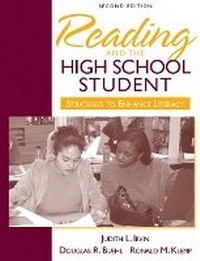
Reading and the High School Student
Strategies to Enhance Literacy
2nd Edition
Published on 3. January 2007
Book
Paperback/Softback
256 pages
978-0-205-48939-8 (ISBN)
Description
Now in its second edition, Reading and the High School Student presents the issues and trends for improving literacy learning in secondary schools. Perfect for both pre-service and in-service teachers, the book emphasizes classroom applications and offers solutions for the development of literacy programs at the school and district levels.
Irvin, Buehl, and Klemp deliver a practical, concise, and balanced introduction to literacy topics, lending special attention to the needs of the struggling reader and the English language learner. The text includes a wealth of strategies with real classroom examples that teachers can implement in their own classrooms, making the book a valuable and handy reference.
New features to this edition include:
-Focus on adolescent literacy as addressed by No Child Left Behind (NCLB) and its consequences for high school students.
-Myriad suggestions on how to close the achievement gap and ideas for tutoring.
-Extensive coverage of multiple literacies and media literacy within the context of high school classes.
Irvin, Buehl, and Klemp deliver a practical, concise, and balanced introduction to literacy topics, lending special attention to the needs of the struggling reader and the English language learner. The text includes a wealth of strategies with real classroom examples that teachers can implement in their own classrooms, making the book a valuable and handy reference.
New features to this edition include:
-Focus on adolescent literacy as addressed by No Child Left Behind (NCLB) and its consequences for high school students.
-Myriad suggestions on how to close the achievement gap and ideas for tutoring.
-Extensive coverage of multiple literacies and media literacy within the context of high school classes.
More details
Edition
2nd edition
Language
English
Place of publication
United States
Publishing group
Pearson Education (US)
Target group
Professional and scholarly
Dimensions
Height: 235 mm
Width: 178 mm
Weight
349 gr
ISBN-13
978-0-205-48939-8 (9780205489398)
Copyright in bibliographic data and cover images is held by Nielsen Book Services Limited or by the publishers or by their respective licensors: all rights reserved.
Schweitzer Classification
Other editions
Previous edition

Judith L. Irvin | Douglas R. Buehl | Ronald M. Klemp
Reading and the High School Student
Strategies to Enhance Literacy
Book
10/2003
Pearson
€55.89
Article exhausted; check for reprint
Content
Chapter 1: ADOLESCENT LITERACY
The Neglect of Adolescent Literacy
Rediscovering Adolescent Literacy
Impact of Federal and State Mandates on Adolescent Literacy
School-wide Approaches to Improving Adolescent Literacy
Purpose and Overview of the Book
Summary
Extending Learning
Re-addressing the Talking Points
Revisiting the Vignette
Terms to Remember and Use
Modifying Instruction for English Language Learners
Beyond the Book
Chapter 2: LITERACY LEARNING
What Teachers See: Symptoms of Ineffective Learning
Metaphor #1: The Trip With No Scenery
Metaphor #2: Ping Pong Reading
Metaphor #3: Mindless Routines
Metaphor #4: Consumers and Extraterrestrials
Metaphor #5: Freeloading and First Down Punting
Metaphor #6: World Brains and School Brains
Interactive Reading and Learning
Schema Theory
Metacognition
Scaffolding
Literacy Practice of Strong Readers
The Learner
The Text
The Context
Reading/Writing Connections
Summary
Extending Learning
Re-addressing the Talking Points
Revisiting the Vignette
Terms to Remember and Use
Modifying Instruction for English Language Learners
Beyond the Book
References
Chapter 3: LEARNING ENVIRONMENTS THAT MOTIVATE STUDENTS
Classroom Negotiations: The Teacher as Mediator
Mediated Instruction and the Gradual Release of Responsibility
Mediated Instruction and Prior Knowledge
The Teacher as Coach and Mentor
Motivation and Engagement
Making Connections to Students' Lives
Creating Safe and Responsive Classrooms
Having Students Interact with Each Other and With Text
Using Classroom Discussion to Motivate Students
Classroom Talk that is Accountable
Think-Pair-Share
The Discussion Web
Cooperative Literacy
Directed Reading Sequence
Summary
Extending Learning
Re-addressing the Talking Points
Revisiting the Vignette
Terms to Remember and Use
Modifying Instruction for English Language Learners
Beyond the Book
References
Chapter 4: ASSISTING STRUGGLING READERS
The Status of Reading Proficiency in the United States
Helping Struggling Readers Become Strong Readers
English Language Learners
Strategies for Struggling Readers
Interactive Reading Guides
Summary
Extending Learning
Re-addressing the Talking Points
Revisiting the Vignette
Terms to Remember and Use
Modifying Instruction for English Language Learners
Beyond the Book
References
Chapter 5: THE DEMANDS OF TEXT
The Transition to Informational Text
Kinds of Text
Narrative Text
Expository Text
Helping Students Understand Text Structure
Difficulty with Content Area Textbooks
Content and Strategic Knowledge
Classroom Experiences with Textbooks
The Task
PIC: A Textbook Previewing Guide
Double S: Signal Words that Indicate Structure
Using and Evaluating Textbooks
Summary
Extending Learning
Re-addressing the Talking Points
Revisiting the Vignette
Terms to Remember and Use
Modifying Instruction for English Language Learners
Beyond the Book
References
Chapter 6: VOCABULARY KNOWLEDGE
The Importance of Vocabulary Knowledge
Factors in Vocabulary Acquisition
Knowing Words
Morphology
Context
Definitions
Size and Growth of Vocabulary
Metalinguistic Awareness
Choosing Words for Instruction
Known Concepts
Synonym/Anonyms or Multiple Meaning Words
Unknown Concept
Guidelines for Instruction
Help Students Become Independent Word Learners
Encourage Active Involvement and Deep Processing of Words
Provide Multiple Opportunities to Use Words
Help Students Develop a Good Attitude about Learning Words Outside of the Classroom
Foster Extensive Reading Outside of Class
Vocabulary Strategies
Possible Sentences
List-Group-Label
Inductive Vocabulary Search
Concept Maps
Word Family Trees
Summary
Extending Learning
Re-addressing the Talking Points
Revisiting the Vignette
Terms to Remember and Use
Modifying Instruction for English Language Learners
Beyond the Book
References
Chapter 7: USING PRIOR KNOWLEDGE
The Role of Prior Knowledge in Reading
Activating Prior Knowledge
Assessing the Knowledge Base of Students
Misconceptions
Prereading Strategies
Building Background Knowledge When Students Know Little about a Topic
Predicting and Confirming Activity
Visual Prediction Guide
Activating Knowledge when Students Know Something about a Topic A PreReading Plan (PREP)
Anticipation Guides
Organizing Knowledge when Students Know a Great Deal about a Topic
Graphic Representations/Organizers
Cloze Graphic Organizers
Semantic or Concept Mapping
Summary
Extending Learning
Re-addressing the Talking Points
Revisiting the Vignette
Terms to Remember and Use
Modifying Instruction for English Language Learners
Beyond the Book
References
Chapter 8: COMPREHENDING TEXT
Strategies Strong Readers Use: A Comprehension Model
Guidelines for Instruction
Comprehension Strategies
Teacher Guided Strategies
Reciprocal Teaching
K-W-L Plus
Questioning the Author
Comprehension Monitoring Strategies
A Self-Monitoring Approach to Reading and Thinking (SMART)
Paired Readings
Study Guides
Textbook Activity Guide
Graphic Organizers
Summary
Extending Learning
Re-addressing the Talking Points
Revisiting the Vignette
Terms to Remember and Use
Modifying Instruction for English Language Learners
Beyond the Book
References
Chapter 9: USING STUDY STRATEGIES TO LEARN AND REMEMBER
Depth of Processing
Identifying Important Ideas
Text Coding
Underlining or Highlighting
Generalizations about Strategic Learning
Task Understanding is Critical to Strategic Learning
Beliefs About Learning Influence How Students Read and Study
Quality Instruction is Essential
Cognitive and Metacognitive Processing Should be the Instructional Focus
It is Important to Teach a Variety of Research-Based Strategies
Question Generation and Answer Explanation
Question Answer Relationships
Text Summarization
Power Notes
Summarizing
Student Generated Elaborations
Elaborative Interrogations
Organizing Strategies
Graphic Respresentations
Summary
Extending Learning
Re-addressing the Talking Points
Revisiting the Vignette
Terms to Remember and Use
Modifying Instruction for English Language Learners
Beyond the Book
References
Chapter 10: ASSESSMENT THAT GUIDES INSTRUCTION
Characteristics of Quality Assessments
Using High Stakes and Other Standardized Tests
Curriculum-based Assessment
Traditional Teacher Assessments: Grades
Authentic Assessment
Underlying Beliefs of Authentic Assessment
Authentic Assessment Design
Technology to Show Mastery
Visual Demonstrations of Mastery
Oral Demonstrations of Mastery
Portfolio Assessment
Managing the Grading Load
Focus Grading
Monday for Comments
Code Sheets
Alternative Evaluators
Writing Conferences
Holistic Scoring with Rubrics
Summary
Extending Learning
Re-addressing the Talking Points
Revisiting the Vignette
Terms to Remember and Use
Modifying Instruction for English Language Learners
Beyond the Book
References
The Neglect of Adolescent Literacy
Rediscovering Adolescent Literacy
Impact of Federal and State Mandates on Adolescent Literacy
School-wide Approaches to Improving Adolescent Literacy
Purpose and Overview of the Book
Summary
Extending Learning
Re-addressing the Talking Points
Revisiting the Vignette
Terms to Remember and Use
Modifying Instruction for English Language Learners
Beyond the Book
Chapter 2: LITERACY LEARNING
What Teachers See: Symptoms of Ineffective Learning
Metaphor #1: The Trip With No Scenery
Metaphor #2: Ping Pong Reading
Metaphor #3: Mindless Routines
Metaphor #4: Consumers and Extraterrestrials
Metaphor #5: Freeloading and First Down Punting
Metaphor #6: World Brains and School Brains
Interactive Reading and Learning
Schema Theory
Metacognition
Scaffolding
Literacy Practice of Strong Readers
The Learner
The Text
The Context
Reading/Writing Connections
Summary
Extending Learning
Re-addressing the Talking Points
Revisiting the Vignette
Terms to Remember and Use
Modifying Instruction for English Language Learners
Beyond the Book
References
Chapter 3: LEARNING ENVIRONMENTS THAT MOTIVATE STUDENTS
Classroom Negotiations: The Teacher as Mediator
Mediated Instruction and the Gradual Release of Responsibility
Mediated Instruction and Prior Knowledge
The Teacher as Coach and Mentor
Motivation and Engagement
Making Connections to Students' Lives
Creating Safe and Responsive Classrooms
Having Students Interact with Each Other and With Text
Using Classroom Discussion to Motivate Students
Classroom Talk that is Accountable
Think-Pair-Share
The Discussion Web
Cooperative Literacy
Directed Reading Sequence
Summary
Extending Learning
Re-addressing the Talking Points
Revisiting the Vignette
Terms to Remember and Use
Modifying Instruction for English Language Learners
Beyond the Book
References
Chapter 4: ASSISTING STRUGGLING READERS
The Status of Reading Proficiency in the United States
Helping Struggling Readers Become Strong Readers
English Language Learners
Strategies for Struggling Readers
Interactive Reading Guides
Summary
Extending Learning
Re-addressing the Talking Points
Revisiting the Vignette
Terms to Remember and Use
Modifying Instruction for English Language Learners
Beyond the Book
References
Chapter 5: THE DEMANDS OF TEXT
The Transition to Informational Text
Kinds of Text
Narrative Text
Expository Text
Helping Students Understand Text Structure
Difficulty with Content Area Textbooks
Content and Strategic Knowledge
Classroom Experiences with Textbooks
The Task
PIC: A Textbook Previewing Guide
Double S: Signal Words that Indicate Structure
Using and Evaluating Textbooks
Summary
Extending Learning
Re-addressing the Talking Points
Revisiting the Vignette
Terms to Remember and Use
Modifying Instruction for English Language Learners
Beyond the Book
References
Chapter 6: VOCABULARY KNOWLEDGE
The Importance of Vocabulary Knowledge
Factors in Vocabulary Acquisition
Knowing Words
Morphology
Context
Definitions
Size and Growth of Vocabulary
Metalinguistic Awareness
Choosing Words for Instruction
Known Concepts
Synonym/Anonyms or Multiple Meaning Words
Unknown Concept
Guidelines for Instruction
Help Students Become Independent Word Learners
Encourage Active Involvement and Deep Processing of Words
Provide Multiple Opportunities to Use Words
Help Students Develop a Good Attitude about Learning Words Outside of the Classroom
Foster Extensive Reading Outside of Class
Vocabulary Strategies
Possible Sentences
List-Group-Label
Inductive Vocabulary Search
Concept Maps
Word Family Trees
Summary
Extending Learning
Re-addressing the Talking Points
Revisiting the Vignette
Terms to Remember and Use
Modifying Instruction for English Language Learners
Beyond the Book
References
Chapter 7: USING PRIOR KNOWLEDGE
The Role of Prior Knowledge in Reading
Activating Prior Knowledge
Assessing the Knowledge Base of Students
Misconceptions
Prereading Strategies
Building Background Knowledge When Students Know Little about a Topic
Predicting and Confirming Activity
Visual Prediction Guide
Activating Knowledge when Students Know Something about a Topic A PreReading Plan (PREP)
Anticipation Guides
Organizing Knowledge when Students Know a Great Deal about a Topic
Graphic Representations/Organizers
Cloze Graphic Organizers
Semantic or Concept Mapping
Summary
Extending Learning
Re-addressing the Talking Points
Revisiting the Vignette
Terms to Remember and Use
Modifying Instruction for English Language Learners
Beyond the Book
References
Chapter 8: COMPREHENDING TEXT
Strategies Strong Readers Use: A Comprehension Model
Guidelines for Instruction
Comprehension Strategies
Teacher Guided Strategies
Reciprocal Teaching
K-W-L Plus
Questioning the Author
Comprehension Monitoring Strategies
A Self-Monitoring Approach to Reading and Thinking (SMART)
Paired Readings
Study Guides
Textbook Activity Guide
Graphic Organizers
Summary
Extending Learning
Re-addressing the Talking Points
Revisiting the Vignette
Terms to Remember and Use
Modifying Instruction for English Language Learners
Beyond the Book
References
Chapter 9: USING STUDY STRATEGIES TO LEARN AND REMEMBER
Depth of Processing
Identifying Important Ideas
Text Coding
Underlining or Highlighting
Generalizations about Strategic Learning
Task Understanding is Critical to Strategic Learning
Beliefs About Learning Influence How Students Read and Study
Quality Instruction is Essential
Cognitive and Metacognitive Processing Should be the Instructional Focus
It is Important to Teach a Variety of Research-Based Strategies
Question Generation and Answer Explanation
Question Answer Relationships
Text Summarization
Power Notes
Summarizing
Student Generated Elaborations
Elaborative Interrogations
Organizing Strategies
Graphic Respresentations
Summary
Extending Learning
Re-addressing the Talking Points
Revisiting the Vignette
Terms to Remember and Use
Modifying Instruction for English Language Learners
Beyond the Book
References
Chapter 10: ASSESSMENT THAT GUIDES INSTRUCTION
Characteristics of Quality Assessments
Using High Stakes and Other Standardized Tests
Curriculum-based Assessment
Traditional Teacher Assessments: Grades
Authentic Assessment
Underlying Beliefs of Authentic Assessment
Authentic Assessment Design
Technology to Show Mastery
Visual Demonstrations of Mastery
Oral Demonstrations of Mastery
Portfolio Assessment
Managing the Grading Load
Focus Grading
Monday for Comments
Code Sheets
Alternative Evaluators
Writing Conferences
Holistic Scoring with Rubrics
Summary
Extending Learning
Re-addressing the Talking Points
Revisiting the Vignette
Terms to Remember and Use
Modifying Instruction for English Language Learners
Beyond the Book
References