

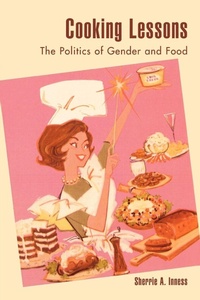
Cooking Lessons
The Politics of Gender and Food
Published on 30. July 2001
Book
Paperback/Softback
224 pages
978-0-7425-1574-1 (ISBN)
Description
Meatloaf, fried chicken, Jell-O, cake-because foods are so very common, we rarely think about them much in depth. The authors of Cooking Lessons however, believe that food is deserving of our critical scrutiny and that such analysis yields many important lessons about American society and its values. This book explores the relationship between food and gender. Contributors draw from diverse sources, both contemporary and historical, and look at women from various cultural backgrounds, including Hispanic, traditional southern White, and African American. Each chapter focuses on a certain food, teasing out its cultural meanings and showing its effect on women's identity and lives. For example, food has often offered women a traditional way to gain power and influence in their households and larger communities. For women without access to other forms of creative expression, preparing a superior cake or batch of fried chicken was a traditional way to display their talent in an acceptable venue. On the other hand, foods and the stereotypes attached to them have also been used to keep women (and men, too) from different races, ethnicities, and social classes in their place.
Reviews / Votes
In Cooking Lessons: The Politics of Gender and Food, nine scholars look at the many ways ethnic and regional food traditions, marketing strategies, cultural stereotypes, and economic forces form or entrench gender roles. These often entertaining essays also investigate the ways that women have used the very foods they prepare to resist and redefine those gender roles. Editor Sherrie Inness has gathered essays from specialists in American studies, literature, history, communications, women's studies, and creative writing that focus on particular foods-each food item serving as a location where women's identity politics play out. The essayists mix ethnographic research with history, literary analysis, and personal anecdotes to help us see that foods like meatloaf, fried chicken, tortillas, Jell-O, bananas, biscuits and cornbread, or even an ordinary cup of tea, always contain gender as one of their ingredients. -- Anne L. Bower, editor, Recipes for Reading: Community Cookbooks, Stories, HistoriesMore details
Language
English
Place of publication
United States
Publishing group
Bloomsbury Publishing Plc
Target group
College/higher education
Professional and scholarly
Dimensions
Height: 229 mm
Width: 152 mm
Thickness: 13 mm
Weight
368 gr
ISBN-13
978-0-7425-1574-1 (9780742515741)
Copyright in bibliographic data and cover images is held by Nielsen Book Services Limited or by the publishers or by their respective licensors: all rights reserved.
Schweitzer Classification
Other editions
Additional editions
E-Book
08/2001
1st Edition
Rowman & Littlefield Publishers
€44.99
Available for download
Person
Sherrie A. Inness is associate professor of English at Miami University. She lives in Fairfield, Ohio. She is the editor of several books including Running for their Lives: Girls, Cultural Identity, and Stories of Survival and Delinquents and Debutantes: Twentieth Century American GirlsO Cultures.
Content
Chapter 1 Introduction: Of Meatloaf and Jell-O...
Part 2 The Power of Food
Chapter 3 The Cup of Comfort
Chapter 4 Honoring Helga, "The Little Lefse Maker": Regional Food as Social Marker, Art, and Tradition
Chapter 5 "I Am an Act of Kneading": Food and the making of Chicana Identity
Chapter 6 Taking the Cake: Power Politics in Southern Life and Fiction
Part 7 Media Images
Chapter 8 Is Meatloaf for Men? Gender and Meatloaf Recipes, 1920-1960
Chapter 9 Bananas: Women's Food
Chapter 10 There's Always Room for Resistance: Jell-O, Gender and Social Class
Part 11 Class, Race and Food
Chapter 12 Beating the Biscuits in Appalachia: Race, Class, and Gender Politics of Women Baking Bread
Chapter 13 "Suckin' the Chicken Bone Dry": African American Women, Fried Chicken, and the Power of a National Narrative
Part 2 The Power of Food
Chapter 3 The Cup of Comfort
Chapter 4 Honoring Helga, "The Little Lefse Maker": Regional Food as Social Marker, Art, and Tradition
Chapter 5 "I Am an Act of Kneading": Food and the making of Chicana Identity
Chapter 6 Taking the Cake: Power Politics in Southern Life and Fiction
Part 7 Media Images
Chapter 8 Is Meatloaf for Men? Gender and Meatloaf Recipes, 1920-1960
Chapter 9 Bananas: Women's Food
Chapter 10 There's Always Room for Resistance: Jell-O, Gender and Social Class
Part 11 Class, Race and Food
Chapter 12 Beating the Biscuits in Appalachia: Race, Class, and Gender Politics of Women Baking Bread
Chapter 13 "Suckin' the Chicken Bone Dry": African American Women, Fried Chicken, and the Power of a National Narrative