

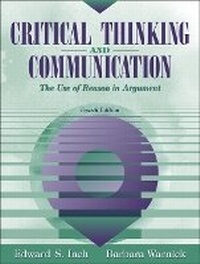
Critical Thinking and Communication
The Use of Reason in Argument
4th Edition
Published on 1. March 2002
Book
Paperback/Softback
384 pages
978-0-205-33541-1 (ISBN)
Description
Relating common theoretical models to true-to-life examples from law, ethics, education, and business, Inch and Warnick stress the importance of argumentation in everyday life as they build student competence and critical awareness.
This text encourages students to develop skills in both constructing and refuting arguments. Through exercises and examples, students learn how to create individual arguments, extend argument cases, and understand how arguments are designed and how to interpret them. The text allow students to conceptualize argumentation in the larger framework of verbal and written interaction, from public speaking and debating to interpersonal, intercultural, and small group communication.
This text encourages students to develop skills in both constructing and refuting arguments. Through exercises and examples, students learn how to create individual arguments, extend argument cases, and understand how arguments are designed and how to interpret them. The text allow students to conceptualize argumentation in the larger framework of verbal and written interaction, from public speaking and debating to interpersonal, intercultural, and small group communication.
More details
Edition
4th edition
Language
English
Place of publication
United States
Publishing group
Pearson Education (US)
Target group
Professional and scholarly
Dimensions
Height: 235 mm
Width: 178 mm
Weight
567 gr
ISBN-13
978-0-205-33541-1 (9780205335411)
Copyright in bibliographic data and cover images is held by Nielsen Book Services Limited or by the publishers or by their respective licensors: all rights reserved.
Schweitzer Classification
Other editions
New editions
Edward S. Inch | Barbara H. Warnick | Danielle Endres
Critical Thinking and Communication
The Use of Reason in Argument
Book
09/2005
5th Edition
Pearson
€85.60
Article exhausted; check for reprint
Previous edition

Book
09/1997
3rd Edition
Prentice-Hall
€59.60
Article exhausted; check for reprint
Content
All chapters close with "Summary" and "Exercises." I. CONCEPTUALIZING ARGUMENT.
1. Arguments and Argumentation.
Critical Thinking.
Argumentation and Arguments.
Perspectives on Argumentation.
An Argument Model.
2. Contexts for Argument.
Culture and Argumentation.
Argumentation and Ethics.
3. Argument Occasions.
Nature of Occasions.
Argument Situations.
II. COMMUNICATING ARGUMENTS.
4. Arguers, Recipients, and Argumentation.
Types of Audiences.
The Audience and Argumentation.
The Arguer and Argumentation.
5. Language and Argument.
The Nature of Language.
Language in Argument.
Fallacies of Language.
III. PARSING ARGUMENTS.
6. Argument Claims and Propositions.
The Nature of Claims and Propositions.
Formulating a Proposition.
Types of Claims.
Interconnection of Claims.
7. Evidence in Argument: The Foundation for Arguments.
The Nature of Evidence.
Types of Evidence.
Evaluating Fact and Opinion Evidence.
Evaluating Statistical Evidence.
Fallacies of Evidence.
Research Strategies for Locating Evidence.
8. Reasoning and the Process of Making Inferences.
Formal Logic and Practical Reasoning.
Reasoning as Inference Making.
Fallacies of Faulty Reasoning.
IV. ARGUING EXTENDED CASES.
9. Case Construction: Arguing about Propositions of Fact.
Arguing about Facts, Values, and Policies.
Relating Facts, Values and Policies.
Principles of Case Construction.
Stock Issues in Fact-Based Cases.
Principles of Refutation.
The Issues Brief.
10. Arguing about Values.
Values and Value Systems.
The Process of Value Change.
Values and Argumentation.
Stock Issues for Value Arguments.
The Issues Brief.
11. Arguing about Policies.
Policy Arguments and Policy Systems.
Issues Brief.
Alternative Formats for Arguing Policies.
Alternative Formats for Refuting Policy Arguments.
V. ANALYZING ARGUMENTS.
12. Argument Analysis and Criticism.
Benefits of Argument Analysis.
A General Model for Argument Analysis.
The Toulmin Model.
Comparison of the Two Models.
Appendix A: Intercollegiate Debate.
Appendix B: Answers to Selected Exercises.
Appendix C: Fallacies.
1. Arguments and Argumentation.
Critical Thinking.
Argumentation and Arguments.
Perspectives on Argumentation.
An Argument Model.
2. Contexts for Argument.
Culture and Argumentation.
Argumentation and Ethics.
3. Argument Occasions.
Nature of Occasions.
Argument Situations.
II. COMMUNICATING ARGUMENTS.
4. Arguers, Recipients, and Argumentation.
Types of Audiences.
The Audience and Argumentation.
The Arguer and Argumentation.
5. Language and Argument.
The Nature of Language.
Language in Argument.
Fallacies of Language.
III. PARSING ARGUMENTS.
6. Argument Claims and Propositions.
The Nature of Claims and Propositions.
Formulating a Proposition.
Types of Claims.
Interconnection of Claims.
7. Evidence in Argument: The Foundation for Arguments.
The Nature of Evidence.
Types of Evidence.
Evaluating Fact and Opinion Evidence.
Evaluating Statistical Evidence.
Fallacies of Evidence.
Research Strategies for Locating Evidence.
8. Reasoning and the Process of Making Inferences.
Formal Logic and Practical Reasoning.
Reasoning as Inference Making.
Fallacies of Faulty Reasoning.
IV. ARGUING EXTENDED CASES.
9. Case Construction: Arguing about Propositions of Fact.
Arguing about Facts, Values, and Policies.
Relating Facts, Values and Policies.
Principles of Case Construction.
Stock Issues in Fact-Based Cases.
Principles of Refutation.
The Issues Brief.
10. Arguing about Values.
Values and Value Systems.
The Process of Value Change.
Values and Argumentation.
Stock Issues for Value Arguments.
The Issues Brief.
11. Arguing about Policies.
Policy Arguments and Policy Systems.
Issues Brief.
Alternative Formats for Arguing Policies.
Alternative Formats for Refuting Policy Arguments.
V. ANALYZING ARGUMENTS.
12. Argument Analysis and Criticism.
Benefits of Argument Analysis.
A General Model for Argument Analysis.
The Toulmin Model.
Comparison of the Two Models.
Appendix A: Intercollegiate Debate.
Appendix B: Answers to Selected Exercises.
Appendix C: Fallacies.