

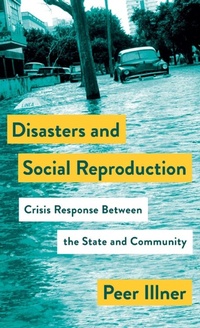
Disasters and Social Reproduction
Crisis Response between the State and Community
Published on 20. November 2020
Book
Hardback
176 pages
978-0-7453-3955-9 (ISBN)
Description
Many communities in the United States have been abandoned by the state. What happens when natural disasters add to their misery? This book looks at the broken relationship between the federal government and civil society in times of crises.
Mutual aid has gained renewed importance in providing relief when hurricanes, floods and pandemics hit, as cuts to state spending put significant strain on communities struggling to survive. Harking back to the self-organised welfare programmes of the Black Panther Party, radical social movements from Occupy to Black Lives Matter are building autonomous aid networks within and against the state. However, as the federal responsibility for relief is lifted, mutual aid faces a profound dilemma: do ordinary people become complicit in their own exploitation?
Reframing disaster relief through the lens of social reproduction, Peer Illner tracks the shifts in American emergency aid, from the economic crises of the 1970s to the Covid-19 pandemic, raising difficult questions about mutual aid's double-edged role in cuts to social spending. As sea levels rise, climate change worsens and new pandemics sweep the globe, Illner's analysis of the interrelations between the state, the market and grassroots initiatives will prove indispensable.
Mutual aid has gained renewed importance in providing relief when hurricanes, floods and pandemics hit, as cuts to state spending put significant strain on communities struggling to survive. Harking back to the self-organised welfare programmes of the Black Panther Party, radical social movements from Occupy to Black Lives Matter are building autonomous aid networks within and against the state. However, as the federal responsibility for relief is lifted, mutual aid faces a profound dilemma: do ordinary people become complicit in their own exploitation?
Reframing disaster relief through the lens of social reproduction, Peer Illner tracks the shifts in American emergency aid, from the economic crises of the 1970s to the Covid-19 pandemic, raising difficult questions about mutual aid's double-edged role in cuts to social spending. As sea levels rise, climate change worsens and new pandemics sweep the globe, Illner's analysis of the interrelations between the state, the market and grassroots initiatives will prove indispensable.
Reviews / Votes
'Tells a fascinating and insightful tale of how the state, increasingly unable and unwilling to care for its citizens, came to depend on community survival projects in the face of disaster' -- Joshua Clover, author of Riot. Strike. Riot. (Verso, 2016) 'A searching enquiry, keyed to our age of pandemics and climate catastrophe, and an exemplary application of insights from Marxist Social Reproduction Theory' -- Gareth Dale, author of Reconstructing Karl Polanyi (Pluto, 2016)More details
Series
Language
English
Place of publication
London
United Kingdom
Target group
Professional and scholarly
Product notice
Library binding
Dimensions
Height: 222 mm
Width: 145 mm
Thickness: 13 mm
Weight
360 gr
ISBN-13
978-0-7453-3955-9 (9780745339559)
Copyright in bibliographic data and cover images is held by Nielsen Book Services Limited or by the publishers or by their respective licensors: all rights reserved.
Schweitzer Classification
Person
Peer Illner is a Research Fellow at the Centre for Normative Orders at Goethe University, Frankfurt and a Lecturer at the Architectural Association in London.
Content
Acknowledgements
1. 2005: The Unclaimed Corpses
2. Vulnerability Beyond Resilience
3. Disasters and Social Reproduction
4. 1930: Disasters, Natural and Federal
5. 1970: The Black Panthers' Quest for Dual Power
6. 1995: Poverty, Crime and the Heat
7. 2012: The Strange Success of Occupy Sandy
8. The Separated Society
9. 2020: I Can't Breathe
Notes
Bibliography
Index
1. 2005: The Unclaimed Corpses
2. Vulnerability Beyond Resilience
3. Disasters and Social Reproduction
4. 1930: Disasters, Natural and Federal
5. 1970: The Black Panthers' Quest for Dual Power
6. 1995: Poverty, Crime and the Heat
7. 2012: The Strange Success of Occupy Sandy
8. The Separated Society
9. 2020: I Can't Breathe
Notes
Bibliography
Index