

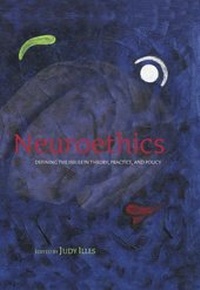
Neuroethics
Defining the issues in theory, practice, and policy
Published on 20. October 2005
Book
Hardback
352 pages
978-0-19-856720-2 (ISBN)
Description
Recent advances in the brain sciences have dramatically improved our understanding of brain function. As we find out more and more about what makes us tick, we must stop and consider the ethical implications of this new found knowledge. Will having a new biology of the brain through imaging make us less responsible for our behavior and lose our free will? Should certain brain scan studies be disallowed on the basis of moral grounds? Why is the media so interested in reporting results of brain imaging studies? What ethical lessons from the past can best inform the future of brain imaging?
These compelling questions and many more are tackled by a distinguished group of contributors to this volume on neuroethics. The wide range of disciplinary backgrounds that the authors represent, from neuroscience, bioethics and philosophy, to law, social and health care policy, education, religion and film, allow for profoundly insightful and provocative answers to these questions, and open up the door to a host of new ones. The contributions highlight the timeliness of modern neuroethics today, and assure the longevity and importance of neuroethics for generations to come.
These compelling questions and many more are tackled by a distinguished group of contributors to this volume on neuroethics. The wide range of disciplinary backgrounds that the authors represent, from neuroscience, bioethics and philosophy, to law, social and health care policy, education, religion and film, allow for profoundly insightful and provocative answers to these questions, and open up the door to a host of new ones. The contributions highlight the timeliness of modern neuroethics today, and assure the longevity and importance of neuroethics for generations to come.
More details
Language
English
Place of publication
Oxford
United Kingdom
Target group
Professional and scholarly
Neuroscientists, bioethicists, cognitive psychologists, philosophers of law and mind
Illustrations
numerous line drawings, halftones, tables and 4 pp
Dimensions
Height: 247 mm
Width: 174 mm
Thickness: 24 mm
Weight
732 gr
ISBN-13
978-0-19-856720-2 (9780198567202)
Copyright in bibliographic data and cover images is held by Nielsen Book Services Limited or by the publishers or by their respective licensors: all rights reserved.
Schweitzer Classification
Other editions
Additional editions
Book
10/2005
Oxford University Press
€82.94
Shipment within 15-20 days
Person
Edited by Judy Illes, Senior Research Scholar and Director, Program for Neuroethics, Center for Biomedical Ethics; Senior Research Scholar, Department of Radiology, Stanford University, California, USA
Contributors: Colin Blakemore, MRC, London, UK Tom Buller, Department of Philosophy, University of Alaska, Anchorage, USA Turhan Canli, Department of Psychology, SUNY, Stony Brook, USA Patricia S. Churchland, Department of Philsophy, University of California San Diego, La Jolla, USA Martha J. Farah, Center for Cognitive Neuroscience, University of Pennsylvania, Philadelphia, USA Joseph Fins Paul J. Ford, Department of Bioethics, The Cleveland Clinic Foundation, USA Kenneth R. Foster, Department of Bioengineering, University of Pennsylvania, Philadelphia, USA Howard Gardner, Harvard University, USA Michael S. Gazzaniga, Center for Cognitive Neuroscience, Dartmouth College, Hanover, USA Maren Grainger-Monsen, Stanford University Center for Biomedical Ethics, Palo Alto, USA Henry Greely, Center for Law and Biosciences, Stanford Law School, USA Ronald M. Green, Ethics Institute at Dartmouth College, Hanover, USA Jaimie Henderson H. Hurt Judy Illes, Stanford Center for Biomedical Ethics, Stanford University, USA Agnieszka Jaworska, Department of Philosophy, Stanford University, USA Kim Karetsky Donald Kennedy, Stanford University, USA Matthew P. Kirschen Robert Klitzman, Department of Psychiatry, Columbia University, New York, USA Franklin G. Miller, Department of Clinical BIoethics, NIH, Bethesda, USA Stephen J. Morse, University of Pennsylvania Law School, Philadelphia, USA Kimberly G. Noble Erik Parens, The Hastings Center, Garrison, USA Alvaro Pascual-Leone, Beth Israel Deaconess Hospital, Department of Neurology, Boston, USA Eric Racine Adina Roskies, Department of Linguistics and Philosophy, Massachusetts Institute of Technology, USA Kim Sheridan Megan S. Steven Paul Root Wolpe, Program in Psychiatry and Ethics, University of Pennsylvania, Philadelphia, USA Elena Zinchenko Laurie Zoloth, Northwestern University, Chicago, USA
Contributors: Colin Blakemore, MRC, London, UK Tom Buller, Department of Philosophy, University of Alaska, Anchorage, USA Turhan Canli, Department of Psychology, SUNY, Stony Brook, USA Patricia S. Churchland, Department of Philsophy, University of California San Diego, La Jolla, USA Martha J. Farah, Center for Cognitive Neuroscience, University of Pennsylvania, Philadelphia, USA Joseph Fins Paul J. Ford, Department of Bioethics, The Cleveland Clinic Foundation, USA Kenneth R. Foster, Department of Bioengineering, University of Pennsylvania, Philadelphia, USA Howard Gardner, Harvard University, USA Michael S. Gazzaniga, Center for Cognitive Neuroscience, Dartmouth College, Hanover, USA Maren Grainger-Monsen, Stanford University Center for Biomedical Ethics, Palo Alto, USA Henry Greely, Center for Law and Biosciences, Stanford Law School, USA Ronald M. Green, Ethics Institute at Dartmouth College, Hanover, USA Jaimie Henderson H. Hurt Judy Illes, Stanford Center for Biomedical Ethics, Stanford University, USA Agnieszka Jaworska, Department of Philosophy, Stanford University, USA Kim Karetsky Donald Kennedy, Stanford University, USA Matthew P. Kirschen Robert Klitzman, Department of Psychiatry, Columbia University, New York, USA Franklin G. Miller, Department of Clinical BIoethics, NIH, Bethesda, USA Stephen J. Morse, University of Pennsylvania Law School, Philadelphia, USA Kimberly G. Noble Erik Parens, The Hastings Center, Garrison, USA Alvaro Pascual-Leone, Beth Israel Deaconess Hospital, Department of Neurology, Boston, USA Eric Racine Adina Roskies, Department of Linguistics and Philosophy, Massachusetts Institute of Technology, USA Kim Sheridan Megan S. Steven Paul Root Wolpe, Program in Psychiatry and Ethics, University of Pennsylvania, Philadelphia, USA Elena Zinchenko Laurie Zoloth, Northwestern University, Chicago, USA
Content
PART I - NEUROSCIENCE, ETHICS, AGENCY AND THE SELF ; 1. Moral decision-making and the brain ; 2. A case study in neuroethics: the nature of moral judgment ; 3. Moral and legal responsibility and the new neuroscience ; 4. Brains, lies and psychological explanations ; 5. Being in the world ; 6. Creativity, gratitude and the enhancement debate: on the fertile tension between two ethical frameworks ; 7. Ethical dilemmas in neurodegenerative disease: respecting the margins of agency ; PART II - NEUROETHICS IN PRACTICE ; 8. From genome to brainome: charting lessons learned ; 9. Protecting human subjects in brain research: a pragmatic perspective ; 10. Facts, fictions and the future of neuroethics ; 11. A picture is worth 1000 words, but which 1000? ; 12. When genes and brains unite: ethical implications of genomic neuroimaging ; 13. Engineering the mind ; 14. Transcranial magnetic stimulation and the human brain: an ethical evaluation ; 15. Functional neurosurgical intervention: neuroethics in the operating room ; 16. Clinicians, patients and the brain ; PART III - JUSTICE, SOCIAL INSTITUTIONS AND NEUROETHICS ; 17. The social effects of advances in neuroscience: legal problems, legal perspectives ; 18. Poverty, privilege and the developing brain: empirical findings and ethical implications ; 19. Neuroethcis in education ; 20. Religious responses to neuroscientific questions ; 21. The mind in the movies: a neuroethical analysis of the portrayal of the mind in popular media